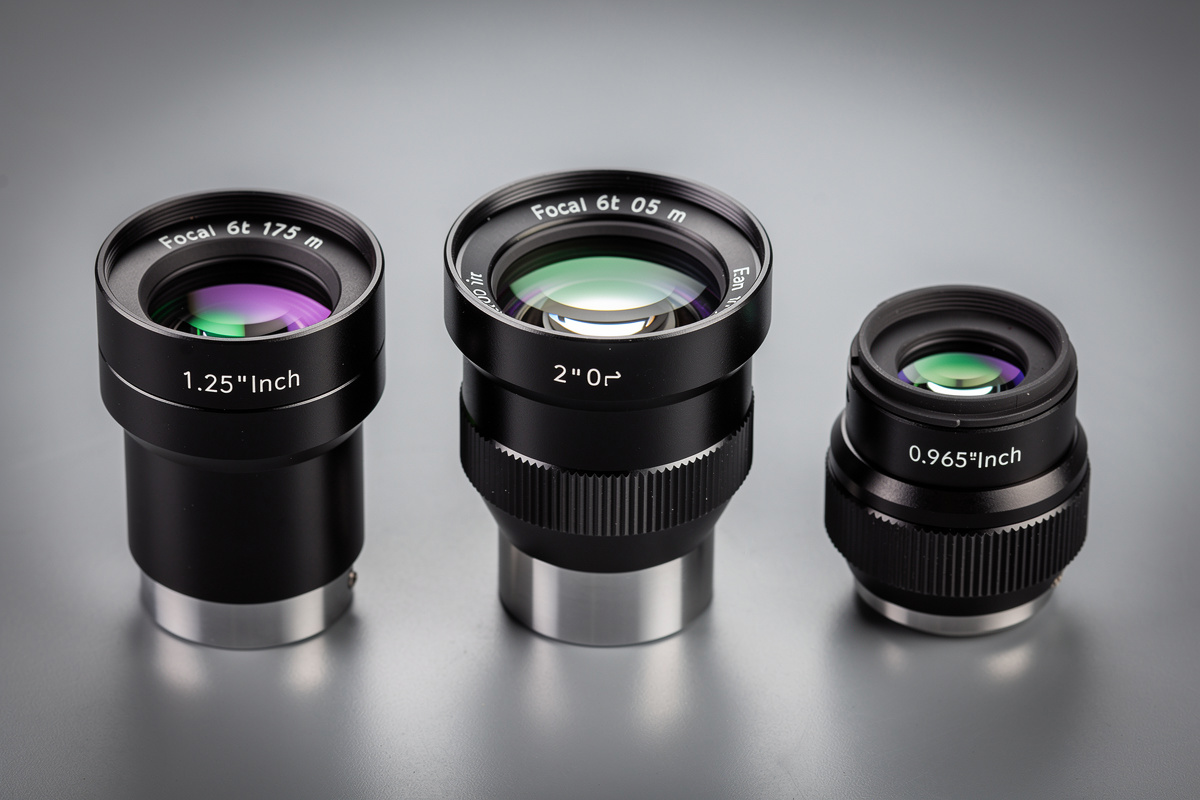

The best telescope eyepieces in 2026 are wide-angle designs with 68 to 82-degree apparent fields and long eye relief under $100 each. The Explore Scientific 68-degree line, Baader Morpheus, and Tele Vue DeLite consistently rank highest for sharpness, comfort, and value across both planetary and deep-sky observing.
Eyepieces are the most frequently changed accessory in astronomy, and the differences between designs are immediately visible at the eyepiece. A quality eyepiece delivers sharp stars to the field edge, comfortable eye positioning, and a wide apparent field that makes finding and tracking objects effortless. This guide covers the top eyepiece categories, specific recommendations at each price point, and the focal lengths you actually need for a complete set.
Best Wide-Angle Eyepieces for Deep-Sky Observing
Wide-angle eyepieces with 68 to 82-degree apparent fields of view show dramatically more sky than standard 50-degree Plössls, making deep-sky objects easier to find and more immersive to observe. The Explore Scientific 68-degree series offers the best price-to-performance ratio in 2026 at $50 to $90 per eyepiece with fully multi-coated optics and 16mm of eye relief across all focal lengths.
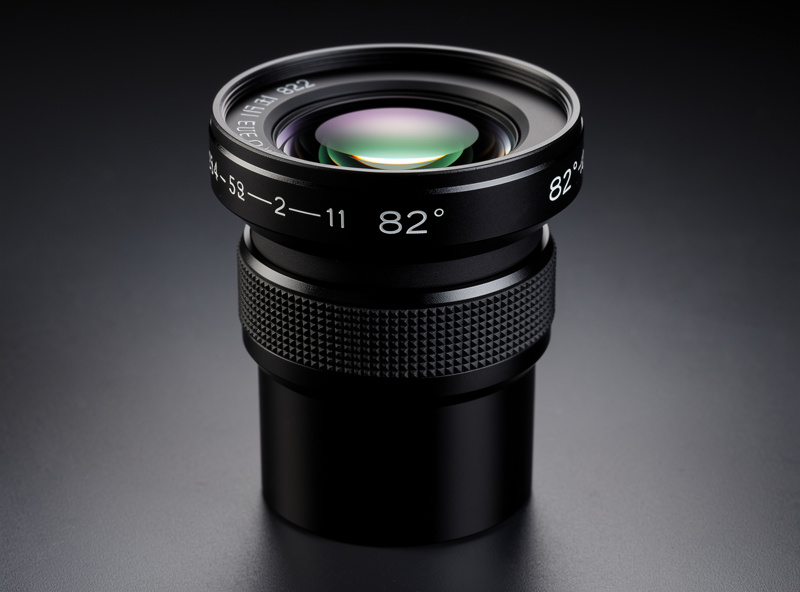
The 24mm Explore Scientific 68-degree is the single most recommended eyepiece in amateur astronomy. At $65 to $80, it provides a 68-degree apparent field with sharp stars to the field edge in telescopes at f/6 or slower. In an 8-inch f/6 Dobsonian, this eyepiece delivers a true field of 1.8 degrees — wide enough to frame the entire Double Cluster in a single view.
For observers who want a wider field, the Tele Vue Ethos line (100-degree apparent field) and Explore Scientific 82-degree line provide an even more immersive experience. The 17mm Explore Scientific 82-degree ($140 to $160) is a popular mid-range choice that works across a wide magnification range. Tele Vue Ethos eyepieces cost $300 to $650 per eyepiece and represent the optical ceiling for amateur astronomy — outstanding, but beyond most beginners’ budgets.
Budget wide-angle options include the Agena Starguider Dual-ED line (60-degree apparent field, $40 to $55 each) and the Goldline 66-degree eyepieces ($20 to $35 each). Goldline eyepieces are a significant upgrade over stock Kellners and Plössls at the entry level. They show acceptable sharpness across 80 percent of the field in f/6 or slower telescopes, making them the recommended first upgrade for budget Dobsonians.
Best Planetary Eyepieces for Sharp Detail
Planetary eyepieces prioritize long eye relief, high contrast, and minimal scatter over field width because planets are small targets that fill a tiny fraction of the field. The Baader Morpheus line sets the standard with 17.5mm eye relief across all focal lengths and 76-degree apparent field at $160 to $200 per eyepiece.
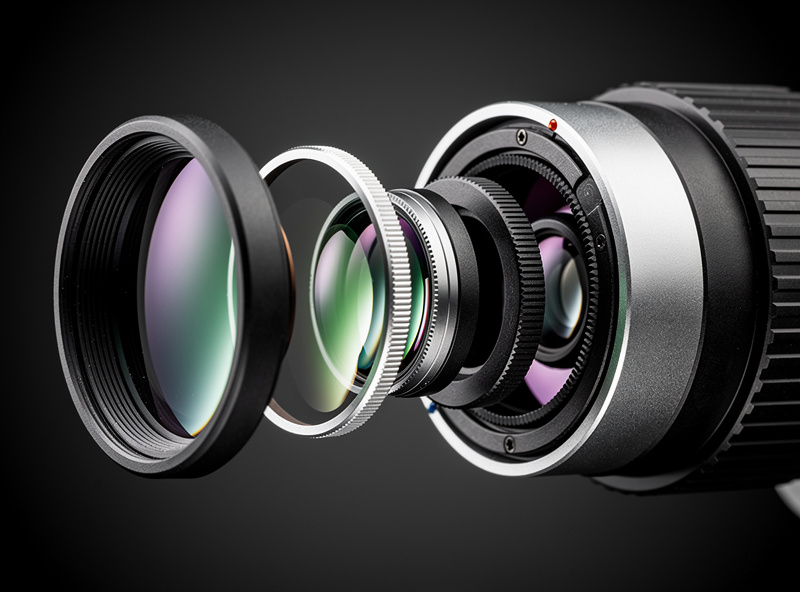
For Saturn’s rings, Jupiter’s cloud bands, and Martian surface features, the ideal eyepiece provides 150x to 300x magnification depending on your telescope’s aperture and local seeing conditions. In a 6-inch telescope, a 5mm to 7mm eyepiece delivers 170x to 240x — the sweet spot for planetary detail in average seeing. A 4mm eyepiece pushes to 300x but only works on nights of excellent seeing.
The Tele Vue DeLite series ($120 to $150 each) provides 62-degree apparent field with 20mm eye relief and zero ghosting or scatter. They are optimized for high-contrast planetary and lunar views. The 7mm DeLite is the most popular focal length for Jupiter and Saturn observing because it delivers 200x to 250x in typical 8 to 10-inch telescopes.
Budget planetary options include the TMB Planetary II line ($40 to $60 each) and the Svbony Redline series ($20 to $30 each). Both provide long eye relief and sharp on-axis performance. The TMB Planetary II eyepieces are well-corrected even in fast f/5 Newtonians, while the Svbony Redlines perform best at f/7 or slower.
Best Budget Eyepieces Under $50
Budget eyepieces have improved dramatically since 2020. The Goldline 66-degree, Svbony Redline 68-degree, and Agena Dual-ED 60-degree lines all deliver optical performance that would have cost $100 per eyepiece a decade ago. These are not compromises — they are genuine upgrades over stock eyepieces that provide years of satisfying views.
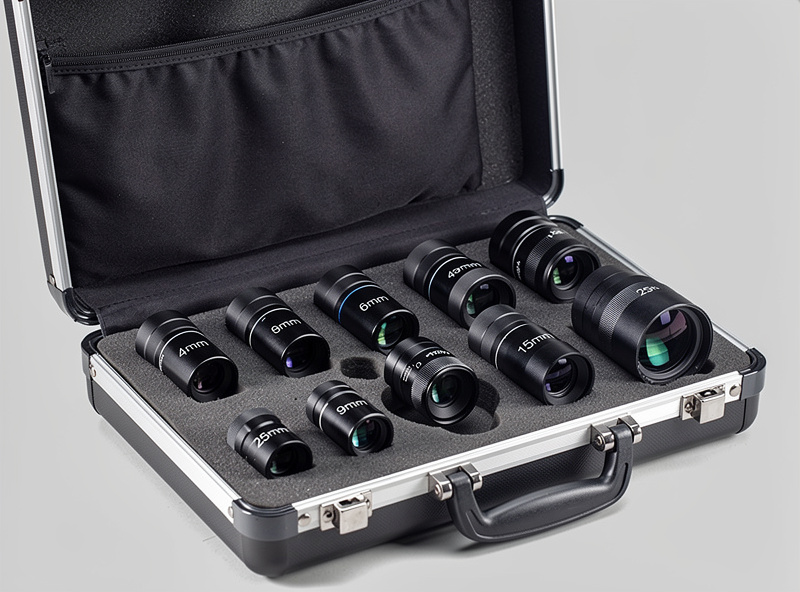
The Goldline 66-degree series ($20 to $35 each on Amazon) uses a four-element design with a 66-degree apparent field and 14mm to 16mm eye relief depending on focal length. They come in 6mm, 9mm, 15mm, and 20mm focal lengths. The 9mm Goldline is the most universally recommended budget eyepiece in astronomy forums because it delivers sharp views across a wide range of telescopes and targets.
Svbony’s Redline 68-degree eyepieces ($25 to $40 each) compete directly with Goldlines and offer slightly better eye relief in short focal lengths. The 6mm Redline is particularly popular for planetary use because its 15mm eye relief is more comfortable than the Goldline equivalent at the same focal length.
A complete budget eyepiece set — 6mm, 9mm, 15mm, and 20mm Goldline or Redline — costs $80 to $140 total. Add a 25mm Plössl ($25 to $35) for low power, and you have a five-eyepiece set that covers 25x to 333x magnification in a 1200mm focal length telescope. That is more magnification flexibility than most observers need.
Plössl vs Kellner vs Wide-Angle: Which Design to Choose
Eyepiece design determines apparent field of view, edge correction, eye relief, and price. Understanding the three main categories — Kellner, Plössl, and wide-angle — prevents overspending on designs that do not match your needs.
Kellner eyepieces (three elements) are the cheapest design and come stock with most budget telescopes. They provide a 40 to 50-degree apparent field with acceptable center sharpness but visible distortion at the field edge. Eye relief is short below 15mm focal length, making high-power Kellners uncomfortable. Replace them as soon as your budget allows.
Plössl eyepieces (four elements) represent the quality floor for serious observing. The 52-degree apparent field is 25 percent wider than Kellners, and the symmetric two-group design provides better correction across the field. Eye relief equals roughly 80 percent of focal length, which means the 25mm Plössl has comfortable 20mm eye relief while the 6mm has only 5mm — too short for most observers without glasses.
Wide-angle designs (six to eight elements, 66 to 100 degrees) solve the eye relief problem at short focal lengths while providing an immersive field of view. The 6mm Explore Scientific 68-degree has 16mm of eye relief compared to 5mm for a 6mm Plössl. This is why experienced observers recommend buying fewer, better eyepieces rather than many cheap ones — one quality wide-angle eyepiece replaces two or three Plössls in comfort and capability.
How Many Eyepieces Do You Actually Need?
Three to five eyepieces cover all observing needs for most amateur astronomers. The ideal set includes one low-power eyepiece for finding and framing objects, one medium-power eyepiece for general deep-sky work, and one to two high-power eyepieces for planets and close doubles. A 2x Barlow lens fills the gaps between focal lengths.
The minimum viable set is three eyepieces: 25mm, 12mm, and 6mm in a 1200mm focal length scope, providing 48x, 100x, and 200x. Adding a 2x Barlow to each gives 24x, 50x, 96x, 200x, 400x — that is six useful magnifications from three eyepieces and one Barlow.
For observers who want more precision, a five-eyepiece set without a Barlow provides five exact magnifications with no compromises: 32mm (low power), 18mm (framing), 12mm (general DSO), 8mm (tight DSO and low planetary), and 5mm (high planetary). This is the set recommended by experienced observers who have tested dozens of configurations. The total cost for quality eyepieces in this range is $250 to $500 depending on whether you choose Plössl, wide-angle, or mixed designs.
Eyepiece Comparison Table
| Feature | Goldline 66° | Plössl 52° | ES 68° | Baader Morpheus 76° | TV Ethos 100° |
|---|---|---|---|---|---|
| Apparent Field | 66° | 52° | 68° | 76° | 100° |
| Eye Relief (6mm) | 14mm | 5mm | 16mm | 17.5mm | 15mm |
| Elements | 4 | 4 | 6-7 | 7 | 8-9 |
| Edge Sharpness (f/5) | Fair | Good | Very Good | Excellent | Excellent |
| Price Range | $20-$35 | $25-$45 | $50-$90 | $160-$200 | $300-$650 |
| Best For | Budget first upgrade | Standard observing | Best value wide-field | Planetary + DSO | No-compromise views |
Related Articles
Telescope Accessories Guide: Eyepieces, Filters, Mounts, and Must-Haves — The complete accessory overview for all categories.
Telescope Buying Guide 2026: How to Choose Your First Telescope — Focal ratio determines which eyepieces perform best.
Best Telescopes for Beginners in 2026: Top Picks by Budget — Pair the right eyepieces with your starter scope.
Best Planets to Observe with a Telescope in 2026 — What magnification each planet needs for detail.
Astrophotography Guide: Equipment, Settings, and Techniques — Camera adapters and projection eyepieces for imaging.
What eyepieces should I buy for my first telescope?
Start with a 25mm Plössl for low-power wide-field views and a 9mm Goldline or Redline for medium magnification. These two eyepieces cost under $60 total and cover 90 percent of observing needs including the Moon, planets, and bright deep-sky objects.
Are expensive eyepieces worth the money?
Yes for experienced observers at fast focal ratios, but diminishing returns hit hard above $100 per eyepiece. A $65 Explore Scientific 68-degree performs within 10 percent of a $300 Tele Vue Ethos for visual observing in telescopes at f/6 or slower.
What focal length eyepiece is best for planets?
For most 6 to 10-inch telescopes, a 5mm to 7mm eyepiece delivers the 150x to 300x magnification that reveals Jupiter’s bands, Saturn’s rings, and Mars’s surface. Pair it with a 2x Barlow for flexibility on nights of varying seeing conditions.
Can I use a Barlow lens instead of buying more eyepieces?
A 2x Barlow effectively doubles your eyepiece collection. A 25mm becomes 12.5mm and a 10mm becomes 5mm. Quality Barlows from $30 to $60 deliver sharp images in telescopes at f/7 or slower, making them the most cost-effective magnification upgrade available.
How do I choose between 1.25-inch and 2-inch eyepieces?
If your focuser accepts 2-inch accessories, low-power wide-field eyepieces above 30mm focal length benefit from the larger barrel. Below 30mm, 1.25-inch eyepieces are identical in performance and lighter weight. Budget telescopes with 1.25-inch-only focusers should stay with 1.25-inch eyepieces.
What is apparent field of view and why does it matter?
Apparent field of view is the angular width of sky you see through the eyepiece. A 50-degree Plössl shows 25 percent less sky than a 68-degree wide-angle at the same magnification. Wider fields make finding objects easier, tracking more forgiving, and extended targets like nebulae far more impressive.
