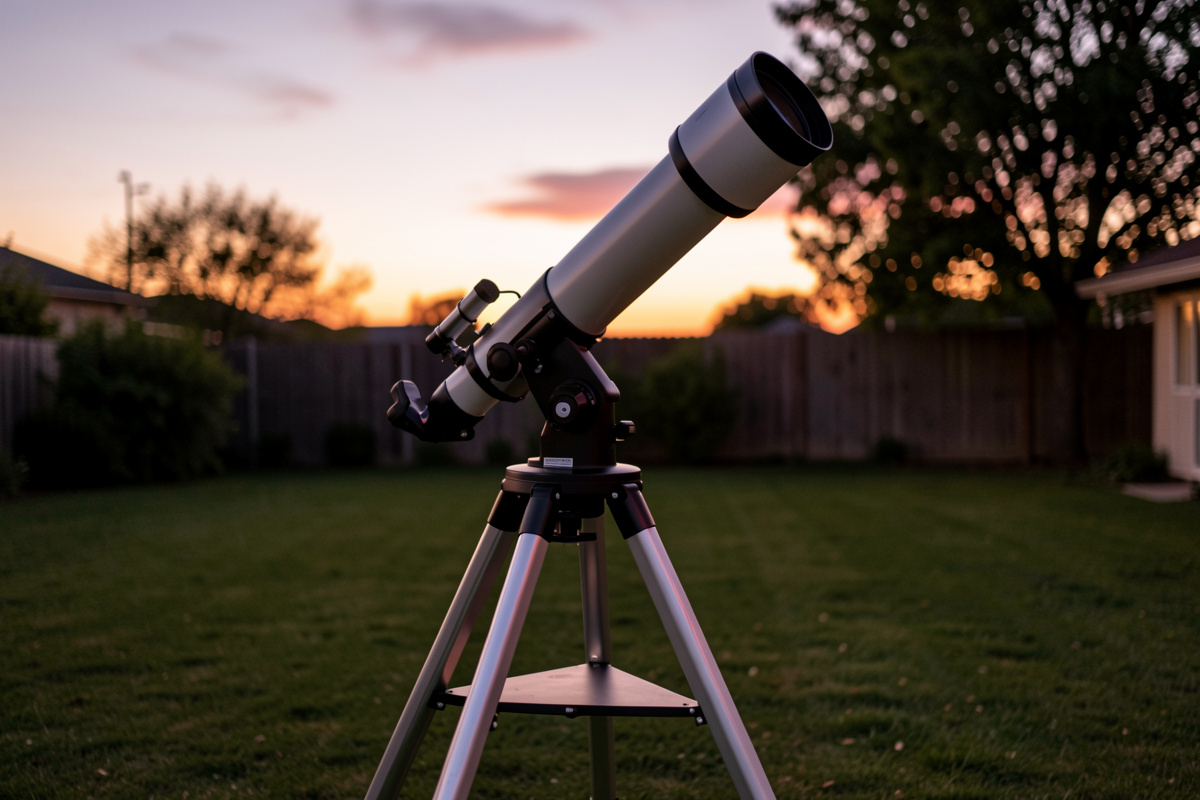

Between a fully manual mount and a fully computerised GoTo sits a quietly excellent middle option: the motorized single-axis drive. A single motor turns the right-ascension axis at the sidereal rate of 15.04 arcseconds per second so your target stays centred, while you still find objects by hand. It costs a fraction of a GoTo and solves the one problem that matters most at the eyepiece — keeping the object still — without the database, the slewing, or the alignment ritual.
I have run the whole progression, from a manual Dobsonian to a single-axis-driven equatorial to full GoTo mounts, and I would not tell everyone they need GoTo. For a visual planetary observer on a budget, a single-axis drive is one of the best-value upgrades in the hobby. This guide lays out exactly what each gives you, what each costs you, and which one fits how you actually observe. For the bigger picture, start with the telescope mount guide.
What a Single-Axis Drive Actually Does
A motorized single-axis drive is a small motor fitted to the right-ascension axis of an equatorial mount. Once you have manually pointed the scope at a target and the mount is polar aligned, the motor turns the RA axis at the sidereal rate of 15.04 arcseconds per second, cancelling the Earth’s rotation so the object sits still in the eyepiece. You find things yourself; the motor only tracks.
This is a genuinely different proposition from GoTo. There is no hand controller full of menus, no object database, no slewing to a named target — just steady tracking on whatever you have already centred. Because it only drives one axis, it relies on decent polar alignment to keep the object in view, which is why the polar alignment guide matters here. The payoff is simplicity and cost: you get the single most useful benefit of a motorised mount — hands-free tracking — for a small fraction of a GoTo’s price.
What Full GoTo Adds
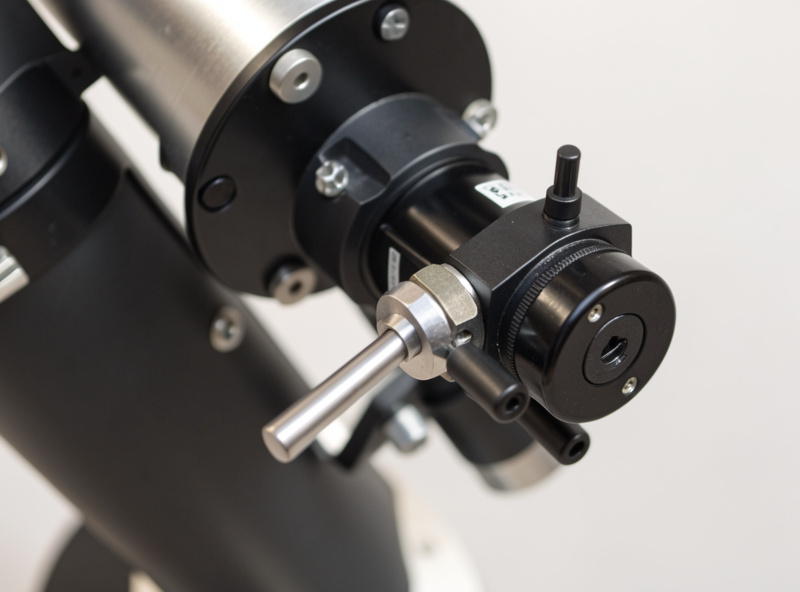
A full GoTo mount drives both axes with motors under computer control, adds an object database of tens of thousands of targets, and slews automatically to anything you select after a star alignment. It does everything the single-axis drive does and far more — it finds objects for you, tracks in both axes, and can be guided for long-exposure imaging.
That capability has a price, in money and in setup. GoTo costs considerably more, needs a proper alignment routine every session, and depends on correct date, time, and location to point accurately — the process covered in the GoTo alignment guide. The dual-axis control is what unlocks autoguiding: a guide camera can correct both right ascension and declination, which a single-axis drive simply cannot do because it has no declination motor. For chasing faint deep-sky objects you cannot easily star-hop to, and for serious imaging, GoTo earns its cost. For finding bright planets you already know, it can be overkill.
The Imaging Divide
This is the clearest line between the two. A single-axis drive supports short-exposure work — bright planetary and lunar imaging, and modestly long deep-sky exposures if your polar alignment is excellent — but it cannot be autoguided in declination, so drift from any polar-alignment error eventually shows up as trailing. There is no second motor to correct it.
Full GoTo, with its dual-axis motors, is what deep-sky imaging is built on. Autoguiding watches a star and corrects both axes continuously, out-correcting periodic error and residual drift alike — the mechanism I explain in the tracking rates and periodic error guide. If long-exposure deep-sky photography is your goal, you need dual-axis GoTo (or a dedicated dual-axis tracker), not a single-axis drive. For wide-field imaging with a camera lens rather than a telescope, a single-axis star tracker is a brilliant low-cost entry, covered in the star tracker mount guide — that niche is the one place single-axis tracking shines for photography.
Cost, Skill, and Learning the Sky
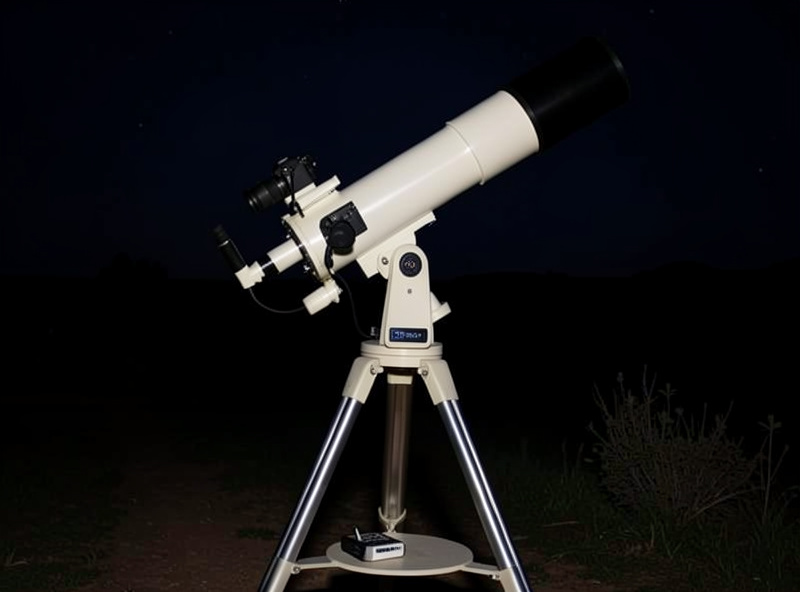
The cost gap is large enough to shape the decision. A single-axis motor drive often costs a small fraction of upgrading to a comparable GoTo mount, which frees money for better eyepieces or more aperture — the components that actually change what you see. For a visual observer, that trade frequently favours the single-axis drive plus a good eyepiece kit over a cheaper GoTo scope.
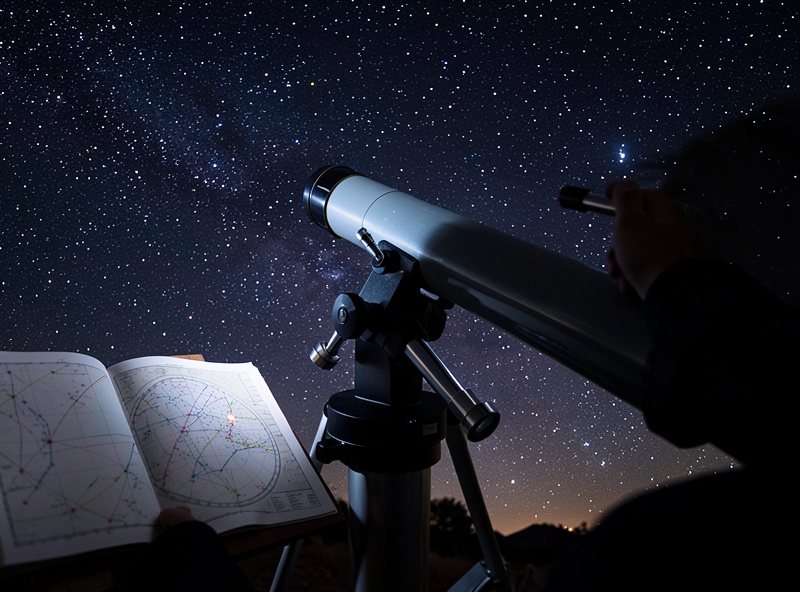
There is a skill dimension too. Finding objects by hand on a single-axis mount forces you to learn the sky — to star-hop, to read a star atlas, to know where things are — and that knowledge made me a far better observer than any database could. GoTo is a wonderful convenience once you know the sky, and a potential crutch if you never learn it; a poorly aligned GoTo slews confidently to nothing, and without sky knowledge you cannot tell. My honest advice to newcomers on a budget: a single-axis-driven equatorial teaches you the craft and tracks beautifully for planets and the Moon. Step up to GoTo when object-finding or imaging genuinely demands it.
My own path ran through a Sky-Watcher EQ-class equatorial with a clip-on RA motor before I committed to a dual-axis GoTo, and the cheap motor taught me more than the expensive one did. The early mistake I made was trusting a rough polar alignment and wondering why Jupiter drifted out of a high-power eyepiece within a few minutes — the motor tracks the sky’s sidereal rate faithfully, but only good polar alignment keeps a single-axis drive honest in declination, since there is no second motor to catch the drift. Once I tightened the alignment, the same humble mount held a planet rock-steady at 200x while I studied it.
Which One Fits You?
Decide on two axes of your own: what you observe, and whether you image. Visual planetary and lunar observers on a budget are superbly served by a single-axis drive — it keeps the target locked while you study it, costs little, and builds your sky skills. Observers who want to hunt faint deep-sky objects by database, or who intend to image the deep sky, need full dual-axis GoTo.
If you are still choosing the mount design underneath all this, the equatorial versus alt-azimuth comparison comes first, since single-axis drives only make sense on an equatorial. And when you do move to GoTo, the Celestron and Sky-Watcher comparison will help you pick a model. The single-axis drive is not a compromise to apologise for — for the right observer it is exactly the right amount of mount.
| Feature | Single-Axis Drive | Full GoTo |
|---|---|---|
| Finding objects | By hand (you star-hop) | Automatic slew from database |
| Tracking | RA axis only, sidereal | Both axes, multiple rates |
| Autoguiding for imaging | No (no declination motor) | Yes — full dual-axis |
| Setup each session | Polar align, then observe | Polar align plus star alignment |
| Cost | Low | Considerably higher |
| Best for | Visual planetary and lunar, budget | Deep-sky hunting and imaging |
Frequently Asked Questions
What is a single-axis motor drive on a telescope mount?
It is a motor fitted to the right-ascension axis of an equatorial mount that turns at the sidereal rate to keep a target centred. You point the scope at objects by hand, and the motor only tracks. It gives hands-free tracking without the database, slewing, or alignment routine of a full GoTo mount.
Is a single-axis drive good enough for astrophotography?
For short planetary and lunar imaging, yes. For long deep-sky exposures it is limited, because it cannot be autoguided in declination, so any polar alignment error eventually causes trailing. Serious deep-sky imaging needs a dual-axis GoTo mount that can be guided in both axes.
Is GoTo worth it over a single-axis drive?
It depends on your goals. GoTo is worth it if you want to find faint objects from a database or image the deep sky, since it slews automatically and supports dual-axis autoguiding. If you mainly observe bright planets and the Moon visually on a budget, a single-axis drive delivers the key benefit, tracking, for far less.
Does a single-axis drive need polar alignment?
Yes. Because it only drives the right-ascension axis, a single-axis drive relies on good polar alignment to keep the object in the field over time. Without accurate polar alignment, the target slowly drifts in declination even though the motor is tracking in right ascension.
Will a single-axis drive help me learn the night sky?
Yes, more than GoTo will. Because you find every object by hand, a single-axis drive forces you to star-hop and read the sky, building real navigation skills. GoTo is a great convenience once you know the sky but can become a crutch if you never learn to find things yourself.
