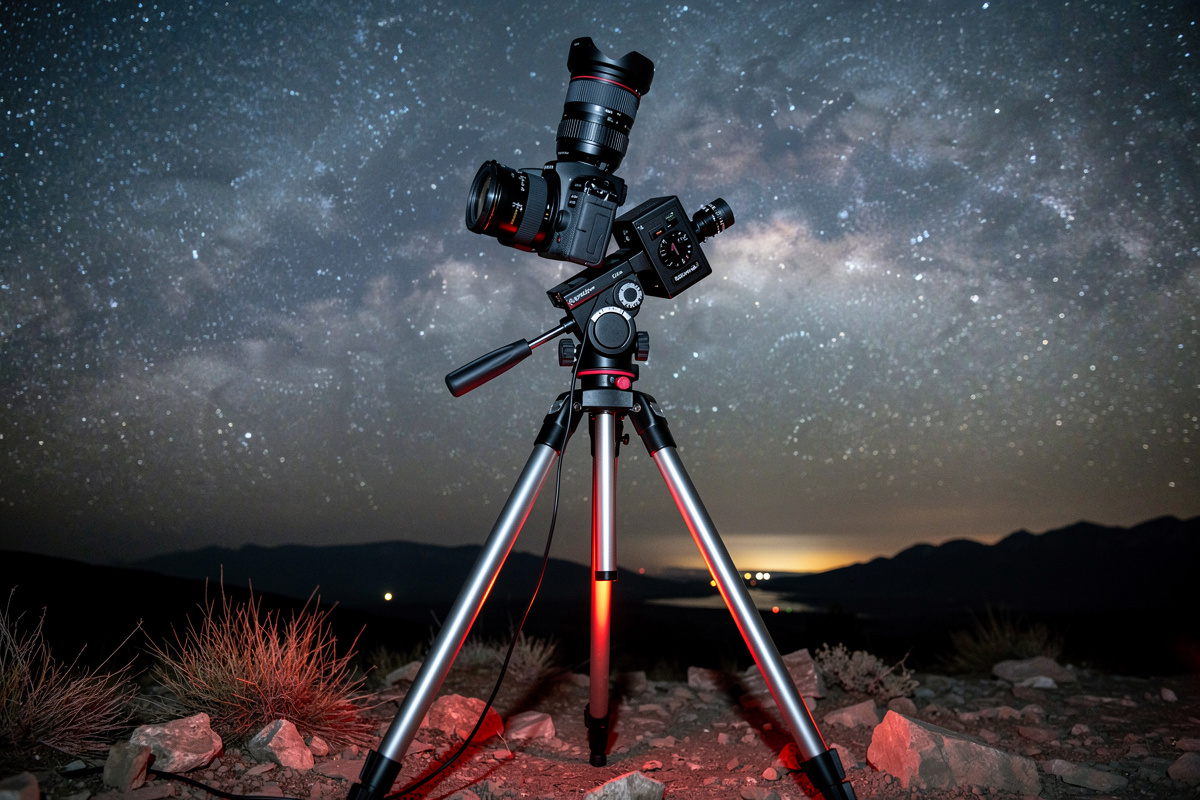

A star tracker mount rotates a camera at the sidereal rate, enabling exposures of 60-180 seconds without star trailing. The Sky-Watcher Star Adventurer GTi ($500) and iOptron SkyGuider Pro ($400) are the two dominant models, both supporting payloads of 5-11 pounds — enough for a DSLR with lenses up to 200mm or a small refractor up to 60mm aperture.
Star trackers are the most cost-effective entry point for astrophotography because they cost one-third to one-fifth of a full equatorial GoTo mount while enabling the same fundamental capability: tracking the sky to extend exposure time beyond what fixed tripods allow. A $400 star tracker paired with a $500 used DSLR and a $200 camera lens produces Milky Way images and wide-field nebula photographs that rival results from equipment costing $3,000-5,000. My first astrophotography rig was a Sky-Watcher Star Adventurer 2i, a Canon T6i, and a 50mm f/1.8 — total cost under $700 — and it produced the M31 image that hooked me on the hobby. The companion astrophotography equipment hub covers the full imaging chain context.
How Star Tracker Mounts Work
Star trackers contain a small motor that rotates a platform at one revolution per 23 hours and 56 minutes — matching Earth’s rotation so the camera stays aimed at the same point in the sky during long exposures. The tracker must be polar-aligned before use: the rotation axis must point at the celestial pole (approximately at Polaris in the northern hemisphere). Accurate polar alignment is critical — a misaligned tracker produces star trailing even during short exposures.
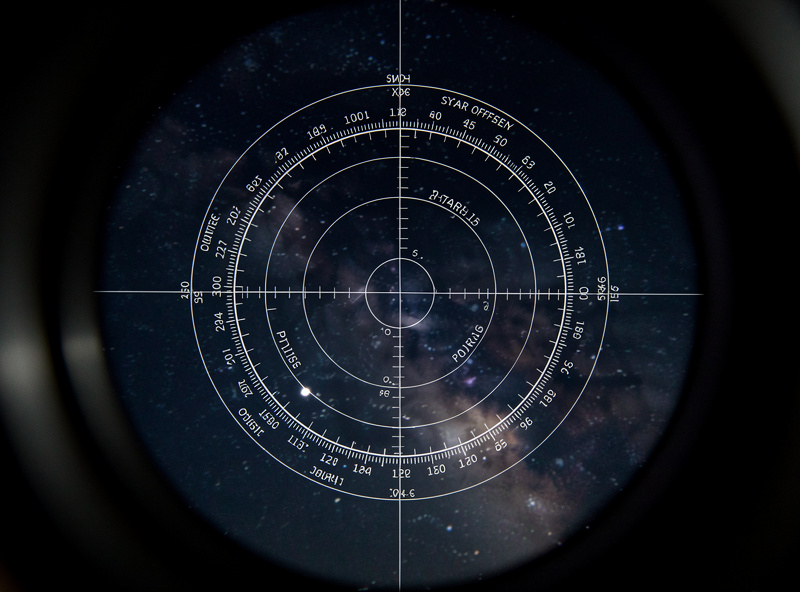
Most star trackers include a small polar scope — a built-in sighting scope that shows Polaris and surrounding stars. You align Polaris to its predicted position in the scope using altitude and azimuth adjustments on the tracker. This takes 2-5 minutes and achieves polar alignment accuracy of 3-5 arcminutes, sufficient for 120-180 second exposures with lenses up to 135mm focal length. Sky-Watcher publishes official Star Adventurer specifications including periodic-error figures, payload limits, and polar scope reticle layout.
Top Star Tracker Models Compared
| Feature | Sky-Watcher Star Adventurer GTi | iOptron SkyGuider Pro | Sky-Watcher Star Adventurer 2i |
|---|---|---|---|
| Price | $500 | $400 | $350 |
| Max payload | 11 lbs | 11 lbs | 11 lbs |
| Weight | 3.3 lbs | 2.6 lbs | 2.2 lbs |
| GoTo | Yes (WiFi app) | No | No |
| Autoguiding | ST4 port | ST4 port | ST4 port |
| Tracking modes | Sidereal, lunar, solar | Sidereal, lunar, solar | Sidereal, lunar, solar |
| Power | AA batteries or USB-C | AA batteries | AA batteries |
| Best for | Feature-rich beginner tracking | Lightweight portability | Budget entry point |
Setting Up a Star Tracker
Setup takes 10-15 minutes in the field. Attach the tracker to a sturdy camera tripod — the tripod must be rated for 15+ pounds because vibrations from wind and ground movement are magnified by the tracker’s tracking motion. Level the tracker using its built-in bubble level or a small torpedo level placed on the platform.
Polar align using the built-in polar scope. In the northern hemisphere, locate Polaris and rotate the tracker’s altitude and azimuth knobs until Polaris sits at its predicted position in the polar scope reticle. Apps like Polar Scope Align Pro or PS Align Pro calculate Polaris’s position for your date, time, and location. Accurate polar alignment to within 1-2 degrees of the pole is sufficient for wide-field work with lenses under 100mm.
Mount the camera on the tracker’s dovetail saddle or mounting plate. Balance the camera by sliding it forward and backward until the tracker stops and starts without the camera swinging. Attach a remote shutter release or intervalometer. Set the camera to manual mode, shoot raw files, and begin with 60-second exposures at ISO 1600-3200 with the lens wide open. The companion camera spoke covers DSLR settings and modification options in detail.
Star Tracker Astrophotography Techniques
The standard star tracker workflow captures 50-200 sub-exposures of 60-120 seconds each, then stacks them in software like Sequator (free), DeepSkyStacker (free), or PixInsight ($260). Stacking averages out random noise and accumulates signal, progressively revealing fainter detail with each sub-exposure added. A typical Milky Way image uses 30-60 minutes of total integration time.
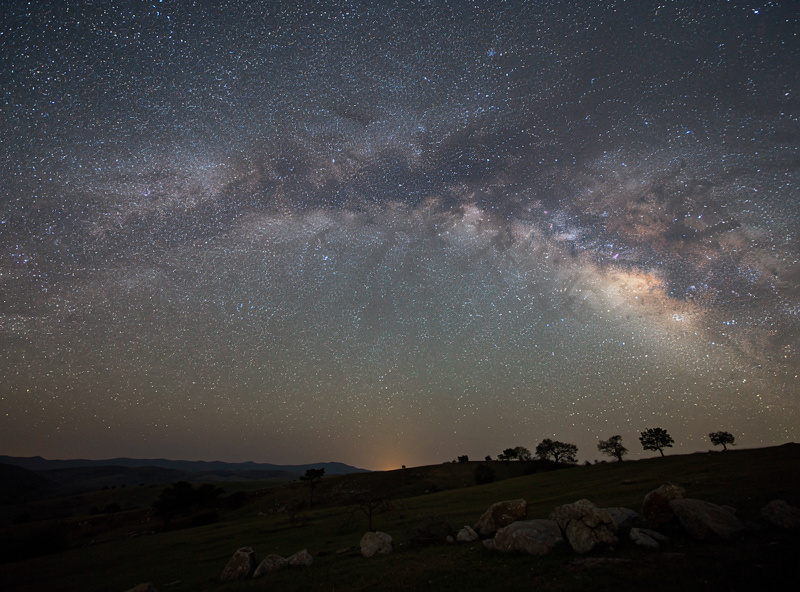
For nebulae like the North America Nebula or the Orion complex, 2-4 hours of total integration reveals structure invisible in single frames. Use an intervalometer to automate the capture sequence — set it to take 120-second exposures with a 5-second pause between frames for the camera to write the file. Run the sequence for 2-3 hours while you observe visually or relax.
A modified DSLR dramatically improves star tracker results on emission nebulae. The stock infrared blocking filter reduces hydrogen-alpha sensitivity by 70-80%, making emission nebulae appear faint and colorless. A modified camera captures 3-5x more hydrogen-alpha signal, revealing vivid red and pink nebulosity that stock cameras cannot record.
Star Tracker Limitations
Star trackers cannot GoTo — they track but do not automatically point at objects. You must aim the camera manually using the tripod head, star-hopping visually or using a planetarium app to locate targets. This is simple for wide-field targets like the Milky Way and large nebulae but becomes difficult for small, faint objects.
Tracking accuracy limits usable focal length. Star trackers achieve 1-3 arcsecond RMS periodic error, which produces round stars with lenses up to 135-200mm but causes elongation with longer focal lengths. Adding a guide camera and off-axis guider to a star tracker extends the usable focal length to 300-400mm but adds $200-300 in equipment. The autoguiding setup guide covers PHD2 with star trackers specifically.
Payload capacity limits telescope choice. The 11-pound rating includes the camera, lens, and any accessories. A DSLR with battery grip weighs 2-3 pounds. A 72mm refractor weighs 5-7 pounds. Adding a guide scope pushes the total to 10-12 pounds — at or beyond the tracker’s limit. Star trackers work best with camera lenses and small refractors under 60mm aperture. The best telescopes for astrophotography spoke covers the small refractors that pair with star trackers, and the field flattener guide covers the lightweight flatteners that fit within the tracker payload.
Common Mistakes I Made on Star Tracker Nights
The first mistake was getting Polaris confused with the actual celestial pole. Polaris is offset from the pole by about 0.7 degrees, and my first three sessions I aligned the tracker so Polaris was dead-center in the polar scope reticle — which left me a degree off the pole. Stars trailed in 60-second exposures and I assumed the tracker was broken. Once I downloaded Polar Scope Align Pro and learned that Polaris belongs at a specific clock position based on the time of night, my exposures became clean immediately. Polar alignment is geometry, not “point at the bright star.”
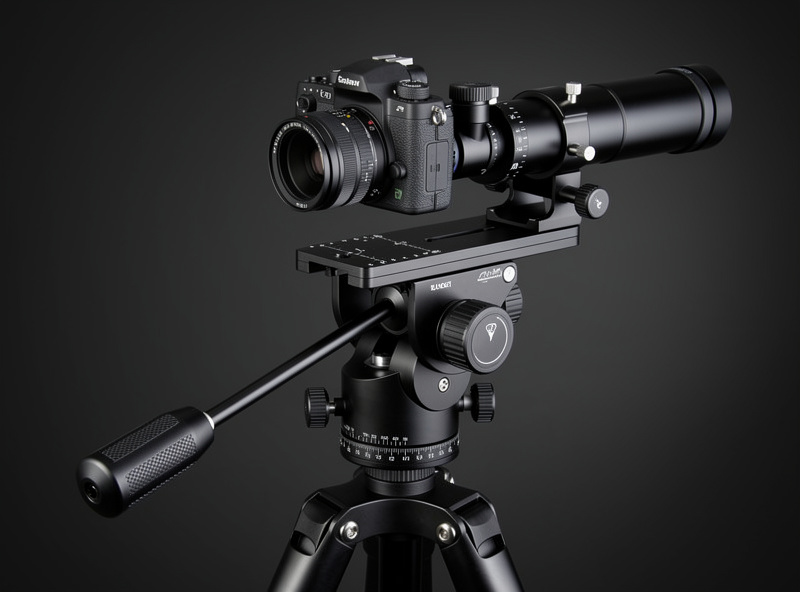
The second mistake was using a flimsy travel tripod for the first six sessions. The tracker amplified every wind gust and footstep into a star trail. I upgraded to a Manfrotto 055 carbon-fiber tripod ($250) and the trailing problems disappeared even on slightly breezy nights. Star trackers magnify their support’s flaws — a sturdy tripod is the cheapest meaningful upgrade.
The third mistake was loading the tracker beyond its 11-pound rating. I tried a 72mm refractor with a heavy camera and a guide scope on the Star Adventurer 2i, totaling about 13 pounds. Tracking degraded visibly and exposures over 90 seconds trailed. The fix was either drop weight (smaller refractor) or upgrade mount (HEQ5 Pro). Beyond the rated payload, no amount of polar alignment fixes a tracker.
What I Would Do Tonight
If you have a star tracker, a DSLR, and a wide-angle lens (14-50mm), here is the session I would build. Set up at a Bortle 4 site 30 minutes before astronomical twilight ends. Polar align using the polar scope and an alignment app to within 1 degree of the pole — this is the floor for clean tracking. Mount the camera with the lens at f/2.8 or its widest aperture, point at the Milky Way core or the Pleiades depending on the season, and shoot 60-second exposures at ISO 1600 for 60 frames. Take 30 dark frames at the end of the session (lens cap on, same settings, same temperature). Stack in Sequator or DeepSkyStacker. The result will out-image any single 30-second tripod exposure by an order of magnitude — and the entire kit fits in a backpack.
Frequently Asked Questions
What is the best star tracker for astrophotography?
The Sky-Watcher Star Adventurer GTi (500 dollars) is the best overall star tracker because it adds WiFi-controlled GoTo to the standard tracking platform. The iOptron SkyGuider Pro (400 dollars) is the best for portability at 2.6 pounds. The Sky-Watcher Star Adventurer 2i (350 dollars) is the best budget option.
How long of an exposure can you get with a star tracker?
With accurate polar alignment, star trackers enable 60-180 second exposures with lenses up to 135mm focal length. With 50mm or shorter lenses, 240-300 second exposures are achievable. Longer focal lengths reduce the maximum exposure time because tracking errors are magnified at higher magnification.
Can you use a telescope on a star tracker?
Yes, but only small ones. Star trackers support 5-11 pounds payload, enough for a 60mm refractor or camera lenses up to 200mm focal length. A 72mm refractor with camera and accessories may exceed the weight limit. Refractors over 80mm and all reflectors require a full equatorial mount.
Do you need autoguiding with a star tracker?
Not for most applications. Star trackers produce good 60-120 second unguided exposures with lenses up to 135mm. Autoguiding helps at focal lengths over 150mm or when pushing exposure times beyond 180 seconds. A guide camera and 30mm guide scope (200-250 dollars total) extends a star tracker capability significantly.
What tripod do you need for a star tracker?
A sturdy tripod rated for at least 15 pounds. Carbon fiber tripods reduce vibration but cost more. The tripod must be rigid enough to resist wind gusts and ground vibrations that would blur long exposures. Avoid lightweight travel tripods — they flex too much for astrophotography tracking.
Can you use a star tracker for deep sky objects?
Yes, with modified DSLRs and camera lenses. Star trackers capture the North America Nebula, Lagoon Nebula, Carina Nebula, and other large emission nebulae with 2-4 hours of stacked 120-second exposures. Small galaxies like M31, M81, and M33 are also within reach with 135-200mm lenses.
Related Articles
Astrophotography Equipment Guide — the complete imaging chain explained.
Astrophotography Cameras — DSLR vs cooled cameras for star tracker setups.
Best Telescopes for Astrophotography — telescope types for imaging.
Field Flattener and Coma Corrector Guide — round stars across the entire sensor.
Autoguiding Setup Guide — extending star tracker capability with PHD2.
