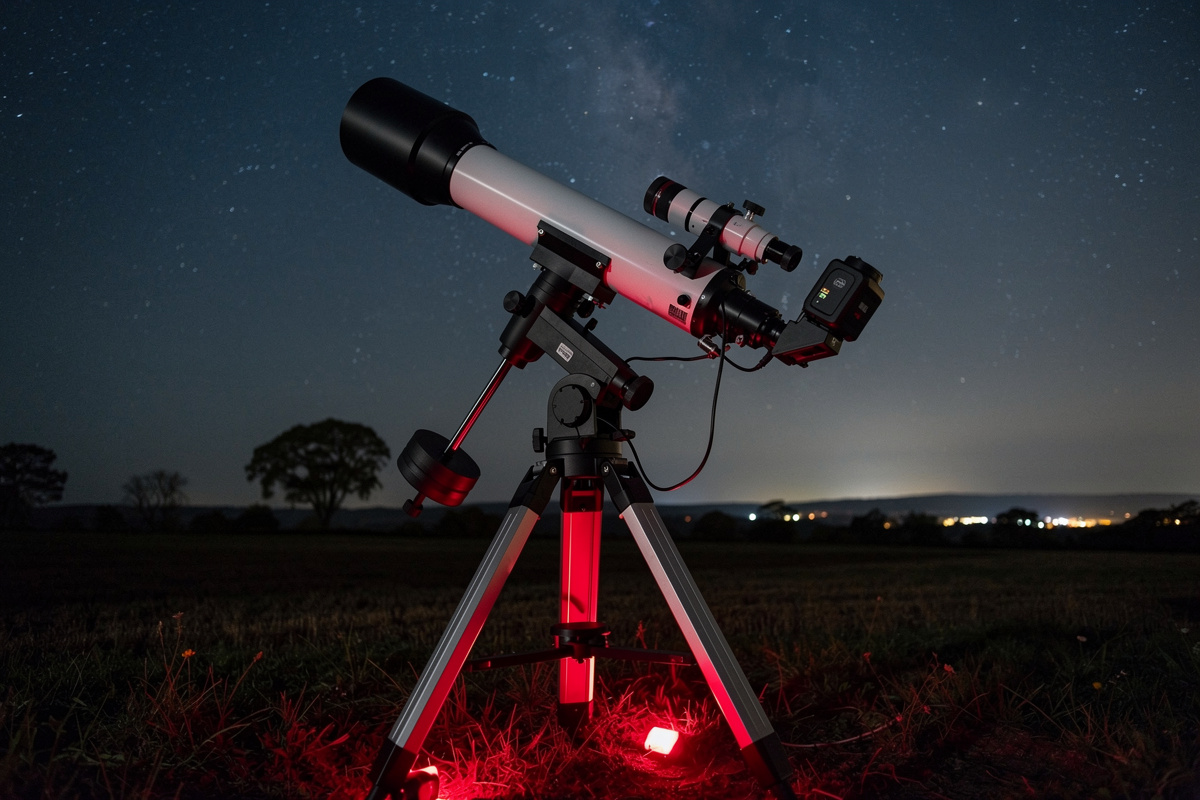

The best telescopes for astrophotography are apochromatic refractors (60-80mm, $800-2,500) for beginners and imaging Newtonians (6-8 inch, $300-800) for budget aperture. Apochromatic refractors produce round stars across the entire field with no collimation required, while imaging Newtonians offer 3-5x more light-gathering per dollar.
Not every telescope works for astrophotography. Visual telescopes optimized for planetary observation typically have long focal lengths, slow focal ratios, and may not produce a flat enough field for photography. Astrophotography demands specific characteristics: fast focal ratios to reduce exposure time, flat corrected fields that produce sharp stars to the sensor edges, and mechanical stability that prevents flexure during long exposures. My own current imaging telescope is a 72mm f/6 ED doublet — the cheapest decent astrograph I could buy — and I have produced more keepers with it than I did with the much more expensive 8-inch SCT I started with. The companion astrophotography equipment hub covers the full imaging chain, and the star tracker mount guide covers the lightweight mounts that pair with small refractors.
Apochromatic Refractors: The Gold Standard
Apochromatic (APO) refractors use two, three, or four-element lens designs that correct chromatic aberration — the color fringing that cheaper achromatic refractors show around bright stars. A quality triplet APO produces white stars with no color fringing across the entire field, including full-frame sensors. This makes APO refractors the most popular telescope type for deep sky astrophotography.
Doublet ED Refractors ($300-700)
ED doublet refractors use an extra-low dispersion glass element to reduce chromatic aberration. A 72mm f/6 ED doublet like the Apertura 72mm or Sky-Watcher Evostar 72ED costs $400-600 and produces good wide-field images with minor color fringing on bright stars. Doublets are lighter, more affordable, and easier to balance on small mounts than triplets. They are excellent first astrophotography telescopes. Sky-Watcher publishes official Evostar 72ED specifications including chromatic aberration figures, back-focus distances, and field flattener compatibility.
Triplet APO Refractors ($1,000-3,000)
Triplet APO refractors add a third lens element to nearly eliminate chromatic aberration. An 80mm f/6 triplet APO like the Sky-Watcher Esprit 80ED ($1,200-1,500) or William Optics Zenithstar 81 ($1,000) produces apochromatic performance across full-frame sensors. The stars are white, round, and sharp from center to corner. Triplets are heavier than doublets and require more robust mounts.
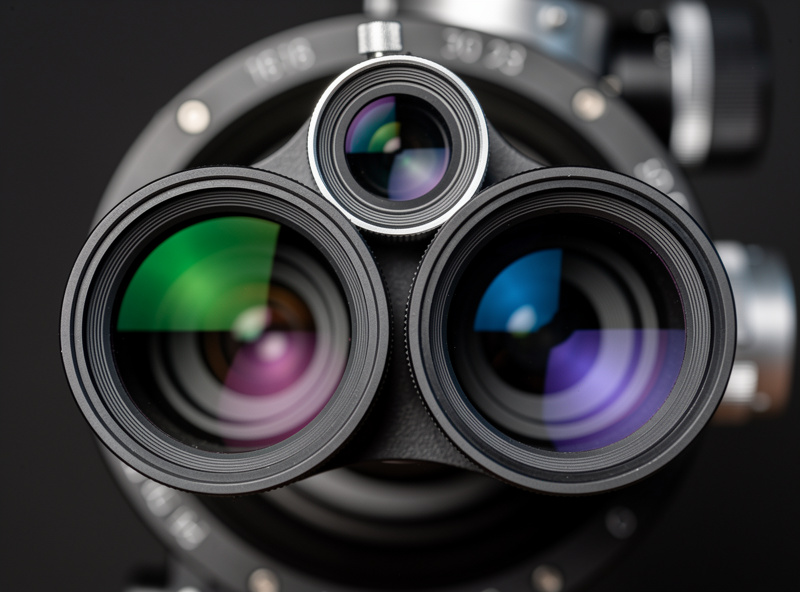
Quadruplet Astrographs ($1,500-4,000)
Quadruplet designs like the Takahashi FSQ-106 and William Optics RedCat include a built-in field flattener that produces a perfectly flat field optimized for imaging. These telescopes cost more but require no additional flattener accessories and produce the sharpest possible star images across large sensors. The field flattener guide explains why quadruplets cost more and which scopes need a separate flattener.
Imaging Newtonians: Aperture on a Budget
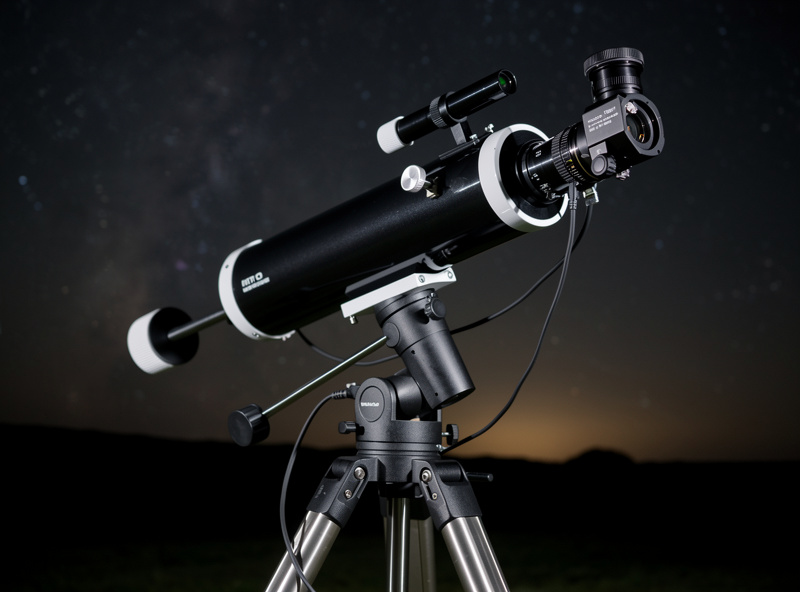
Imaging Newtonians at f/4 to f/5 offer 200-300mm of aperture for $300-800, collecting far more light per exposure than refractors at the same price. A 6-inch f/4 Newtonian costs $300-500 and collects 56% more light than an 80mm refractor. An 8-inch f/4 costs $400-800 and collects 156% more light. Newtonians are the most aperture-efficient telescopes for astrophotography.
Newtonians require collimation before every session — aligning the primary and secondary mirrors to ensure the optical axis is straight. This takes 2-3 minutes with a laser collimator ($30-50). Newtonians also benefit from coma correctors ($100-200) to round stars at the field edges, especially with sensors larger than APS-C. Without a coma corrector, stars at the field edge appear as comet-shaped smudges.
The main limitation of Newtonians for astrophotography is back-focus distance — the distance from the focuser to the focal plane. Fast Newtonians (f/4) have short back-focus, which can make it difficult to fit a camera, filter wheel, and coma corrector within the available focus travel. Checking back-focus compatibility before buying a Newtonian prevents frustrating focus problems later.
SCTs for Planetary and Long-Focal-Length Imaging
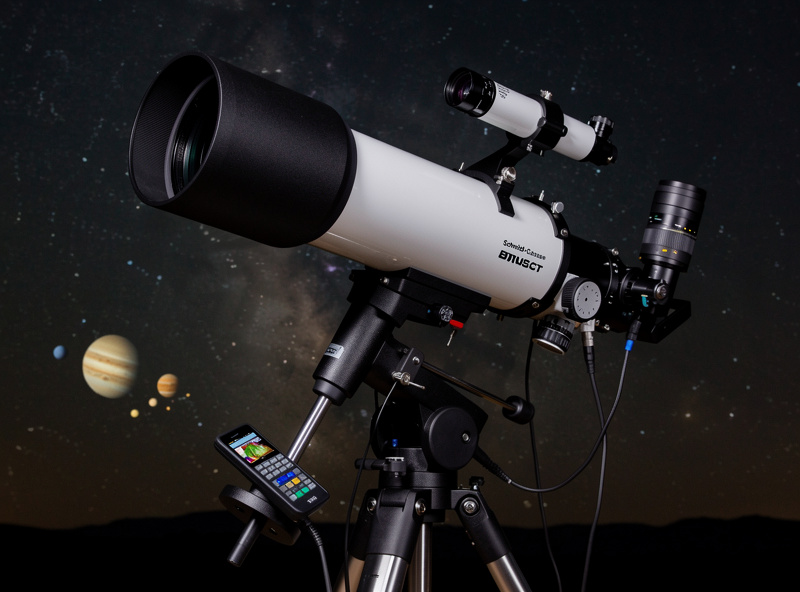
Schmidt-Cassegrain telescopes offer 1,500-2,500mm focal length in compact tubes, making them ideal for planetary imaging and small deep sky objects. An 8-inch SCT at f/10 has 2,000mm focal length — sufficient to resolve Jupiter’s Great Red Spot, Saturn’s Cassini Division, and Mars’ surface features during opposition.
For deep sky imaging, SCTs benefit from focal reducers that drop the focal ratio from f/10 to f/6.3 or f/7. A 0.63x focal reducer on an 8-inch SCT produces 1,260mm at f/6.3, which is a versatile combination for galaxies, planetary nebulae, and globular clusters. The reducer also increases the field of view and reduces exposure time.
Telescope Selection by Target Type
| Target Type | Best Telescope Type | Focal Length | Focal Ratio | Price Range |
|---|---|---|---|---|
| Milky Way, wide nebulae | Camera lens or 60mm refractor | 50-360mm | f/2-f/6 | $200-800 |
| Emission nebulae, large DSO | 72-80mm APO refractor | 400-600mm | f/5-f/7 | $500-2,000 |
| Galaxies, planetary nebulae | 6-8 inch Newtonian or SCT | 600-2,000mm | f/4-f/10 | $300-1,500 |
| Planetary imaging | 8-14 inch SCT or Mak | 2,000-4,000mm | f/10-f/15 | $1,000-3,000 |
| Everything (versatile) | 80mm APO + 8 inch SCT | 480mm + 2,000mm | f/6 + f/10 | $2,000-4,000 |
Matching Telescope to Mount
The telescope and camera’s combined weight must not exceed the mount’s rated imaging payload — and the practical limit is typically 50-60% of the mount’s visual weight rating. An HEQ5 mount rated for 30 pounds visually handles 15-18 pounds for imaging. An 80mm refractor with camera and guide scope weighs 8-12 pounds, fitting comfortably within this limit. An 8-inch Newtonian with camera weighs 15-20 pounds, requiring an EQ6-R or equivalent.
Balance is as important as weight. An imbalanced telescope causes the mount’s motors to work harder, increasing periodic error and degrading guiding accuracy. The telescope must balance in both right ascension and declination with all accessories attached. Adjustable tube rings and sliding dovetail bars enable fine balance adjustment. Once the imaging telescope is balanced and mounted, the autoguiding setup is what unlocks 5-15 minute sub-exposures.
Common Mistakes I Made on Telescope Choice
The first mistake was buying an 8-inch SCT as my first imaging telescope. The 2,000mm focal length was unforgiving of even small polar alignment errors and required perfect guiding to produce round stars. I burned six months on guiding tuning and field rotation before I bought a 72mm refractor and produced my first usable image in the second session. Short focal lengths forgive everything — beginners should start there and earn long focal lengths later.
The second mistake was ignoring back-focus distance. The first imaging Newtonian I tried (6-inch f/4) had only 50mm of back-focus, which meant my coma corrector + filter drawer + ASI533 could not all fit within the focuser travel. I never reached focus and spent two evenings convinced the scope was defective. The fix was a low-profile filter drawer and a 35mm-back-focus camera — but I should have checked the math before buying.
The third mistake was buying a slow refractor (f/8 doublet) that produced excellent visual planetary views but was too slow for deep-sky imaging. f/8 is a planetary focal ratio; f/5 to f/7 is the imaging sweet spot. The slower scope sat unused once I started imaging seriously and I sold it for half what I paid.
What I Would Do Tonight
If you have a budget of $1,000-1,500 for your first astrophotography telescope and you already own a DSLR, here is the rig I would build. Buy a Sky-Watcher Evostar 72ED ($550) and the matching dedicated field flattener ($170). Pair it with a Sky-Watcher Star Adventurer 2i ($350) for entry-level tracking. Add a T-ring for your camera body ($25). Total: $1,095. Mount on a sturdy photo tripod. Polar align with the polar scope to within 5 arcminutes. Shoot 60-second exposures of M31 or the North America Nebula. Stack 60 frames and process in DeepSkyStacker + Siril. The result will rival images from rigs costing 5x more — and the kit fits in a single backpack.
Frequently Asked Questions
What is the best telescope for beginner astrophotography?
A 72mm f/6 ED doublet refractor (400-700 dollars) is the best beginner astrophotography telescope. It requires no collimation, produces good star quality, weighs 5-7 pounds, and works with any equatorial mount. Its wide field of view forgives framing errors and shows large nebulae beautifully.
Can you use a Dobsonian telescope for astrophotography?
Short exposures of the Moon and planets work on Dobsonians, but long-exposure deep sky imaging does not. Dobsonians use alt-azimuth mounts that produce field rotation during exposures longer than a few seconds. Equatorial platforms (200-400 dollars) add tracking to Dobs but are not precise enough for long-exposure work.
What focal length is best for astrophotography?
400-600mm is the most versatile focal length for deep sky astrophotography. It frames large nebulae and galaxies, works with 1-inch and APS-C sensors, and tolerates moderate mount tracking errors. Longer focal lengths (1000mm+) narrow the field and require more accurate guiding but reveal more detail in smaller targets.
Do you need a field flattener for astrophotography?
Yes, for refractors. Every refractor produces some field curvature that elongates stars at the edges, especially with sensors larger than micro four-thirds. A field flattener (100-300 dollars) corrects this curvature and produces round stars across the full sensor. Some quadruplet refractors include a built-in flattener.
Is a faster telescope better for astrophotography?
Generally yes. A faster focal ratio (f/4 vs f/10) gathers more light per exposure, reducing total integration time needed. But fast telescopes demand higher optical quality — aberrations that are invisible at f/10 become obvious at f/4. Fast Newtonians need coma correctors; fast refractors need quality field flatteners.
What is the best telescope for both visual and astrophotography?
An 8-inch f/4 Newtonian on an equatorial GoTo mount is the best dual-purpose setup. The Newtonian gathers enough light for visual observing of galaxies and nebulae, and its fast f/4 ratio works well for imaging with a coma corrector. Add a second imaging-focused refractor later when budget allows.
Related Articles
Astrophotography Equipment Guide — the complete imaging chain explained.
Astrophotography Cameras — choosing the right camera for your telescope.
Star Tracker Mount Guide — entry-level tracking platforms for camera lenses.
Field Flattener and Coma Corrector Guide — round stars across the entire sensor.
Autoguiding Setup Guide — PHD2 calibration and tuning workflow.
