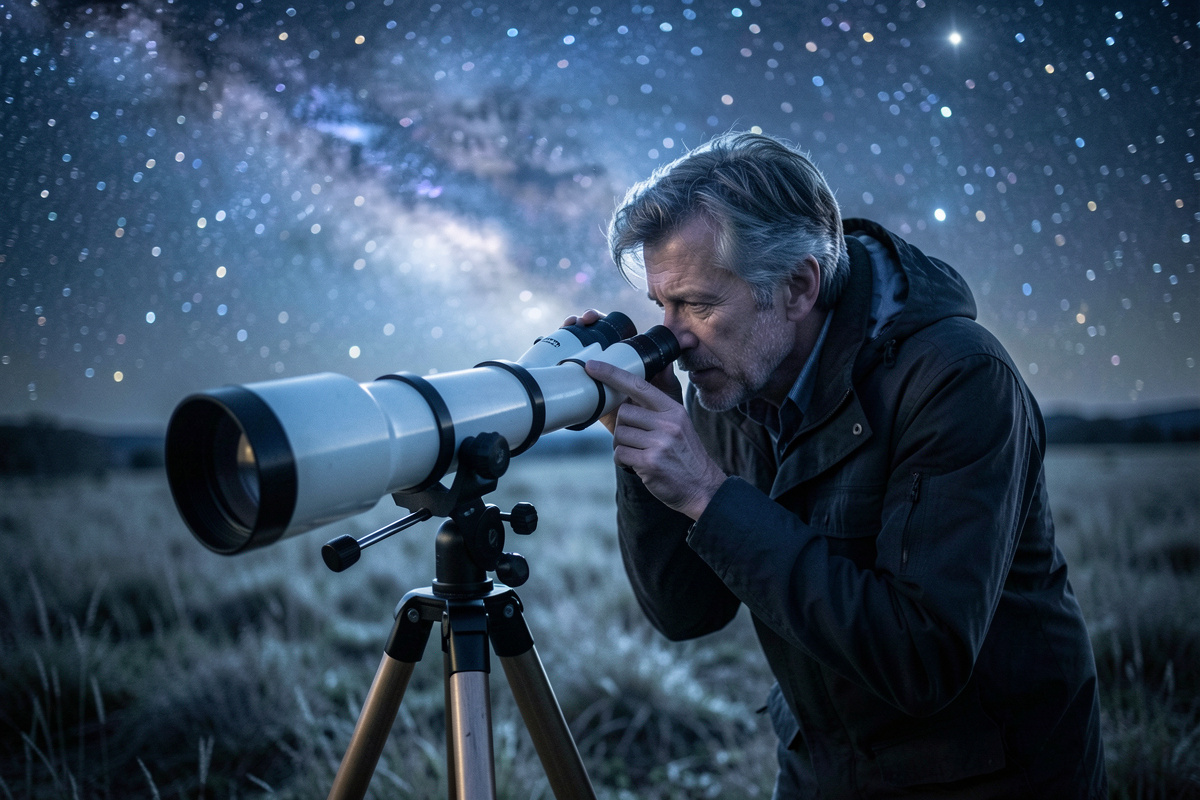

Nine times out of ten a blurry telescope isn’t broken glass — it’s a stack of fixable nuisances, and I check them in a fixed order: focus, cool-down, the sky itself, collimation, dew, then the eyepiece. Run that order and most “my telescope is ruined” panics evaporate in under five minutes at the eyepiece.
I’ve owned every common scope design side by side — a 12-inch Dob, a 127mm Mak, a 100mm ED apo, an 8-inch SCT — and every one of them has handed me a soft, mushy view at some point. The scope is rarely the problem. What follows is the exact triage I run, easiest and most-common first, so you stop guessing and start ruling things out.
First Suspect: You’re Not Actually at Focus
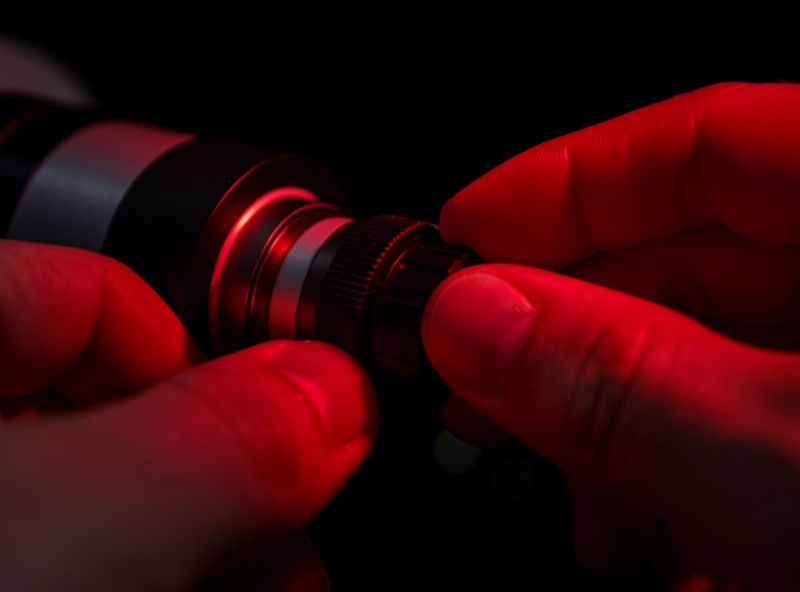
The single most common cause of a blurry view is that you never truly nailed focus — or you’re pushing magnification the eyepiece can’t deliver. Before touching anything else, rack the focuser slowly back and forth through the sharp point on a bright star and watch what happens.
Focus is fiddly because the sweet spot is narrow and a planet or faint nebula gives your eye nothing crisp to lock onto. That’s why I focus on a bright star first, then slew to the target. As you turn the knob, the star shrinks to the smallest, tightest dot — go a hair past and it bloats again. If you can’t find a clean minimum, you’re probably over-magnifying. A useful rule from my own observing logs: usable magnification tops out near 50x per inch of aperture on a perfect night, and most nights you’ll want far less. My 127mm Mak is theoretically good for ~250x, but I rarely run it past 180x because the air won’t hold it.
The deeper trap is exit pupil. Exit pupil is the aperture in millimeters divided by magnification, and once it drops below about 0.5mm the image goes dim and soft no matter how sharp your optics are. So that 6mm kit eyepiece stacked behind a Barlow in a small scope can manufacture “blur” out of thin air — you’re just emptying the cone of light. Back off the power and the view snaps to life.
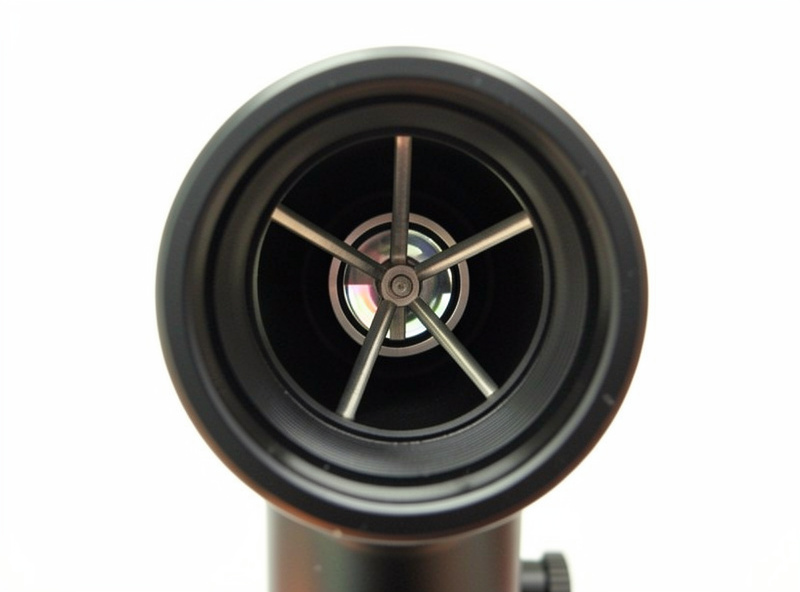
If you image, or you just want focus you can trust every time, a Bahtinov mask is the cheat code: it throws a diffraction pattern over a bright star and you adjust until the central spike sits dead-centered. It removes the guesswork entirely. You can find a Bahtinov mask sized to your scope for the price of a cheap eyepiece, and it pays for itself the first night. If you keep hunting for focus and never quite arrive, work through my dedicated telescope won’t focus fix walkthrough.
Give the Scope Time to Cool Down
If your optics are warmer than the night air, heat pours off the glass and tube walls as roiling currents right in the light path — and everything smears. This is enormous in a Nordic winter, where a scope coming out of a heated house can sit 20°C above ambient. No focuser fixes thermal currents; only time does.
Out under a clear winter sky here in suburban Sweden, the temperature gap between my living room and the garden can be 25 or 30 degrees, and that’s a recipe for a soft, shimmering view for the first half hour no matter how carefully I focus. The mass of glass matters: my 127mm Mak, with its thick corrector and closed tube, takes the longest to settle relative to its aperture, while the open tube of my 12-inch Dob breathes faster despite being far bigger. Rough numbers I plan around — a small refractor settles in 15–20 minutes, a mid SCT or Mak wants 45–60, and a large solid-tube reflector can need an hour-plus on a sharply cold night.
The fix is boring but it works: get the scope outside early. I set mine out while I’m still layering up and making coffee, and a cooling fan on the Dob’s primary cuts the wait roughly in half. You’ll watch a planet that was boiling at 9pm sit rock-steady by 10. That improvement is almost always cool-down, not the sky.
Sometimes It’s the Sky, Not the Scope
If the scope is focused and acclimated and the view still won’t hold steady, look up — you may be fighting the atmosphere itself, and nothing on the telescope can fix that. Two separate things are in play, and confusing them sends people down the wrong rabbit hole.
Seeing is atmospheric turbulence — how steady the air is. Bad seeing makes a planet boil and shimmer like a coin at the bottom of a pool, and it’s worst on objects low to the horizon, which is a permanent tax up here at northern latitudes where the planets ride low. Transparency is how clear and dark the sky is — high transparency means faint galaxies pop, but a transparent night is often a turbulent one, so you frequently trade one for the other.
You can’t fix the sky, but you can work with it. Magnify less on a soft night — drop to a longer eyepiece and the image firms up because you’re not amplifying the turbulence. Wait for the steady moments: even bad seeing comes in pulses, and if you keep your eye at the eyepiece, the planet snaps into crisp detail for a second or two at a time, and your brain stitches those glimpses together. For faint fuzzies, use averted vision — look slightly off to the side of the object so its light lands on the more sensitive part of your retina. If you’ve nailed focus and the view is technically sharp but flat and lifeless, that’s a different problem; I cover it in low-contrast washed-out telescope views.
Check Collimation — Especially on Reflectors and SCTs
If stars look like little comets or soft smears that never quite reach a clean point at focus, your optics are misaligned. A miscollimated scope literally cannot deliver a sharp focus, and Newtonians, Dobs, and SCTs all drift out of alignment with handling, temperature, and travel.
The honest test is a star test: center a bright star, defocus slightly, and look at the expanding disk of light with its central shadow. In a well-collimated scope that pattern is a clean set of concentric rings — a perfect bullseye. If the rings are lopsided, with the dark center shoved off to one side, you’re out of collimation and no amount of focusing will save you. My 12-inch Dob needs a quick touch-up nearly every session because the truss tubes flex; my apo refractor, by contrast, holds alignment for years and is the reference I trust when I want to know whether a soft view is the scope or the sky.
Collimation sounds intimidating and isn’t, once you’ve done it twice. A Cheshire eyepiece does the job for free in daylight; a laser collimator is faster in the dark. I keep both, and you can pick up a collimation tool for less than a mid-grade eyepiece. For the full step-by-step on getting those mirrors aligned, work through my telescope collimation guide.
As an Amazon Associate I earn from qualifying purchases.
Watch for Dew Quietly Softening the View
A view that started sharp and slowly went hazy over an hour usually isn’t your eyes getting tired — it’s dew condensing on a lens, corrector plate, or eyepiece. On humid or rapidly cooling nights, exposed glass radiates heat to the sky, drops below the dew point, and fogs over so gradually you don’t notice until everything’s milky.
This bites refractors, Maks, and SCTs hardest because they have an exposed front element pointed straight up at the cold sky. My 127mm Mak’s corrector will dew up within the hour on a still autumn night if I don’t manage it, and the worst part is how sneaky it is — there’s no single moment of failure, just a steady slide into soft and low-contrast. An eyepiece left out between targets fogs the same way the second you put your warm eye to it. A dew shield buys you time, a dew heater band solves it for the night, and you should never wipe the glass — let it dry or apply gentle warmth. Because this one has its own full diagnosis, I’ve put the detail in telescope eyepiece fogging up fix.
Last Stop: The Eyepiece and Dirty Optics
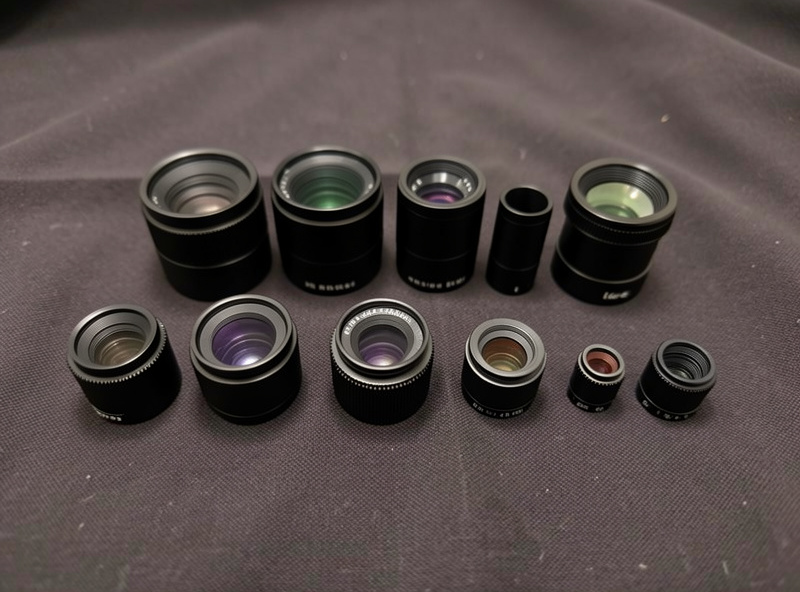
The eyepiece is half your optical system, and the cheap Plossl that came in the box is often the weakest link in the chain. If you’ve cleared focus, cool-down, seeing, collimation, and dew and the view is still mediocre, look at what you’re actually looking through.
I keep the original kit Plossls precisely so I can do honest “what you got in the box” comparisons, and the gap is real: swap a stock 25mm Plossl for a quality wide-field of the same focal length and the same target gains contrast, a flatter field, and edge sharpness that the budget glass smears away. Stacking a cheap Barlow behind a cheap eyepiece compounds every flaw and dims the view on top of it — that combo is a blur factory. Match magnification to the night with a sensible eyepiece instead; my eyepiece focal length and magnification primer shows how to pick the right one rather than just reaching for the most power.
Don’t ignore plain dirt, either. Dust on a mirror is mostly cosmetic, but fingerprints, dried dew spots, and grime on an eyepiece’s eye lens scatter light and kill contrast immediately. Clean the eyepiece lenses gently with proper optical fluid and a blower first — never a dry shirt-tail — and you’ll often recover more sharpness from a five-minute clean than from a new accessory. If you’ve run this whole ladder and you’re still stuck, my telescope troubleshooting and fixes hub connects every symptom to its fix.
Blurry Telescope Causes at a Glance
Here’s the whole triage in one place — the tell that points you to each cause, and what actually fixes it. Work top to bottom; the cheapest, most-common culprits are first.
| Cause | The tell (how it looks) | The fix |
|---|---|---|
| Not at focus / too much power | Star never shrinks to a tight dot; dim, mushy, no clean minimum | Focus on a bright star, back off magnification, use a Bahtinov mask |
| Scope not cooled down | Shimmering “heat haze” inside the view, worst in the first half hour | Set scope out early; add a cooling fan; wait 20–60+ min by aperture |
| Bad seeing (turbulence) | Planets boil and ripple, worse low to the horizon; comes in pulses | Lower magnification, wait for steady moments, observe higher targets |
| Poor transparency / averted-vision miss | Faint objects washed out or invisible; bright targets still fine | Use averted vision; choose a more transparent, darker night |
| Collimation off | Stars look comet-shaped; defocused rings lopsided, not concentric | Star-test, then align with a Cheshire or laser collimator |
| Dew on glass | View starts sharp, slowly goes milky and low-contrast over the hour | Dew shield + heater band; never wipe; let glass warm and dry |
| Cheap eyepiece / Barlow / dirty optics | Soft, low-contrast edges; flat field; smeared even when focused | Upgrade from kit Plossl; ditch stacked Barlows; clean eye lens |
Why is my telescope blurry no matter how I focus?
If you cannot find a sharp point at all, you are usually over-magnifying past what your aperture or the night’s seeing allows, or your scope is out of collimation. Drop to a longer eyepiece and star-test for alignment.
How long should I let my telescope cool down?
Plan on 15 to 20 minutes for a small refractor, 45 to 60 for a mid SCT or Mak, and an hour or more for a large solid-tube reflector on a sharply cold night. A cooling fan roughly halves the wait.
Is a blurry view the telescope’s fault or the sky’s?
Often the sky. Bad seeing makes planets boil and shimmer, worst near the horizon, and no scope adjustment fixes it. Lower your magnification and wait for the brief steady moments the atmosphere hands you.
Can bad collimation make a telescope blurry?
Yes. A miscollimated reflector or SCT cannot reach a clean focus, so stars look like soft comets. Defocus a bright star: if the rings are lopsided instead of concentric, align the optics with a Cheshire or laser collimator.
Why did my telescope view get hazy partway through the night?
That is almost always dew condensing on a lens, corrector, or eyepiece as the glass cools below the dew point. Use a dew shield and heater band, and never wipe the glass; let it warm and dry instead.
Will a better eyepiece make my telescope sharper?
Often, yes. The eyepiece is half the optical system, and the kit Plossl is usually the weakest link. A quality wide-field of the same focal length gains contrast, a flatter field, and edge sharpness over budget glass.
