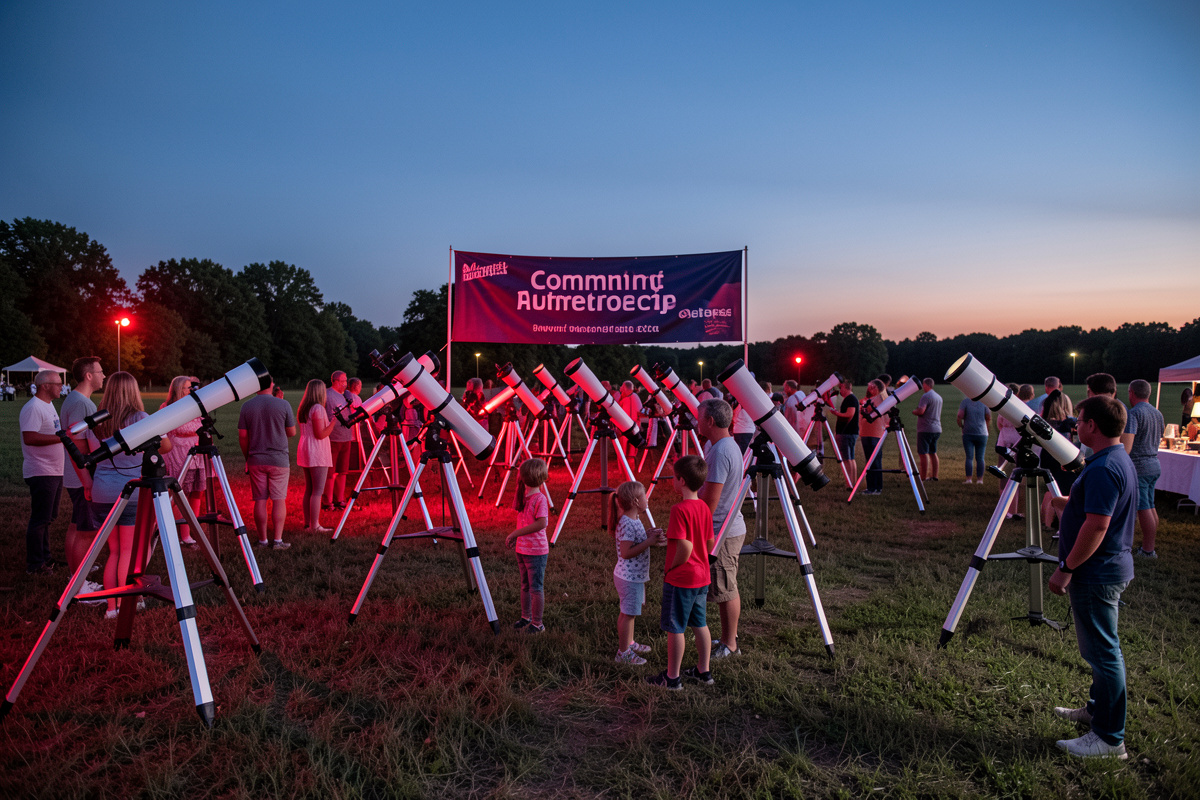

An astronomy club is the single fastest way to deepen anyone’s interest in the sky — child or adult. A local club gives you access to telescopes worth thousands of dollars — a 16-inch club Dob alone runs $2,000+ — people who’ll happily teach you, public observing nights that welcome families, and the contagious enthusiasm that turns a casual look into a lifelong hobby. Most clubs are free or nearly free to attend, and you don’t need to own any gear to show up.
I came up the way most people do — alone in a backyard, learning from books and trial and error. Putting a beginner next to other people’s scopes does in one night what months of solo fumbling can’t: a child looks through a big Dobsonian from a dark site, sees a galaxy as actual structure instead of the smudge they get at home, and the hobby clicks. This guide covers how clubs work, how to find one, and how to run your own school or scout outreach. It’s the community chapter of my broader astronomy for kids family guide.
Why a Club Beats Going It Alone
The biggest leap a beginner can make is looking through a range of telescopes they don’t own. At a club observing night you might see the Moon through a refractor, Saturn through an SCT, and a galaxy through a 16-inch Dobsonian — all in one evening, with someone standing beside you explaining what you’re looking at. That breadth is impossible to buy and impossible to replicate alone.
The value runs deeper than the views. Clubs short-circuit the expensive mistakes — the members will steer a newcomer away from the box-store “400x” scope and toward the gear that actually works, saving far more than the cost of membership. They demystify the skills that feel impenetrable from a book: collimation, star-hopping, polar alignment, all of it makes sense in ten minutes when someone shows you on real equipment. And for a child, seeing adults who are genuinely passionate about the sky reframes astronomy from a school subject into something real people love. If you’re still deciding what to buy, the club’s collective wisdom pairs perfectly with my best telescope for kids guide and the general telescope buying guide — bring your shortlist and ask.
How to Find a Club or Public Observing Night
Most populated regions have at least one amateur astronomy society, and the majority run public events specifically designed to welcome newcomers and families. You rarely need to be a member to attend a public star party or open observing night — you just turn up, often for free, and look through whatever’s pointed at the sky.
Start by searching for your town or region plus “astronomy club,” “astronomical society,” or “star party.” Check the events calendars at local science centres, planetariums, universities, and nature reserves, which frequently host or co-run public nights. Public libraries increasingly lend telescopes and host astronomy talks, too. The most family-friendly entry points of all are the events tied to a sky event — a lunar eclipse, a meteor shower peak, or a bright planetary conjunction — because clubs turn out in force and the atmosphere is festive. Bring the kids, dress everyone warmer than you think you need, and don’t worry about not owning a scope; the whole point of these nights is to share the ones that are there. The apps in my stargazing apps guide will help you and the kids identify what the club members are showing you.
What to Expect at Your First Event
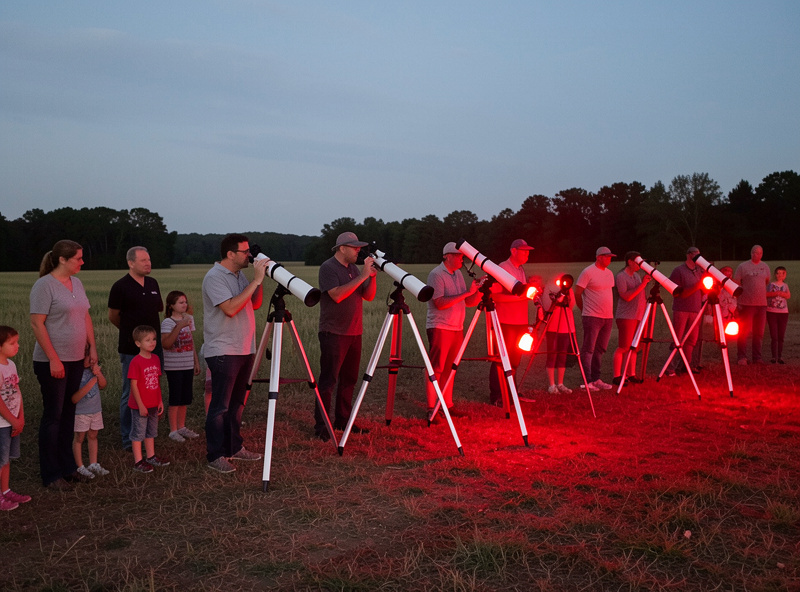
A first club night is more relaxed than newcomers fear. People are friendly, genuinely glad you came, and used to explaining the basics. There’s an etiquette, but it’s simple and mostly about protecting everyone’s night vision and not bumping the expensive equipment — easy to follow once you know the few rules.
The big one is light discipline: no white phone screens or flashlights, because dark-adapted eyes take twenty minutes to build and a single flash of white light wrecks everyone’s. Switch your phone to its dimmest red night mode or leave it pocketed, and bring a red flashlight if you have one. When you look through someone’s scope, don’t touch the telescope or grab the eyepiece — just lean in and look, and ask before adjusting anything. Kids should be coached on this beforehand so the night stays fun rather than tense. Beyond that, ask questions freely; club members love showing off their setups and explaining what you’re seeing. It’s also the best possible place to compare scope designs side by side before you buy — the same owned-every-design comparison I make in my best beginner telescopes guide, except you get to look through them yourself.
Running Your Own Outreach: Schools, Scouts, and Community
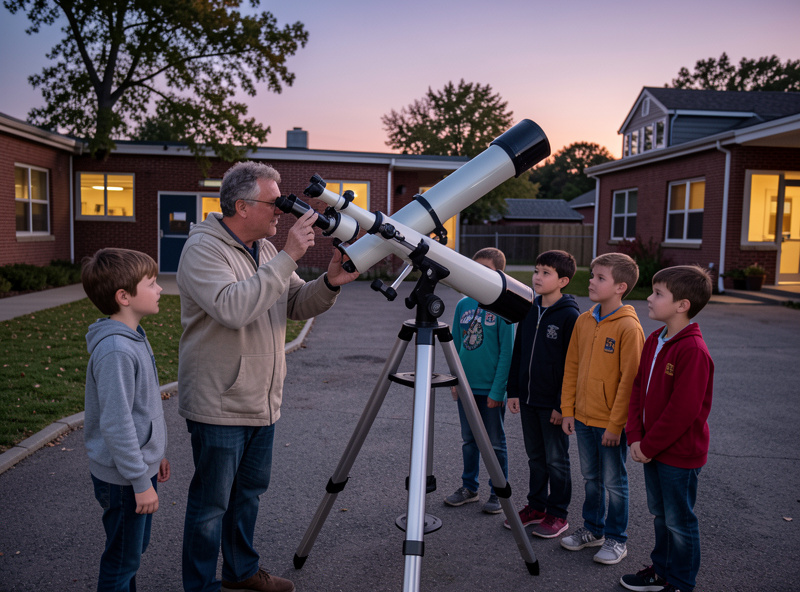
If you’ve got a scope and some enthusiasm, hosting an outreach event for a school class, a scout troop, or your neighbourhood is hugely rewarding and easier than it looks. The recipe is simple: pick a bright, easy target, keep the queue moving, set expectations out loud, and have a cloudy-night backup plan ready. You don’t need to be an expert — you need to be a few steps ahead of the kids.
The Moon is the perfect outreach target — bright, dramatic, forgiving of light pollution, and impossible to miss in the eyepiece — so schedule around the days near first quarter when the craters show best, not the full Moon when it’s flat and glary. Keep one scope on the Moon and, if you have a second, put it on a bright planet. Pre-aim and let the line file past quickly; thirty seconds each keeps a crowd of kids engaged rather than restless. Say out loud what they’re about to see before they look — “this is the Moon, those round shapes are craters” — because a child who knows what they’re looking at is far more excited than one who’s confused. Have a backup for clouds: a few astronomy images on a tablet, a meteorite to pass around, or a quick solar-system scale walk works when the sky doesn’t cooperate. And one absolute rule for any daytime outreach: never point a scope anywhere near the Sun without a proper full-aperture white-light solar filter, and never use a screw-in eyepiece “sun” filter — with a crowd of children, that safety discipline is non-negotiable. The hands-on activities in my astronomy projects for kids guide double as excellent cloudy-night outreach material.
Attending vs Joining: What Membership Adds
You can attend most public club nights forever without paying a cent, and for many families that’s enough. But paid membership — usually a modest annual fee, often discounted for families and students — unlocks a tier of benefits that’s hard to get any other way, and it’s where a keen child’s interest really accelerates.
The standout perk at many clubs is a loaner-scope programme: members can borrow a club telescope for weeks at a time, which lets a family try a real instrument before committing to a purchase. That alone can be worth the membership, since it sidesteps the most expensive mistake in the hobby — buying the wrong scope. Membership also typically grants access to a club’s dark-site: a privately arranged observing field away from town lights, gated to members, where the deep-sky targets that are invisible from a suburb finally appear. For a teenager who’s caught the bug, the mentorship is the real prize — experienced members who’ll teach star-hopping, help with a first astrophotography rig, and answer the endless questions that a book can’t. Clubs also run equipment swap-meets where used gear changes hands at fair prices among people who know what they’re selling, which is a far safer used market than a generic classifieds site. If your child leans toward the imaging side of the hobby, that mentor network is invaluable; the learning curve there is steep, and having someone to ask shortcuts months of frustration.
Outreach Under Northern Skies
Where you run outreach changes when you can run it, and far-northern organisers face a calendar most guides ignore. From a high latitude like mine in Sweden, summer is nearly useless for evening outreach because the sky never gets properly dark — but that same season hands you the Sun and, with the right safety gear, daytime solar outreach becomes the star of the show.
The flip side is winter, which is outreach gold at northern latitudes: it’s dark by mid-afternoon, so a school can run an observing event right after class, before the youngest kids’ bedtimes, instead of long into the night. The catch is cold, so winter outreach lives or dies on warmth — short sessions, warm drinks, and indoor breaks keep a group of children happy. Bortle realities matter too: even a club’s big scopes can’t conjure faint galaxies out of a light-polluted schoolyard, so stick to the Moon, planets, and bright clusters for urban outreach, and save the deep-sky for the dark-site trips covered in my dark-sky locations guide. If a venue is washed out by nearby security lighting, the practical fixes in my piece on coop and security light pollution apply just as well to a schoolyard.
However you start — turning up to a public night, joining a society, or hosting your own backyard event — the community is what makes the hobby stick. Once you’ve got a taste for observing with others, the natural next step is running your own family night; my star party guide for families covers the logistics end to end, my guide to stargazing with kids handles the youngest first-timers, and the astronomy for kids family guide ties the whole journey together from first look to first scope.
More in This Series
- Astronomy for Kids: Family Guide — the full journey from first look to first scope
- Star Party Guide for Families — host or join a shared night
- How to Start Stargazing With Kids — the no-gear first nights
- Simple Astronomy Projects for Kids — cloudy-night outreach material
- Best Telescope for Kids 2026 — what to actually buy
