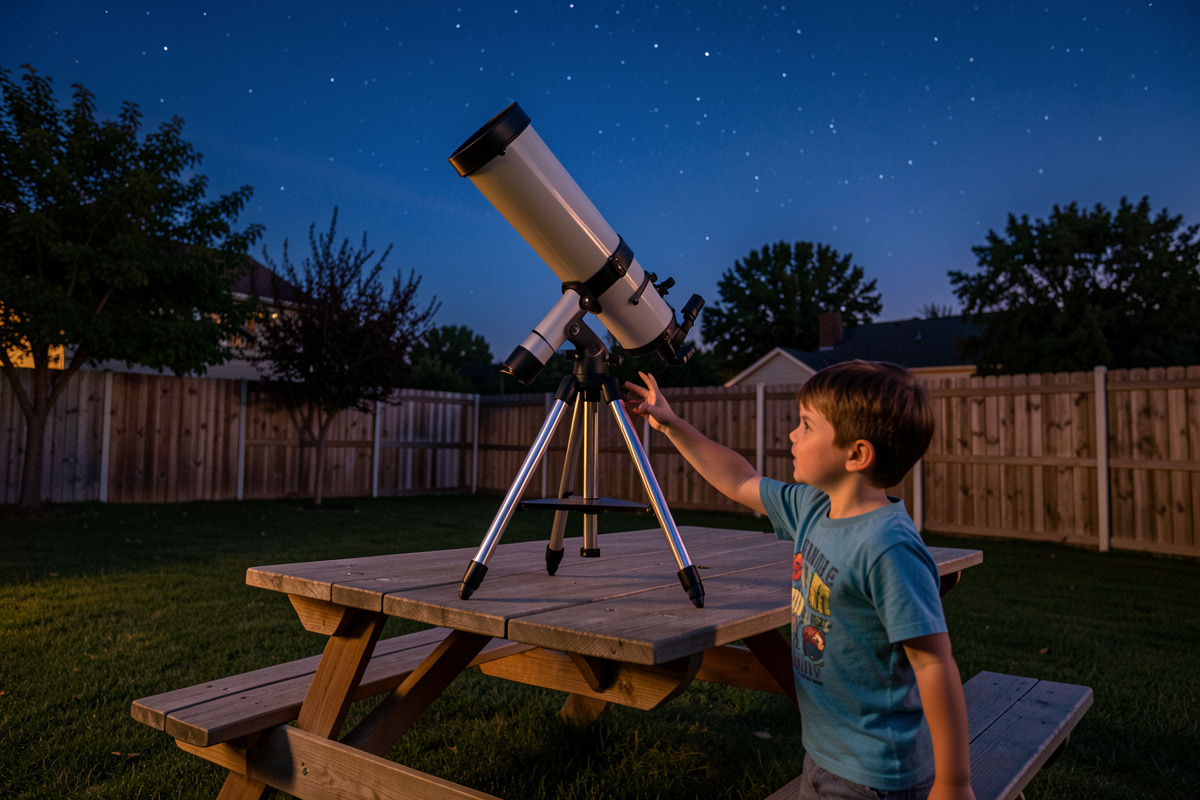

The best telescope for most kids in 2026 is a small tabletop Dobsonian in the 76mm to 130mm range — not the high-magnification refractor on the box-store shelf. A tabletop Dob aims with a simple push of the hand, sits stable on any table, and shows the Moon, Saturn’s rings, and Jupiter’s moons without the wobble that ends so many young observers’ interest in a single frustrating night.
I’ve put scopes of every design on the same lawn, and watched plenty of kids try them. The pattern is consistent: children get on with a telescope they can aim intuitively and abandon one that fights them. That single factor — can the child point it at the Moon without help — predicts whether a scope gets used more reliably than aperture, brand, or price. This guide picks the right scope by age and budget, names the design that works, and flags the one to avoid. It’s the buying companion to my broader astronomy for kids family guide.
The One Rule: Buy Aperture and Stability, Not Magnification
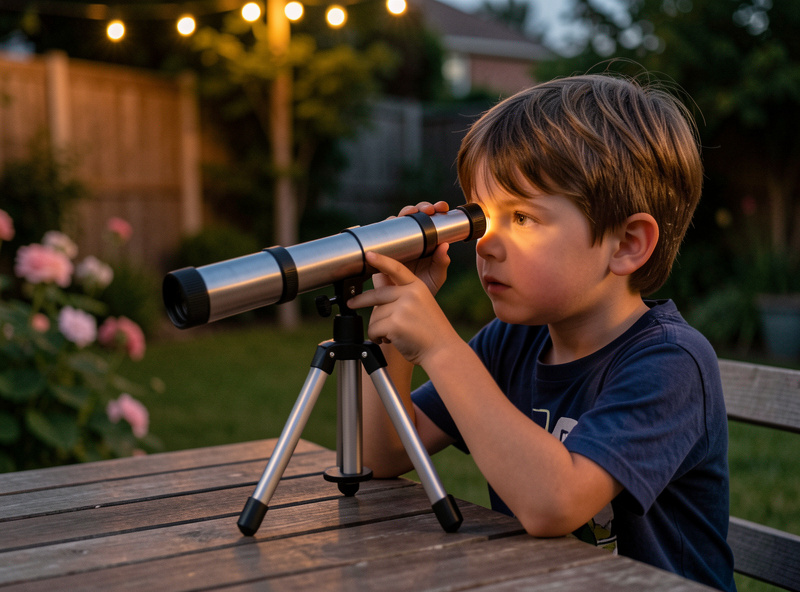
Ignore the magnification number on the box entirely. A telescope’s useful power is limited by its aperture — the diameter of its main lens or mirror — and by the steadiness of its mount, not by the eyepiece. The “525x” printed on a 60mm refractor is marketing fiction; that scope tops out around 120x before the image turns to mush, and the wobbly tripod makes even 50x a shaking blur.
Aperture is what gathers light and resolves detail, so a child sees more through a bigger, steadier scope at modest power than through a tiny one cranked to its advertised maximum. Just as important is the mount: a scope that shudders for five seconds every time a child touches the focus knob is unusable for a beginner. This is exactly why the tabletop Dobsonian wins for kids — it puts the maximum mirror over the simplest, steadiest base, with no fragile tripod legs to knock. The same logic drives my picks for grown-up beginners in the best beginner telescopes guide and the reasoning in the first-telescope buying guide.
Why a Tabletop Dobsonian Beats a Refractor for Children
A tabletop Dobsonian is a reflector telescope sitting on a small rotating base instead of a tripod. The child grabs the tube and swings it to point — up, down, side to side — exactly the way they’d point a garden hose. There’s no slow-motion knob to fiddle, no tripod to level, and nothing to tip over. For a kid, that intuitive aiming is the whole game.
Compare that to a typical beginner refractor on an equatorial mount: the tube moves along two tilted axes that don’t match up, down, left, right, and a child trying to follow the Moon ends up cranking the wrong knob while the target drifts out of view. The frustration is real and it’s the number-one reason kids quit. A 100-130mm tabletop Dob also gathers far more light than the 60-70mm refractors sold at the same price, so the Moon shows more craters and the planets show more detail. The trade-off is that a reflector occasionally needs its mirrors aligned — collimation — but on a small Dob that’s a five-minute job a couple of times a year, not a nightly chore.
Picks by Age and Budget
The right scope shifts with the child’s age and how much you want to spend, but the design stays the same — a Dobsonian almost every time. Below is how I’d match a scope to a child, from the youngest beginners to a keen older kid who’ll grow into a serious instrument.
| Child’s Age | Recommended Scope | Aperture | Rough Budget | Why This One |
|---|---|---|---|---|
| 5-7 (with a parent) | 10×50 binoculars | 50mm | Low | Easiest to aim, indestructible, the Moon and Jupiter’s moons; a scope can wait |
| 7-9 | 76-100mm tabletop Dobsonian | 76-100mm | Low | Light enough to carry, simple push aiming, great Moon and planet views |
| 9-12 | 114-130mm tabletop Dobsonian | 114-130mm | Low to medium | More aperture for planets and brighter clusters; still child-friendly |
| 12+ / keen kid | 150-200mm full-size Dobsonian | 150-200mm | Medium | Reaches galaxies and nebulae from a dark site; grows with them for years |
| Any age, tech-loving | Smart/GoTo tabletop scope | 100mm+ | Medium to high | Auto-finds targets; great if the parent will manage the setup and charging |
A note on the smart and GoTo scopes that get heavily marketed to families: they genuinely can find objects for you, which removes the star-hopping learning curve, but they add batteries, phone apps, alignment routines, and cost. For a young child whose parent is happy to run the tech, they can work well. For a kid you want to learn the sky themselves, a manual Dob teaches more. I unpack the mount side of that decision in my telescope mount guide and the alt-az vs equatorial vs GoTo breakdown.
As an Amazon Associate I earn from qualifying purchases. Rather than chase a specific model number that may be out of stock by the time you read this, browse current tabletop Dobsonian telescopes and match the aperture to the age band above.
The Scope to Avoid — and How to Spot It
Avoid any telescope whose headline feature is a huge magnification number, especially the 50-70mm refractors on flimsy aluminium tripods advertising “400x” or “525x.” These are the scopes that end kids’ interest in astronomy. The optics are usually fine; the mount and the tiny aperture are what ruin the experience.
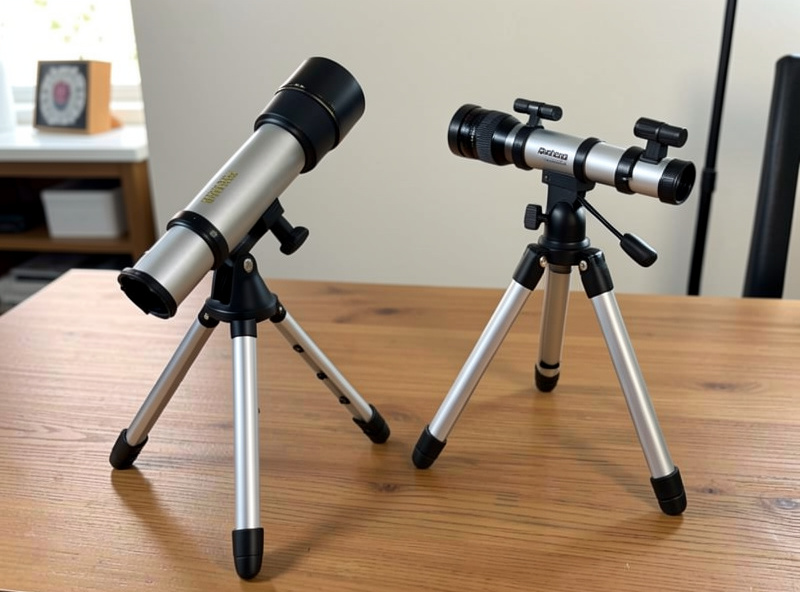
The tells are easy once you know them. A giant magnification claim on a small scope is the clearest red flag — no 60mm scope usefully reaches anywhere near those numbers. A spindly photo-style tripod that wobbles when you brush it means every view will shake. A box that shows planets filling the eyepiece like Hubble photos is lying about what the child will see. And a bag of plastic eyepieces plus a “Barlow lens” promising to triple the power is padding the spec sheet, not the experience. If you’ve already been gifted one of these, all is not lost — pair it with the realistic expectations and Moon-first approach in my guide to stargazing with kids and you can still get some good nights out of it before upgrading.
The Accessories That Actually Matter
The scope is only half the optical system — the eyepiece is the other half, and the cheap ones in the box hold a good telescope back. One decent mid-range eyepiece, a red flashlight, and a planisphere or star-map app will improve a child’s nights more than any spec upgrade, and together they cost a fraction of the scope.
Most kids’ scopes ship with one or two basic eyepieces that are usable but not great. Adding a single better wide-field eyepiece in the 6-10mm range for planets transforms the planetary view, and it carries over to the next scope when you upgrade. A red flashlight protects the dark-adapted vision that takes twenty minutes to build, and a star map — paper or app — turns aimless sweeping into finding specific targets. I cover eyepiece choice in depth in the telescope eyepiece guide and name current picks in best telescope eyepieces 2026. What you don’t need on day one is a pile of filters; they’re oversold to beginners, and a child sees plenty without them. Once you’re ready to push into darker skies and fainter targets, my dark-sky locations guide matters far more than any accessory.
Frequently Asked Questions
What is the best telescope for a 7-year-old?
A small 76-100mm tabletop Dobsonian is ideal for a seven-year-old. It is light enough to carry, aims with a simple push of the hand, and shows the Moon’s craters and the bright planets clearly. For younger children, 10×50 binoculars are an even easier and cheaper starting point.
Is a Dobsonian or a refractor better for kids?
A tabletop Dobsonian is usually better for kids. It aims intuitively, gathers more light than a same-price refractor, and sits stable on a table with no wobbly tripod. Beginner refractors on equatorial mounts confuse children because the tube moves along tilted axes that don’t match up and down.
Are smart or GoTo telescopes worth it for children?
They can be, if a parent manages the setup, app, and charging. GoTo and smart scopes automatically find objects, which removes the star-hopping learning curve. But they cost more and add complexity, and a manual Dobsonian teaches a child the sky better if learning is the goal.
How much should I spend on a child’s first telescope?
You can get an excellent first scope without overspending — a capable tabletop Dobsonian sits in the low budget range, well under what families fear. Spending more buys aperture, not necessarily a better child experience. Avoid the cheapest box-store refractors; their wobbly mounts make them a false economy.
Why should I avoid telescopes that advertise 400x or 500x?
Because the magnification is fictional. A small 60mm telescope usefully reaches only about 120x before the image breaks down, and the flimsy tripods these scopes use shake at any power. The huge magnification number is a marketing tell that the scope will frustrate a child rather than delight them.
Related Guides
- Astronomy for Kids: Family Guide — the full path from eyes to eyepiece
- How to Start Stargazing With Kids — what to do before you buy anything
- Binoculars vs Telescope for Beginners — why binoculars often come first
- Best Beginner Telescopes 2026 — the grown-up budget picks
- Telescope Buying Guide 2026 — how to choose your first scope
