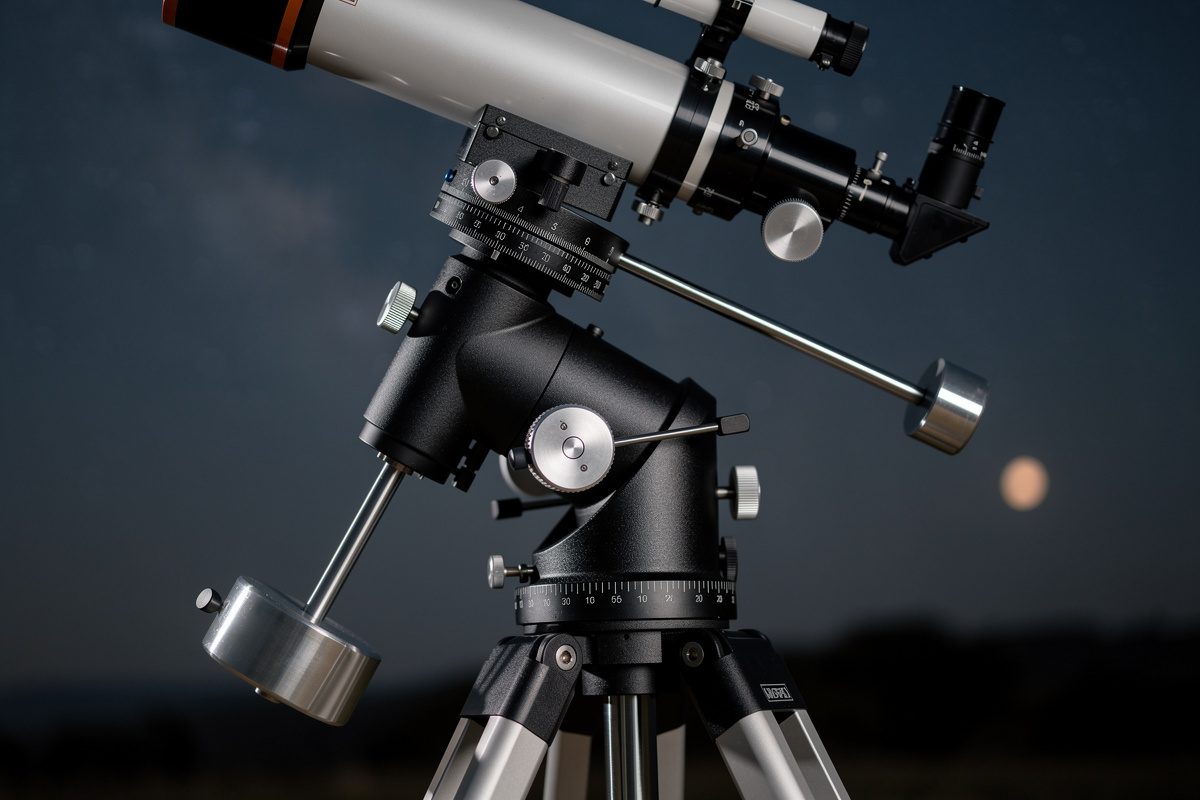

Telescope mounts come in three main types: alt-azimuth for intuitive pointing, equatorial for tracking celestial motion, and GoTo computerized mounts for automated object location. Alt-azimuth mounts suit visual observing and Dobsonians, equatorial mounts enable astrophotography, and GoTo systems save time in light-polluted skies where star-hopping is difficult.
Mount choice determines how your telescope performs in practice more than any other factor except the optics themselves. A great telescope on a shaky mount produces blurry images. A modest telescope on a smooth, stable mount delivers satisfying views every time. Understanding the tradeoffs between mount types prevents the most common regret in amateur astronomy: buying a mount that cannot handle the telescope’s weight or the observer’s needs.
Alt-Azimuth Mounts: Simple, Lightweight, and Intuitive
Altitude-azimuth mounts move in two perpendicular axes — up-down (altitude) and left-right (azimuth) — just like a camera tripod. They require no polar alignment, set up in under a minute, and are the standard mount for Dobsonian telescopes and most budget refractors. Alt-az mounts are the best choice for visual observers who prioritize simplicity and quick setup.
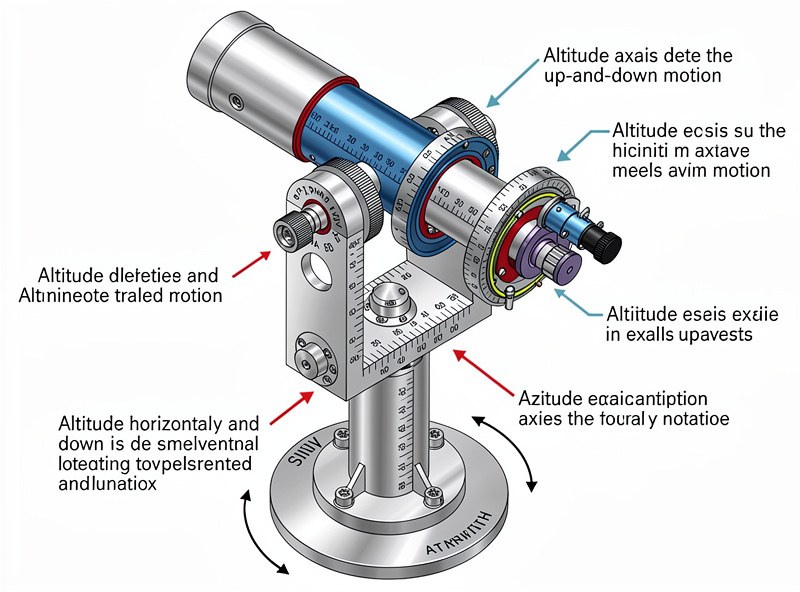
Dobsonian mounts are the most common alt-az design, using a lazy-susan azimuth bearing and a rocker-box altitude bearing. An 8-inch Dobsonian on its mount weighs 40 to 50 pounds total and sets up in 30 seconds — place the base on the ground, drop the tube into the cradle, and start observing. Compare this to an equatorial mount of similar capacity, which weighs 30 to 50 pounds for the mount head alone, plus tripod, plus counterweights, plus 10 to 15 minutes of polar alignment.
The limitation of alt-az mounts is field rotation. Objects move in arcs across the sky, and an alt-az mount must constantly adjust both axes to track them. At low magnification (under 100x), this drift is slow enough that objects stay in the field for several minutes before needing manual nudging. At high magnification (200x and above), objects drift out of the field in 15 to 30 seconds, which limits planetary and double-star observing comfort.
Alt-az mounts also cannot be used for long-exposure astrophotography because the field rotation creates star trails even with perfect tracking. For deep-sky imaging, an equatorial mount is mandatory. Alt-az mounts with tracking motors ($150 to $400 add-on for Dobsonians) solve the tracking problem for visual use but do not address field rotation for photography.
Equatorial Mounts: Tracking Made Simple with One Knob
Equatorial mounts tilt one axis to align with Earth’s rotation axis (the celestial pole), allowing single-axis motorized or manual tracking to keep objects centered in the eyepiece. Once polar aligned, turning a slow-motion knob or engaging a clock drive compensates for Earth’s rotation and keeps any object stationary in the field for hours.
German equatorial mounts (GEMs) are the standard design for telescopes up to about 40 pounds of payload. A GEM consists of a tripod, wedge-shaped mount head, counterweight shaft, and counterweights. The telescope attaches to one side of the declination axis and counterweights balance it on the other side. Popular GEMs include the Sky-Watcher EQ5 ($350 to $450, 25-pound capacity), HEQ5 ($550 to $700, 30-pound capacity), and EQ6-R ($900 to $1,200, 44-pound capacity).
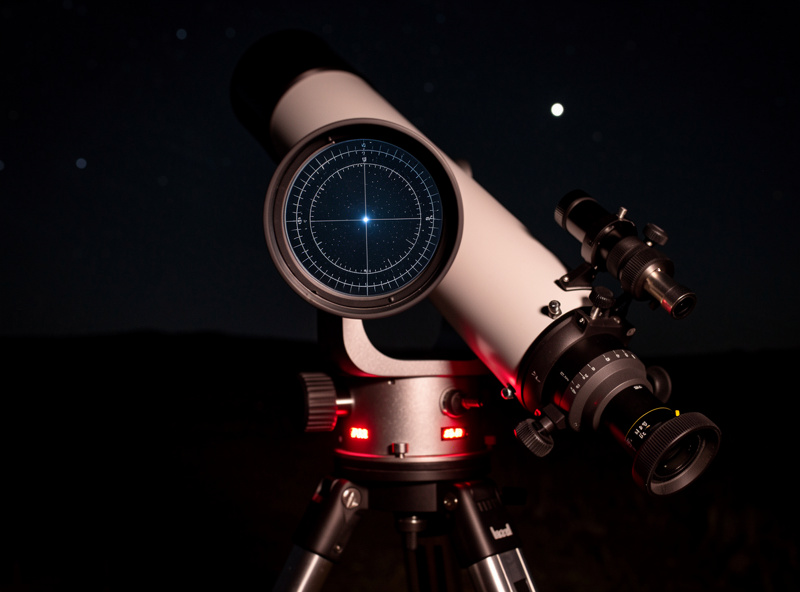
Polar alignment is the critical step that makes equatorial mounts work. Using the mount’s polar scope to center Polaris (in the Northern Hemisphere) takes 5 to 10 minutes and provides tracking accuracy sufficient for visual use and short-exposure astrophotography. For long-exposure deep-sky imaging, precise polar alignment using drift alignment or a software-assisted method takes 20 to 30 minutes but eliminates field rotation entirely.
The tradeoff for equatorial mounts is weight and setup time. An EQ6-R with tripod, counterweights, and an 8-inch Newtonian weighs 80 to 100 pounds total and takes 15 to 20 minutes to set up, polar align, and balance. For observers who want to grab a telescope and observe for 30 minutes, an alt-az mount makes more sense. For observers who plan dedicated sessions of 2+ hours and want tracking, an equatorial mount pays for itself in comfort.
GoTo Mounts: Automated Object Location
GoTo mounts add computerized servo motors, a hand controller with a database of 10,000 to 40,000 objects, and automated slew capability. After a star alignment procedure (typically centering 2 to 3 bright stars), the mount calculates its orientation and can automatically slew to any object in its database. You select Messier 42 from the menu, press Enter, and the mount drives to the Orion Nebula.
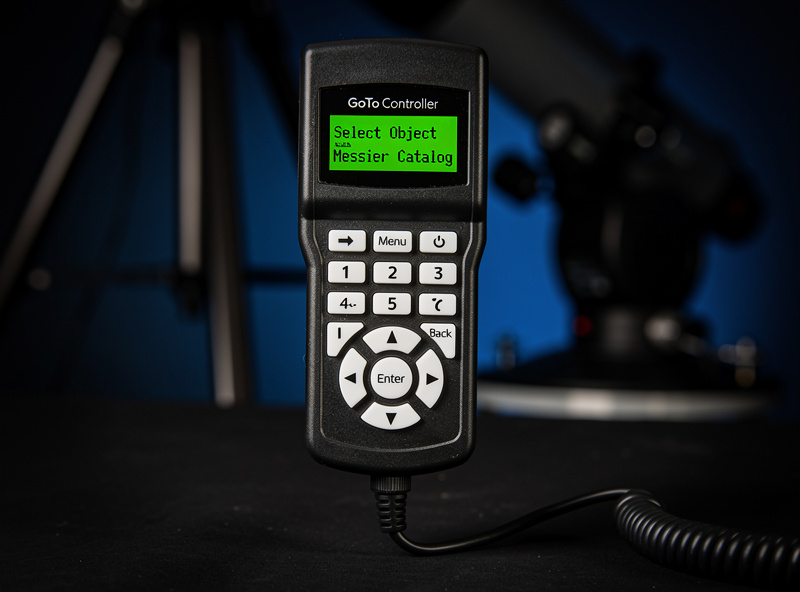
GoTo mounts are available in both alt-az and equatorial configurations. Alt-az GoTo mounts (like the Celestron NexStar SE series, $500 to $900) provide tracking and automated pointing for visual use. Equatorial GoTo mounts (like the Sky-Watcher EQ6-R Pro SynScan, $1,100 to $1,400) provide tracking suitable for astrophotography.
The greatest value of GoTo is for observers in light-polluted skies where star-hopping from naked-eye stars to faint deep-sky objects is extremely difficult. In Bortle 7 or 8 skies, a GoTo mount finds objects in seconds that would take 10 to 20 minutes to locate manually — if you can find them at all through the washed-out sky.
GoTo mounts require power. A 12V 7Ah sealed lead-acid battery ($25 to $35) powers most GoTo mounts for 8 to 12 hours. Without power, a GoTo mount becomes a manual mount — the motors do not work, but the mount still holds the telescope. Always bring a backup power source or be prepared to manually push the telescope to objects if the battery dies.
Choosing the Right Mount Payload Capacity
Payload capacity is the maximum weight a mount can hold and track accurately. Exceeding the rated payload degrades tracking accuracy, makes the mount sluggish during slews, and can damage the gears. Always choose a mount rated for at least 50 percent more than your telescope and accessories weigh.
Common telescope weights for mount selection: 5-inch refractor with diagonal and eyepiece = 8 to 12 pounds; 6-inch Newtonian with rings and finder = 12 to 15 pounds; 8-inch SCT with diagonal and finder = 14 to 18 pounds; 8-inch Dobsonian tube = 20 to 25 pounds; 10-inch Dobsonian tube = 28 to 35 pounds. Add 2 to 4 pounds for a guide scope and camera if doing astrophotography.
For visual-only use, an alt-az mount or Dobsonian base handles any weight because there is no tracking motor to overload. For tracked equatorial use, a mount rated for 25 pounds handles a 6-inch Newtonian or 8-inch SCT comfortably. For astrophotography, you want the mount loaded to no more than 50 to 60 percent of its rated capacity for best tracking — an EQ6-R rated at 44 pounds performs best with 22 to 26 pounds of telescope and camera.
Mount Accessories and Upgrades
Mount accessories improve tracking accuracy, convenience, and capability. Polar alignment scopes, guide scopes, counterweights, and vibration suppression pads are the most impactful upgrades for equatorial mounts.
A polar alignment scope ($30 to $80 if not included with the mount) allows centering Polaris in the field for basic polar alignment. Most mid-range and higher equatorial mounts include one. For astrophotography, a dedicated polar alignment routine using PHD2 or SharpCap ($10 software license) provides arcminute-level accuracy without a polar scope.
Vibration suppression pads ($20 to $40 for a set of three) sit under the tripod legs and absorb wind gusts, ground vibrations, and observer movements. They are the cheapest and most effective upgrade for any tripod-mounted telescope. Without pads, touching the focuser creates 2 to 5 seconds of visible vibration at high magnification. With pads, vibration dampens in under 1 second.
Counterweights are required for equatorial mounts and must be matched to the telescope weight on the opposite side of the declination axis. Most mounts include one or two counterweights rated for their maximum payload. Additional counterweights ($20 to $40 each) are needed when using heavier telescopes or when adding guide scopes and cameras that shift the balance point.
Mount Comparison Table
| Feature | Dobsonian Alt-Az | Manual EQ | Alt-Az GoTo | EQ GoTo |
|---|---|---|---|---|
| Setup Time | 30 seconds | 10-15 minutes | 5-10 minutes | 15-20 minutes |
| Tracking | Manual nudge | Single-axis manual/motor | Dual-axis motor | Dual-axis motor |
| Astrophotography | No | Short exposures only | No (field rotation) | Yes |
| Weight (8″ scope setup) | 40-50 lbs | 60-80 lbs | 50-65 lbs | 75-100 lbs |
| Price Range | $300-$600 | $300-$700 | $500-$1,200 | $800-$2,500 |
| Best For | Budget visual | Tracking visual | Light-polluted visual | Astrophotography |
Related Articles
Telescope Accessories Guide: Eyepieces, Filters, Mounts, and Must-Haves — The complete accessory overview for all telescope equipment.
Dobsonian Telescopes: Why They Are the Best Value in Astronomy — Why alt-az Dobsonian mounts dominate visual astronomy.
Astrophotography Guide: Equipment, Settings, and Techniques — Equatorial GoTo mount requirements for imaging.
Telescope Buying Guide 2026: How to Choose Your First Telescope — How mount type affects your telescope choice.
Best Telescopes for Beginners in 2026: Top Picks by Budget — Pre-mounted telescope packages by price.
What mount type is best for a beginner telescope?
An alt-azimuth Dobsonian mount is the best beginner choice because it sets up in 30 seconds, requires no polar alignment, and costs less than equatorial alternatives. The simple push-to pointing lets beginners focus on observing instead of mount mechanics.
Do I need a GoTo mount for visual observing?
No. GoTo helps most in light-polluted skies above Bortle 6 where star-hopping is difficult. Under dark skies, a Dobsonian with a Telrad finder and printed atlas reaches the same objects. GoTo adds $300 to $800 to the cost without improving image quality.
What is polar alignment and why does it matter?
Polar alignment points an equatorial mount’s rotation axis at the celestial pole so that one motor axis tracks the sky’s apparent motion. Without accurate polar alignment, objects drift out of the eyepiece and astrophotography produces star trails. It takes 5 to 15 minutes with a polar scope.
How much payload capacity do I need?
Choose a mount rated for at least 50 percent more than your telescope and accessories weigh. For astrophotography, load the mount to no more than 50 to 60 percent of its rated capacity. An 8-inch SCT weighing 15 pounds needs a mount rated for 23 or more pounds for visual and 30 or more for imaging.
Can I upgrade a manual mount to GoTo later?
Many equatorial mounts accept GoTo upgrade kits ($200 to $500) that replace the slow-motion controls with servo motors and add a hand controller. Check your mount manufacturer for compatibility before purchasing. Dobsonian telescopes can add tracking platforms ($150 to $400) but not full GoTo without replacing the base entirely.
What is the difference between alt-az and equatorial tracking?
Alt-az tracking moves both axes simultaneously to follow objects, which causes field rotation that prevents long-exposure photography. Equatorial tracking moves only one axis because the mount is tilted to align with Earth’s rotation, eliminating field rotation. For visual use, both track equally well; for imaging, equatorial is mandatory.
