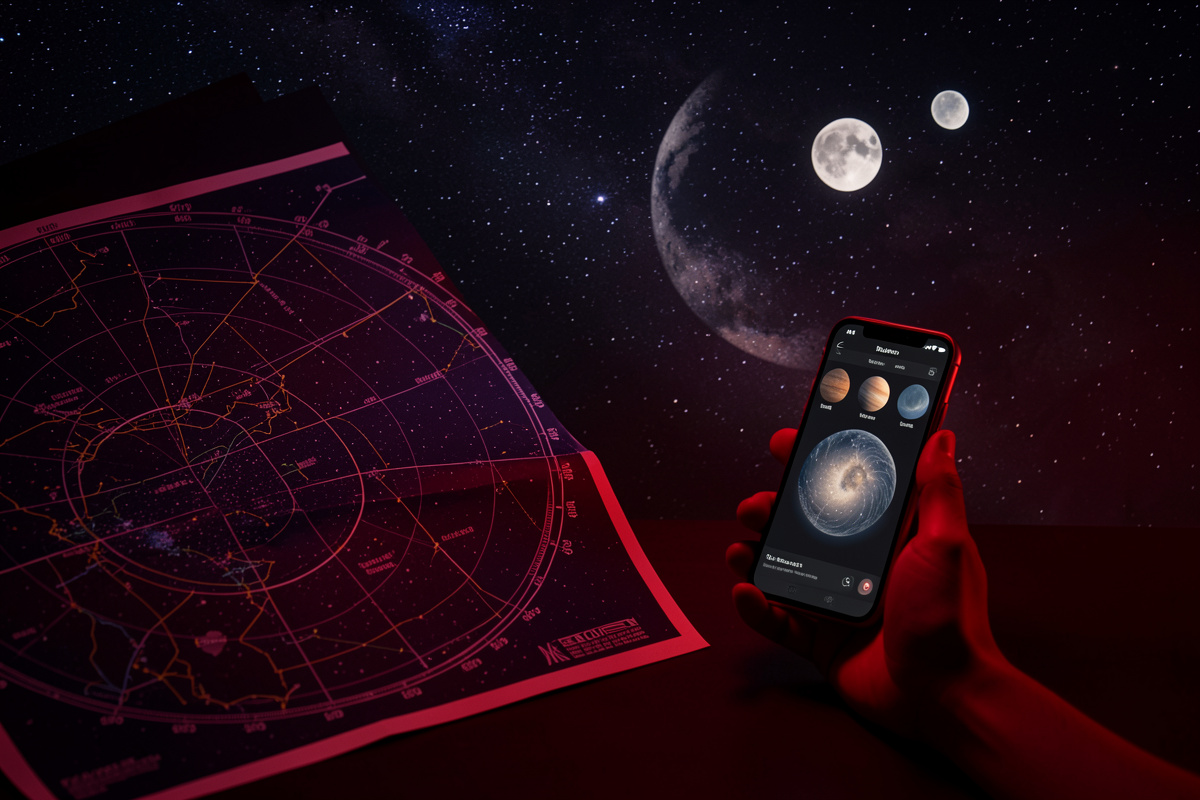

A monthly astronomy highlights guide fills the gap a seasonal map cannot: the things that change from month to month and year to year. The fixed star background shifts about two hours earlier each month, but the Moon, the planets, meteor showers, and the occasional comet ride on top of that on their own schedules. Tracking the sky at month-level resolution is how you catch the events a static seasonal chart will always miss.
I treat the seasonal map as the broad strokes and a monthly check as the fine detail. Before any month I look at three things: where the planets are, which meteor shower (if any) peaks, and the Moon phase — because a full Moon mid-month can wreck two weeks of deep-sky plans. This guide explains how to read the monthly sky and what recurs each month, and it works alongside my seasonal night sky guide and the best deep-sky objects by season reference.
What Changes Month to Month
Two layers move at different speeds. The constellations drift westward by about two hours each month as Earth orbits the Sun, so a target that rises at midnight in one month rises around 10 p.m. the next — this is predictable and follows the seasonal pattern. The faster, less predictable layer is the Solar System: the Moon cycles every 29.5 days, the planets wander through the zodiac on schedules from months to years, and meteor showers recur on fixed annual dates.
That second layer is exactly why a static seasonal map is not enough. A planet that is a brilliant evening target one year may be a pre-dawn object the next, and an opposition or a close conjunction is a month-specific event. Checking monthly means you never miss the good stuff — and you stop wasting clear nights on deep-sky targets the Moon has just washed out.
The practical workflow is to keep the seasonal picture in your head and refresh the monthly detail with a quick planetarium-app check. The app shows you tonight’s exact sky — what is rising, where each planet sits, and how bright the Moon is — while the seasonal map gives you the context of which targets are entering or leaving their best window. Used together, they answer the only two questions that matter on a clear night: what is up, and is it worth setting up for.
The Moon Phase: Your First Monthly Check
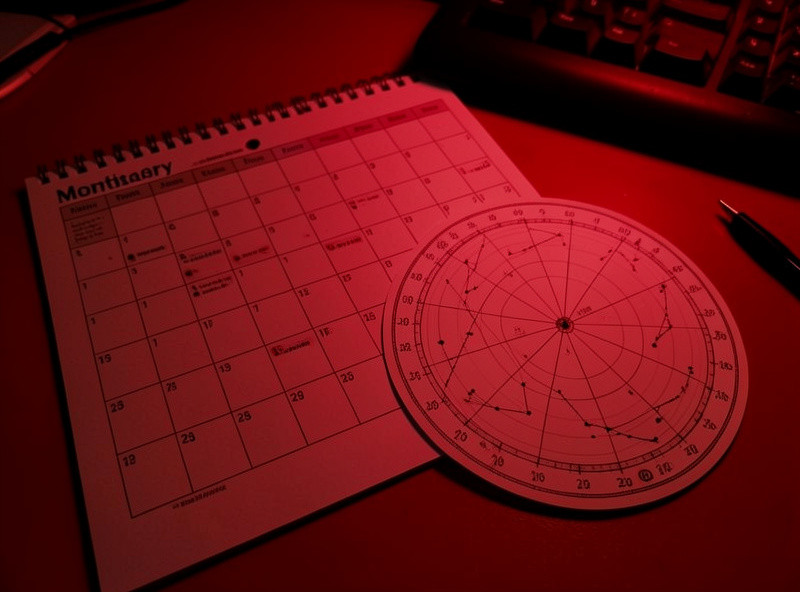
Before anything else, check the Moon. The lunar cycle runs about 29.5 days from new Moon to new Moon, and its phase dictates what kind of observing the month offers week by week. The two weeks around new Moon are prime for faint deep-sky work, because the sky is dark; the bright week around full Moon washes out galaxies and nebulae but is ideal for lunar and planetary observing, where the Moon’s own light is the target.
I plan the month around this rhythm: deep-sky galaxy and nebula sessions clustered near new Moon, and the bright Moon nights spent on the lunar terminator, double stars, and the planets — targets that do not care about a bright sky. On a bright gibbous week I will happily spend an hour on the lunar terminator with the 127mm Maksutov, the scope that cools fast and throws up crisp craters even from my light-washed backyard. The Moon itself is a month-long show as the terminator shifts and different craters catch the light; my Moon observation guide covers what to chase as the phase changes.
Planets, Conjunctions, and Oppositions
The planets are the headline monthly variable. Because they orbit the Sun at different rates, their visibility shifts continuously: a planet moves from the morning sky to the evening sky over months, brightens and fades, and periodically reaches opposition — when it sits opposite the Sun, rising at sunset and visible all night at its biggest and brightest. Opposition is the best time to observe an outer planet, and it happens on a different date each year for each planet.
Conjunctions — when two planets, or a planet and the Moon, appear close together — are month-specific events worth catching, especially the tight ones visible to the naked eye. Because all of this changes year to year, I do not list specific dates here; instead, pull the current month’s planetary lineup from a planetarium app and cross-check oppositions. My planets at opposition guide and planetary observing guide cover what each planet shows when it is well placed, and the best planetarium apps give you the exact current positions.
The Annual Meteor Showers by Month
Meteor showers are the one Solar System event that recurs on fixed dates every year, which makes them easy to plan around. They happen when Earth passes through the debris trail of a comet or asteroid, so the same showers peak on roughly the same nights annually. The table below lists the reliable showers by month — the dates shift by a day or two year to year, so confirm the exact peak for the current year.
| Month | Major Meteor Shower | Approx. Peak | Notes |
|---|---|---|---|
| January | Quadrantids | Early January | Short, sharp peak; can be strong |
| April | Lyrids | Around April 22 | Moderate, fast meteors |
| May | Eta Aquariids | Early May | Best from lower latitudes |
| August | Perseids | Around August 12 | The reliable summer favorite |
| October | Orionids | Around October 21 | Debris from Halley’s Comet |
| November | Leonids | Around November 17 | Occasional strong outbursts |
| December | Geminids | Around December 14 | The best shower of the year |
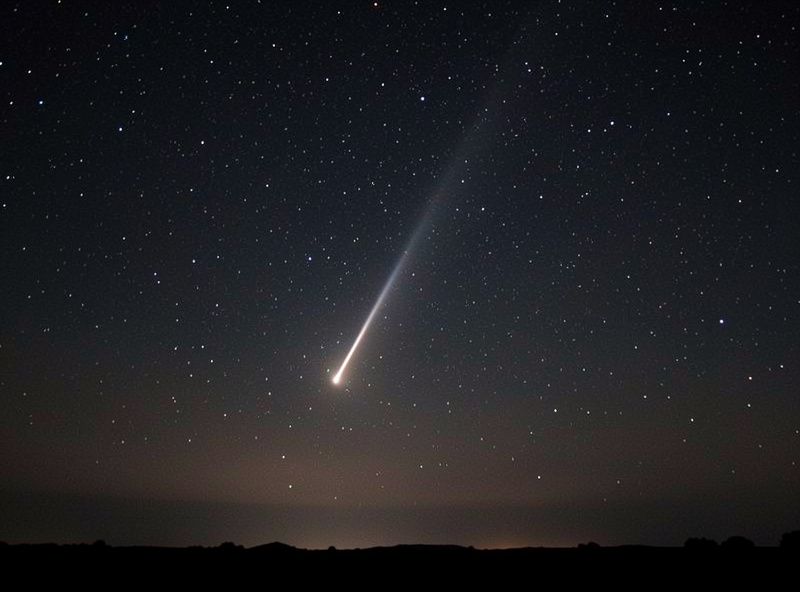
The Geminids in December and the Perseids in August are the two heavyweights, and both reward a dark site, a reclining chair, and no equipment at all — meteor watching is naked-eye observing. The catch every year is the Moon: a shower peaking near full Moon is badly diminished, so check the phase against the peak date. I have been burned by this more than once — one year I drove out to my dark site for the Perseids only to find a near-full Moon had bleached the rate down to a handful an hour, a wasted trip I now avoid by checking the phase against the peak before I commit to the drive. My dedicated meteor showers guide goes deeper on observing them, and the comet watching guide covers the less predictable visitors.
Month-by-Month: The Fixed Sky
Layered under the changing events is the predictable march of the constellations. Roughly: January and February belong to Orion and the bright winter clusters, high and dominant. March brings the spring equinox and the first galaxies of galaxy season rising in the east. April and May are deep in galaxy season, with the Virgo and Leo galaxy fields well placed. June’s solstice brings the shortest, brightest nights — the thin season for northern observers — though the Milky Way core begins to rise.
July and August are the Milky Way core’s best evenings, with the Sagittarius and Cygnus star clouds overhead at mid-latitudes. September’s equinox marks the fast return of darkness and Andromeda climbing high. October and November are prime autumn galaxy and cluster time as the winter constellations begin rising late. December brings the longest nights and the return of Orion to the evening sky. This fixed rhythm is the skeleton; the monthly events are the surprises that hang on it.
Seasonal Bonus Events Worth Tracking
Beyond the planets and meteor showers, a few atmospheric and seasonal phenomena recur on a roughly monthly or seasonal schedule and are worth watching for — especially from northern latitudes. The zodiacal light, a faint pyramid of glow from sunlight scattering off interplanetary dust, is best seen on dark, moonless evenings in early spring (after dusk in the west) and autumn (before dawn in the east), when the ecliptic stands steeply to the horizon. It is subtle and needs a truly dark sky, but once you have seen it you will recognize it again.
From high northern latitudes, summer brings noctilucent clouds — eerie electric-blue clouds high in the atmosphere, lit by a Sun just below the horizon, visible in the deep twilight around the solstice that frustrates deep-sky observing. And aurora can appear in any month when solar activity spikes, turning a routine night into something memorable. None of these follow the deep-sky calendar, which is exactly why a monthly habit of looking up — not just at your target list — pays off. Some of my most memorable northern nights were the ones where the sky threw in something the charts never predicted.
Building a Monthly Observing Habit
The observers who see the most build a simple monthly routine. At the start of each month I spend ten minutes checking three things: the Moon phase calendar to find the dark-sky window, the planetary lineup in a planetarium app, and any meteor shower peak. From that I know roughly which nights are for deep-sky, which are for the Moon and planets, and whether there is a special event to plan around. Then I just wait for clear skies and pounce.
A good astronomy weather app turns that plan into action by flagging the clear, dark nights, and an observing log records what you actually saw so the months build into real knowledge of your own sky. Pair this monthly habit with the seasonal map and the deep-sky-by-season list, and you have a complete planning system: the season tells you the broad targets, the month tells you the events, and the night tells you whether to set up. Within a year of observing this way, you will know your sky better than any printed guide can teach you — come back to the seasonal hub whenever you want the bigger picture.
