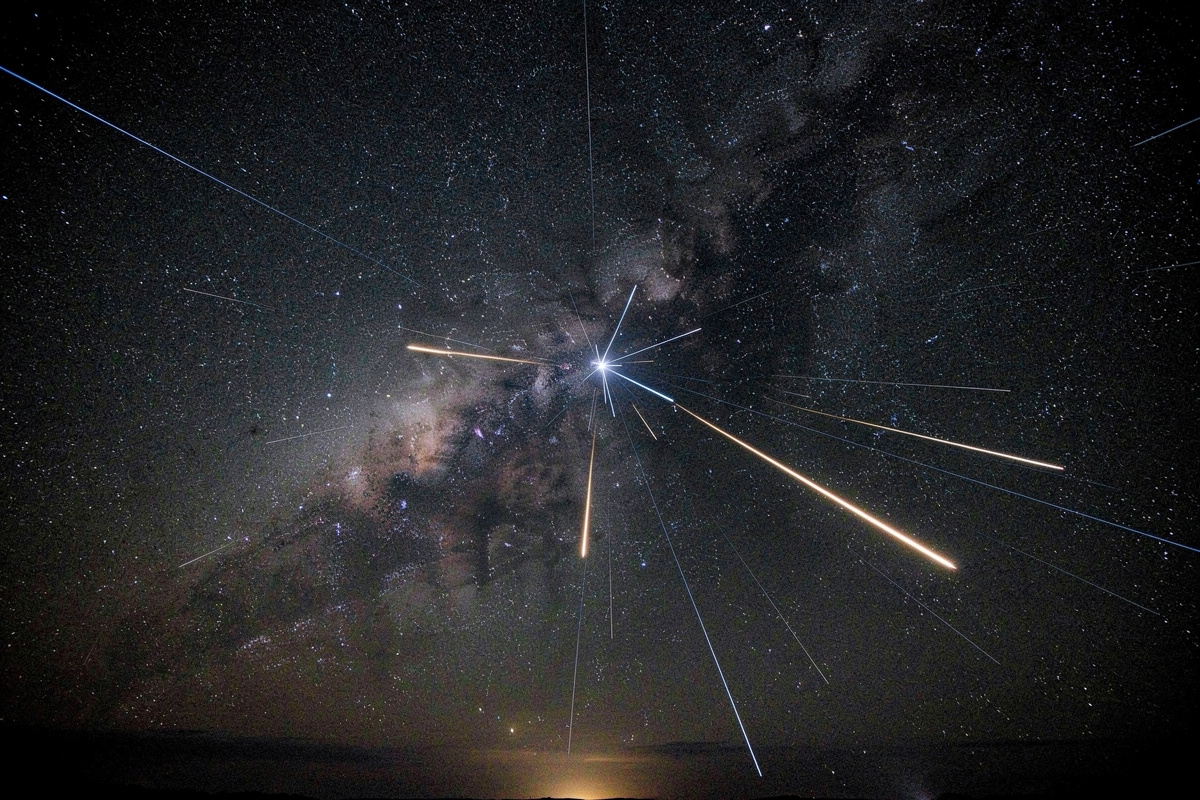

Earth crosses the dust trail of a comet or asteroid, and for one or two nights of the year the upper atmosphere lights up with streaks at 11-72 km per second — that is a meteor shower in the way it actually feels at 2 AM in a folding chair. The Perseids peak around August 12 with 80-100 meteors per hour under dark skies, while the Geminids in December rival them at 120-150 per hour in ideal conditions.
Meteor showers are the lowest-equipment branch of amateur astronomy I run — no telescope, no eyepieces, no collimation, no thermal equilibration. A reclining lawn chair, a wool blanket, and a thermos of coffee are the entire kit. I plan two showers a year minimum: the Perseids in August and the Geminids in December, both from a Bortle 4 site I drive 45 minutes to reach. The broader cluster planets at opposition guide covers the planetary side of the events calendar.
Major Annual Meteor Showers in 2026
Every meteor shower has a radiant — the point in the sky from which meteors appear to originate. You do not need to look directly at the radiant; meteors appear across the entire sky. However, they are most frequent within about 60° of the radiant.
Quadrantids (January 3-4 peak): Active December 28 – January 12. ZHR (Zenithal Hourly Rate): 110. Speed: 41 km/s. Parent body: asteroid 2003 EH1. The Quadrantids produce bright fireballs but the peak is narrow — only 6 hours of maximum activity. Best viewed from the Northern Hemisphere. The 2026 peak favors North America with the radiant in Boötes rising after midnight.
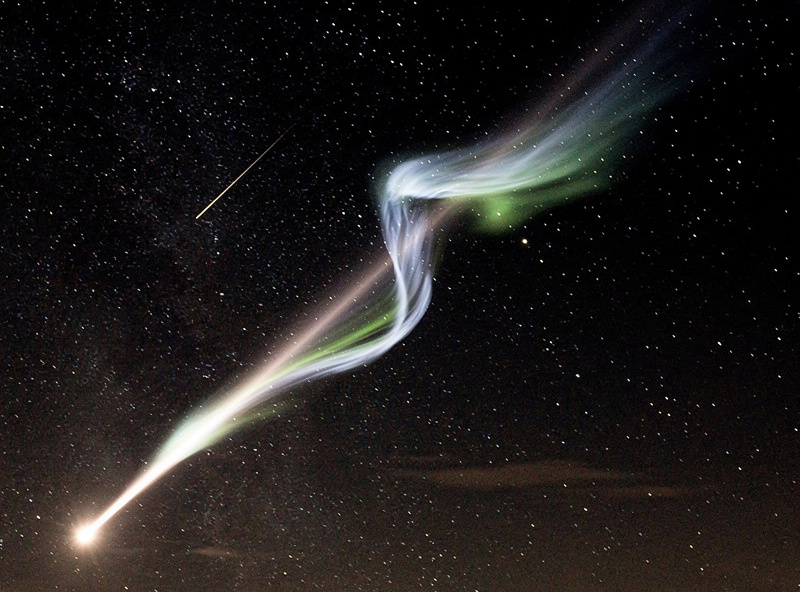
Lyrids (April 22-23 peak): Active April 16-25. ZHR: 18 (occasional outbursts to 90+). Speed: 49 km/s. Parent: Comet C/1861 G1 (Thatcher). Moderate shower from the Northern Hemisphere. The 2026 peak has a waning crescent Moon (12% illuminated) — excellent conditions. Lyrids occasionally produce bright fireballs with persistent trains.
Eta Aquariids (May 5-6 peak): Active April 19 – May 28. ZHR: 50. Speed: 66 km/s. Parent: Comet 1P/Halley. Best viewed from the Southern Hemisphere and tropics, but Northern Hemisphere observers at latitude 40°N or below see 10-20 per hour after 3 AM when the radiant rises. Fast meteors leave persistent trains lasting 1-2 seconds.
Perseids (August 12-13 peak): Active July 17 – August 24. ZHR: 100. Speed: 59 km/s. Parent: Comet 109P/Swift-Tuttle. The most popular annual shower because it peaks during warm August nights in the Northern Hemisphere. The 2026 peak has a waning gibbous Moon (63% illuminated) that will wash out faint meteors after midnight. Best viewing: 10 PM – midnight before moonrise, or focus on bright fireballs.
Orionids (October 21-22 peak): Active October 2 – November 7. ZHR: 20. Speed: 66 km/s. Parent: Comet 1P/Halley. Another Halley-produced shower. Moderate rates but fast meteors produce persistent trains. The 2026 peak has a waxing crescent Moon (5% illuminated) — outstanding conditions. Visible from both hemispheres.
Leonids (November 17-18 peak): Active November 6-30. ZHR: 15 (storm years: 100,000+). Speed: 71 km/s. Parent: Comet 55P/Tempel-Tuttle. Famous for the 1833 and 1966 meteor storms. The 2026 peak has a waxing crescent Moon (24% illuminated) — good conditions. The next Leonid storm is predicted around 2031-2033.
Geminids (December 13-14 peak): Active December 4-17. ZHR: 150. Speed: 35 km/s. Parent: asteroid 3200 Phaethon. The most reliable annual shower with consistently high rates. Slow, bright meteors that are easy to count. The 2026 peak has a waning crescent Moon (28% illuminated) — good conditions. Visible from both hemispheres, best from Northern Hemisphere.
How to Watch a Meteor Shower
Meteor watching requires zero equipment. Telescopes and binoculars are counterproductive — their narrow field of view means you miss most meteors. Naked-eye observation across the widest possible sky area is the optimal technique.
Location: Get away from city lights. Light pollution at Bortle 4 or darker (naked-eye limiting magnitude 6.0+) is ideal. A rural site 30-50 km from a major city typically qualifies. Check lightpollutionmap.info for your area’s Bortle class.
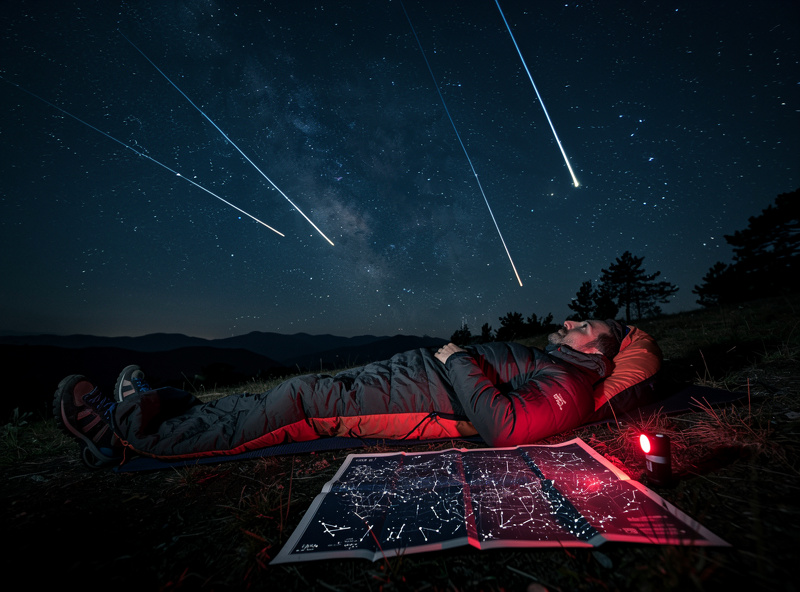
Setup: Bring a reclining chair, sleeping pad, or blanket. Lie on your back with your feet pointing roughly toward the radiant (this places the radiant about 45-60° from your center of vision, where meteors appear longest due to perspective). Allow 20 minutes for dark adaptation — no phone screens, no white lights. Use a red flashlight for any needed illumination. My own kit is a Coleman zero-gravity recliner, a wool blanket I keep in the car trunk year-round, and a Petzl headlamp set to red mode at minimum brightness.
Counting: Serious observers log meteors in 15-minute intervals, recording magnitude estimates, shower membership (based on trajectory back toward the radiant), and any persistent trains. The International Meteor Organization (IMO) accepts visual reports and uses them to refine ZHR calculations. Submit your counts at imo.net.
Meteor Magnitudes and What You See
Meteor brightness is rated on an apparent magnitude scale identical to stars. A magnitude 0 meteor is as bright as Vega. Each magnitude step equals a factor of 2.512 in brightness.
Magnitude 3: faint meteor, visible in dark skies only. Most meteors fall here.
Magnitude 1: moderately bright, easily visible. Comparable to Capella.
Magnitude 0: bright, similar to Venus. Draws your eye immediately.
Magnitude -4: brighter than Venus. Leaves a momentary afterglow.
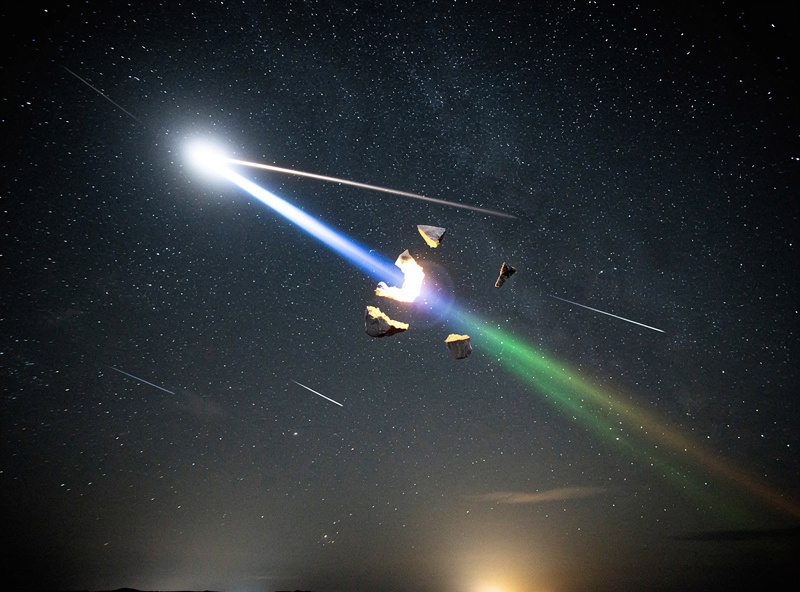
Magnitude -8 or brighter: fireball. Can cast shadows. Occasionally breaks apart.
Under a dark sky (Bortle 3-4) during a major shower peak, an observer sees 1-2 meteors per minute on average. The Geminids and Perseids produce 80-120 meteors per hour visible to a single observer. Sporadic (non-shower) meteors add another 5-10 per hour, making total rates of 100-130 per hour typical during peak nights. My personal best Perseid hour was 84 meteors counted over 60 minutes from a Bortle 4 site in 2023 — slightly off the ZHR-100 prediction, which is expected because the radiant was 55° up and a small amount of moonlight grazed the horizon.
The Parent Bodies: Comets and Asteroids
Most meteor showers originate from comets. As a comet orbits the Sun, it sheds gas and dust through sublimation — solar heating vaporizes ices, releasing embedded particles. Over centuries to millennia, the debris stream spreads along the comet’s orbit. When Earth crosses this stream, particles hit the atmosphere at orbital velocity (11-72 km/s) and burn up as meteors. The comet watching guide covers the parent objects on the nights they themselves are visible in a telescope.
1P/Halley (period 75.3 years) produces both the Eta Aquariids (May) and Orionids (October) — two showers from one comet because Earth crosses Halley’s orbit at two points.
109P/Swift-Tuttle (period 133 years) produces the Perseids. This comet is 26 km in diameter — large enough that close approaches to Earth (within 0.1 AU) could theoretically produce an impact event. The next close approach is in 2126. The Perseid stream is well-established and produces reliable annual activity.
3200 Phaethon is an asteroid — not a comet — that produces the Geminids. This was a puzzle for decades because asteroids do not shed debris like comets. Phaethon’s orbit brings it within 0.14 AU of the Sun (closer than Mercury), and thermal fracturing of its surface rocks may release the dust stream. Alternatively, Phaethon may be an extinct comet nucleus.
Fireballs and Bolides
A fireball is any meteor brighter than magnitude -4. A bolide is a fireball that explodes or breaks apart during flight. Both are more common during major meteor showers because shower meteoroids are larger on average than sporadic meteors.
Fireballs occasionally produce meteorites — fragments that survive atmospheric entry and reach the ground. This happens when the original meteoroid is at least fist-sized and composed of dense rocky or metallic material. Shower meteoroids almost never produce meteorites because they are too fragile (cometary debris is typically dust-grain to pebble-sized).
If you see a fireball, note the time (to the nearest minute), your location, the fireball’s start and end points relative to background stars, its color (most fireballs are green, orange, or white), and whether it broke apart. Report it to the American Meteor Society (amsmeteors.org) or the IMO. These reports help calculate the fireball’s trajectory and potential landing zone. The brightest fireball I have logged was a green -8 Perseid in 2024 that left a 6-second persistent train — I forgot to start my timer and only realized in the silence after how long the train lasted.
Photographing Meteors
Meteor photography is a numbers game — you need long exposure time across a wide field of view. A DSLR or mirrorless camera with a 14-24 mm f/2.8 lens on a tripod is the standard setup.
Settings: ISO 1600-3200, f/2.8 (or widest aperture), 15-25 second exposures. Use an intervalometer to shoot continuously — 200-300 frames over 1-2 hours is typical. Expect 1-3 meteor captures per 100 frames during a major shower. Focus manually on a bright star using live view at maximum zoom. I shoot meteors with a Sony A7III and a Samyang 14 mm f/2.8, ISO 3200, 15 seconds, intervalometer firing every 17 seconds for the 2-second buffer write — that combination gives me 200+ frames per shower hour with usable signal-to-noise.
Technique: Point the camera 45-60° from the radiant. Meteors near the radiant appear short and slow; meteors far from the radiant appear long and fast. Including foreground elements (trees, mountains, a tent) creates more interesting compositions. Stack multiple frames in software to create a “meteor composite” image showing all captured meteors in one frame.
Smartphones with night mode can capture the brightest meteors and fireballs. Prop the phone against something stable or use a small tripod adapter. Set night mode to its longest duration (30 seconds on many phones). The computational photography stacks multiple short exposures internally.
2026 Meteor Shower Calendar Summary
| Shower | Peak Date | ZHR | Speed (km/s) | Moon Phase (2026) | Rating |
|---|---|---|---|---|---|
| Quadrantids | Jan 3-4 | 110 | 41 | Full (unfavorable) | Poor |
| Lyrids | Apr 22-23 | 18 | 49 | Waning crescent 12% | Excellent |
| Eta Aquariids | May 5-6 | 50 | 66 | Waning crescent 40% | Good |
| Perseids | Aug 12-13 | 100 | 59 | Waning gibbous 63% | Moderate |
| Orionids | Oct 21-22 | 20 | 66 | Waxing crescent 5% | Excellent |
| Leonids | Nov 17-18 | 15 | 71 | Waxing crescent 24% | Good |
| Geminids | Dec 13-14 | 150 | 35 | Waning crescent 28% | Good |
Common Mistakes I Made on Meteor Nights
The first Perseid peak I tried, I drove 45 minutes to a dark site, set up the chair, and proceeded to stare at the radiant in Perseus for 20 minutes wondering why I was not seeing anything. Meteors never appear at the radiant — they appear all over the sky and trace back to the radiant. I now park the chair at a 90° angle to Perseus, look straight up, and let peripheral vision do the work. Counts more than tripled.
The second mistake: not checking the Moon phase before driving out. I lost a full Geminid peak in 2022 to a 95% gibbous Moon I had not bothered to look up. The brightest meteors still cut through, but the fainter half of the count was washed out. I now check Moon phase the same week I check the long-range forecast — both have to cooperate or the trip is not worth the gas.
The third mistake was bringing a Bluetooth speaker for music to “stay awake.” The volume kept me alert but the LED on the speaker (a small white dot) destroyed my dark adaptation every time I glanced toward it. I now bring an audiobook on a phone with the screen flipped down and the brightness at zero. Anything with a forward-facing white light comes off the kit list.
What I Would Do for the Next Major Shower
If the Geminids are coming up and you have not done a meteor shower before, here is the night I would build for you. Pick a date 24-48 hours before or after the peak — the wings of the shower still produce 30-60 meteors per hour and the radiant is up earlier in the evening. Drive to a Bortle 4 or darker site you have scouted in daylight. Arrive 30 minutes before astronomical twilight ends and let your eyes dark-adapt while the sky finishes darkening. Lie back facing 45-60° away from Gemini, set a phone alarm for 60 minutes, and just look up. Count any meteor that crosses your field of view, regardless of direction. After the alarm, stretch, refill coffee, and run another 60-minute count. Two hours of patient counting will give you a personal ZHR estimate, a probable fireball or two, and a habit you will repeat every December.
Frequently Asked Questions
Do I need a telescope to watch a meteor shower?
No. Telescopes have too narrow a field of view and cause you to miss most meteors. Watch meteor showers with your naked eyes for the widest sky coverage. Recline on a chair or blanket and look straight up or toward the darkest part of the sky, not directly at the radiant.
What time should I watch a meteor shower?
Most showers produce more meteors after midnight because you are then on the side of Earth facing the direction of Earth orbital motion — you scoop up debris head-on. For most showers, 11 PM to 4 AM local time is the optimal window. The radiant is also highest in the sky after midnight.
How many meteors will I see per hour?
The Zenithal Hourly Rate (ZHR) assumes perfect conditions: radiant at zenith, dark sky, no clouds, no Moon. Under realistic conditions (radiant 45 degrees up, Bortle 4 sky, slight Moon glow), expect 30-50 percent of the ZHR. So a ZHR-100 shower yields roughly 30-50 meteors per hour for a typical observer.
What causes meteor showers?
Earth passes through a stream of debris left by a comet or asteroid. As these particles — typically sand-grain to pea-sized — hit the atmosphere at 11-72 km/s, they compress the air ahead of them, heating it to 1500-3000 degrees C. The particle ablates (vaporizes), producing a visible streak of light. The streak is a cylinder of excited air molecules, not the particle itself.
Can meteor showers be dangerous?
No. Meteoroids that produce visible meteors are tiny — most weigh less than 1 gram. They burn up completely at altitudes of 80-120 km. Even fireballs from grapefruit-sized objects rarely reach the ground. The chance of being injured by a meteorite is effectively zero — smaller than the chance of being struck by lightning.
When is the next meteor storm?
The next likely meteor storm is the Leonid storm predicted around 2031-2033, when Comet 55P/Tempel-Tuttle passes near Earth orbit. Storms produce 1000-100000+ meteors per hour. The 1833 Leonid storm produced an estimated 100000+ meteors per hour. The 1966 storm peaked at 40000+ per hour. Storms are rare and difficult to predict precisely.
Related Articles
- Planets at Opposition: Best Viewing Times — When planets are closest and brightest.
- Comet Watching Guide for Amateur Astronomers — Finding and tracking comets.
- Solar Eclipse Guide: How to Observe Safely — Safe solar viewing during eclipses.
- Moon Observation Guide with Telescope — Craters, maria, and observation technique.
- Dark Sky Locations — Where to find Bortle 4 or darker skies.
