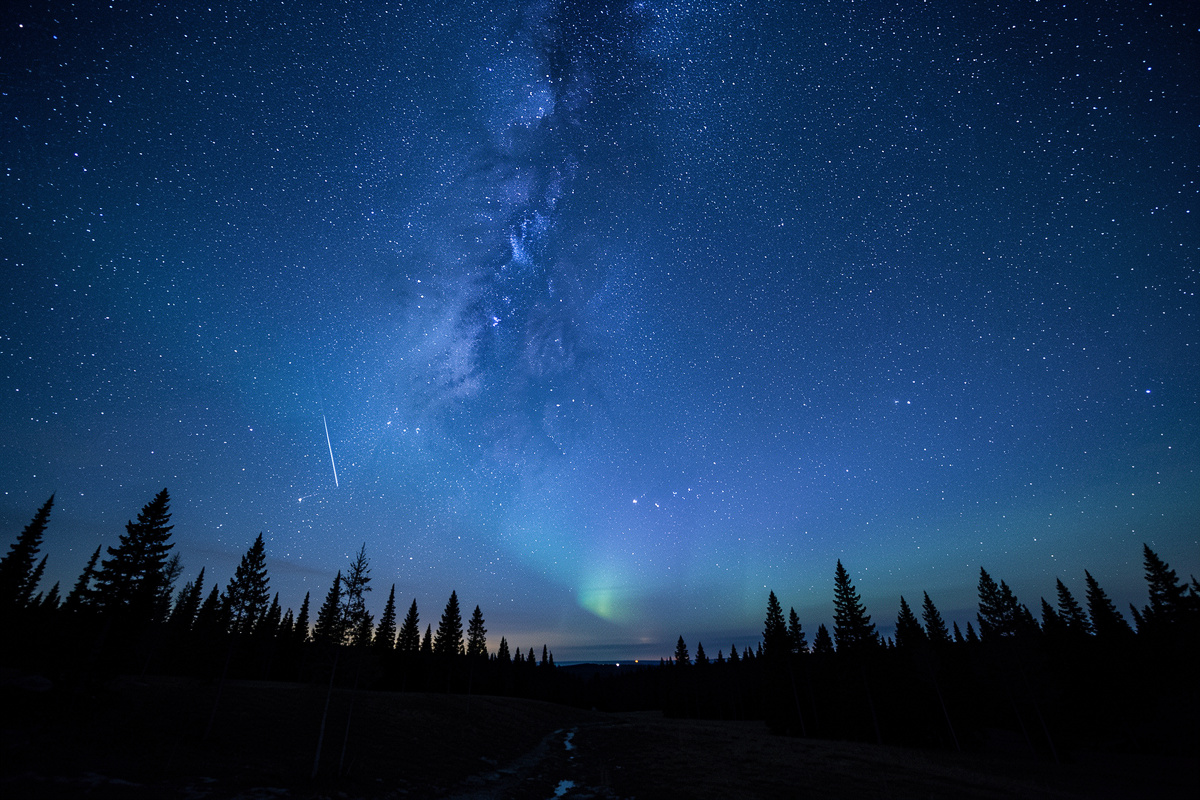

A seasonal sky guide for astronomy works because the night sky is a calendar, not a fixed picture. As Earth swings around the Sun, the constellations on view at midnight shift roughly two hours earlier each month, so the showpiece targets of winter are gone by summer and back again the next year. Plan around that rhythm and every night out gets easier.
I have observed the same backyard sky from suburban Sweden for years, and driven to a darker Nordic site when it counts, and the single biggest jump in my hit rate came not from a bigger scope but from learning what is actually up on a given night. This hub ties together my four season guides plus the deep-sky-by-season and monthly-highlights references, so you can stop fighting the sky and start working with it.
Why the Night Sky Changes Through the Year
The seasonal shift is pure geometry. Earth orbits the Sun once a year, so the half of the sky we face at night points in a slowly rotating direction. The stars behind the Sun are washed out by daylight; the stars opposite the Sun ride high at midnight. Six months later those positions swap entirely.
There is a second, slower layer on top of this: the Sun, Moon, and planets all travel along the ecliptic — the line of the zodiac constellations — so which zodiac figures are well placed for evening viewing also marches through the year. Taurus and Gemini are evening winter constellations; Sagittarius and Scorpius belong to summer. That is why Orion owns the winter midnight sky and is invisible at midnight in summer, and why the Milky Way core only climbs into view in the warm months. The practical takeaway: a target list is only useful with a date attached. The same scope shows you completely different things in January and July, and matching your session to the season is the cheapest upgrade in the hobby. A small refractor used on the right night beats a big Dobsonian pointed at a season’s worst targets.
The Nordic Latitude Reality Most Guides Skip
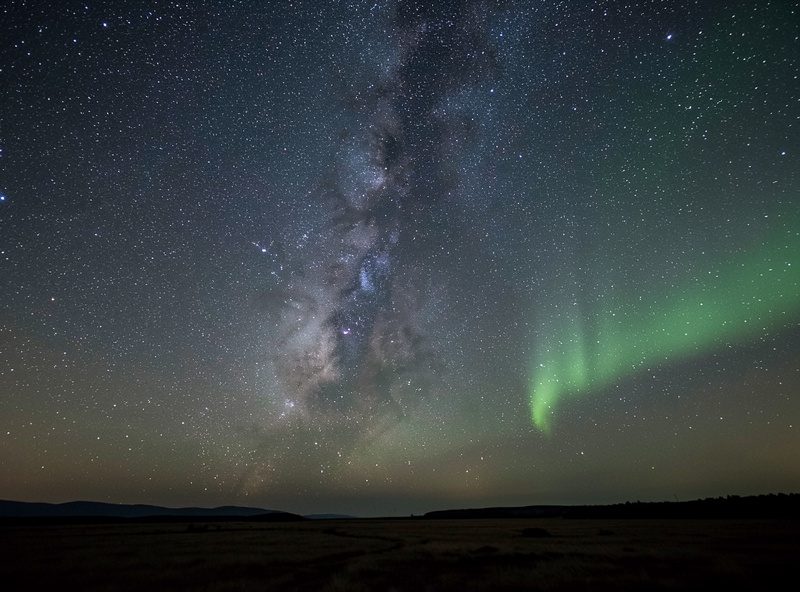
Almost every “best targets by season” list is written from a mid-latitude US or UK vantage, and it quietly misleads anyone observing from the far north. From my latitude in Sweden, summer simply does not get astronomically dark for weeks on end — the Sun never sinks far enough below the horizon, and the sky stays a deep twilight blue all night. So the “summer deep-sky season” that American guides celebrate is, for me, the thinnest observing window of the year.
Winter is the opposite story: brutally cold, often cloudy, but when it clears the nights are enormous and genuinely dark by late afternoon. That inversion reframes the whole calendar. The Sweden winter that is miserable for daylight gardening or my hydroponics bench is a gift for visual astronomy — long, cold, and dark. If you observe from a high northern (or far southern) latitude, read every seasonal list through this filter: your darkness budget swings violently with the season, and that matters more than which constellations are nominally “in season.”
Season by Season: The Quick Map
Here is the year at a glance, written from a northern-hemisphere observer’s chair with the Nordic darkness reality baked in. Each season has a signature character, a flagship object, and a specific challenge to plan around.
| Season | Sky Character | Flagship Target | Darkness (far north) | Main Challenge |
|---|---|---|---|---|
| Winter | Bright stars, open clusters, the Orion region | Orion Nebula (M42) | Long, fully dark nights | Cold, dew/frost, cloud gaps |
| Spring | Galaxy season — faint, distant objects | Virgo & Leo galaxies | Shortening but still dark | Faint targets need dark skies |
| Summer | Milky Way core, rich nebulae, globulars | The Milky Way through Sagittarius | Little or no true darkness up north | Twilight never fully clears |
| Autumn | Andromeda, the Galaxy season returns | Andromeda Galaxy (M31) | Darkness rapidly returning | Transparency varies wildly |
Use that table as a triage tool. If you only get out a handful of nights a season, point your time at the flagship and a couple of supporting targets rather than chasing a sprawling list and seeing everything badly.
Winter: The Showpiece Season
Winter is where most observers fall in love with the hobby. The air is steady on cold clear nights, Orion stands high with the Orion Nebula (M42) blazing in any aperture, and the surrounding sky is packed with bright open clusters like the Pleiades and the Double Cluster. From the far north you also get the longest fully dark nights of the year, so a single clear winter evening can deliver more eyepiece time than a whole summer week.
The trade-off is the cold and the dew that turns to frost on your optics. Thermal acclimation matters more in winter than any other season — a warm scope dragged into freezing air shimmers for an hour. I cover the targets, the gear that survives the cold, and the cool-down discipline in the full winter night sky observing guide. If you only master one season, make it this one.
Spring: Galaxy Season
As Orion sinks into the west, the sky opposite the Milky Way swings into view, and that direction is a window out of our own galaxy into deep intergalactic space. Spring is galaxy season: the Virgo Cluster, the Leo Triplet, the Whirlpool, and dozens of fainter island universes. These are not bright, beginner-friendly targets — they reward aperture, dark skies, and averted vision.
This is the season where light pollution hurts most, because galaxies are diffuse and low in surface brightness. A 12-inch Dob under a dark sky shows galaxy structure that a 4-inch from town simply cannot. My spring night sky observing guide walks through which galaxies are realistic in which apertures, and how to star-hop the relatively blank spring sky where there are few bright signposts to guide you.
Summer: The Milky Way Core
For mid-latitude observers, summer is the grand prize: the Milky Way core rises through Sagittarius and Scorpius, dense with nebulae and globular clusters — the Lagoon, the Trifid, the Swan, M22, and the great globular M13 in Hercules. The richness per square degree here is unmatched anywhere else in the year.
From the far north, though, summer carries the asterisk I mentioned: the core stays low and the sky may never go fully dark. My first northern summer I hauled the 12-inch Dob out for the core three nights running and never once caught a properly dark sky; that run of wasted setups is why I now treat the summer Milky Way as a low, twilight-fringed treasure rather than the overhead river that southern observers enjoy. The full summer Milky Way observing guide covers reading the core, the filters that cut through summer haze, and how to make the most of a short, bright northern summer night.
Autumn: Andromeda and the Return of the Dark
Autumn is the relief season for northern observers — real darkness returns fast, the nights lengthen by the week, and the Andromeda Galaxy (M31) climbs high overhead as the nearest large galaxy you can find with naked eyes from a dark site. The Great Square of Pegasus dominates, and the Perseus Double Cluster bridges autumn into winter.
The catch in autumn is transparency: it swings wildly with passing weather systems, and a hazy autumn night can swallow the very galaxies you came for. My autumn night sky guide covers the season’s targets, the transparency judgment calls, and how to use the rapidly improving darkness before winter’s cold sets in.
Seeing and Transparency: The Other Calendar
Two atmospheric conditions decide what any season actually delivers, and they pull in opposite directions. Transparency is how clear and dark the air is — how faint a target you can detect. Seeing is how steady the air is — how much fine detail holds still at high magnification. A night can have superb transparency and terrible seeing, or the reverse, and the two rarely peak together.
This matters enormously for season planning. Crisp, cold winter nights after a front passes often bring excellent transparency for faint deep-sky work but turbulent seeing that smears planets into a boil. Hazy, humid summer nights can deliver rock-steady seeing for planetary detail while the murk kills any faint nebula. So a “bad” night for one target is often a “good” night for another. I learned to stop writing off a session and instead switch targets to match the conditions — if the planets are boiling, I go after bright clusters; if the sky is milky but steady, I push magnification on the Moon and planets. The atmospheric seeing guide goes deep on reading these conditions, and a habit of checking them before setup will save you more frustration than any gear upgrade.
Planning the Whole Year
Two of my guides are built to be used across all four seasons rather than within one. The best deep-sky objects by season reference is a curated target list organized by when each object is well placed, so you can build a realistic session plan for any night without wading through a 110-object catalog. It is the file I keep open when I am deciding what to actually point at.
The monthly sky highlights guide drops down to month-level detail — what is rising, what is setting, and the changing events (conjunctions, oppositions, meteor showers) that a static seasonal map cannot capture. Between the two, you have a planning system: the seasonal map for the broad strokes, the monthly guide for the specifics, and a planetarium app to confirm timing on the night. Pair those with a good weather app for astronomy nights and you stop wasting clear skies on the wrong targets.
The Two Things That Beat Aperture Every Season
If there is one lesson my four seasonal guides keep repeating, it is that aperture is the most overrated variable in the hobby. Two things matter more across every season: the quality of your sky, and the quality of your eyepiece and mount. A 6-inch scope under a Bortle 3 sky shows more deep-sky detail than a 12-inch fighting Bortle 7 suburban glow, because faint galaxies and nebulae are limited by contrast against the background, not by raw light grasp.
The eyepiece is half the optical system, and the cheap kit pieces that ship in the box hold back even a good objective. A worked kit — a wide-field for low-power sweeping, a workhorse mid-range, and a quality high-power for planets — transforms what every scope shows you, season after season. The mount is the other under-spent piece: a shaky mount makes high magnification useless no matter how good the optics. My eyepiece guide and mount guide cover the season-agnostic foundations, and the telescope buying guide ties the whole decision together for a first purchase.
Light Pollution and the Seasonal Dark-Site Decision
Light pollution interacts with the seasons in a way that catches new observers out. Bright targets — the Moon, planets, double stars, the brighter open clusters — cut through suburban skies fine and are available in every season. Diffuse, low-surface-brightness targets — galaxies in spring, nebulae in summer — collapse under light pollution and demand a dark site. So the seasons effectively dictate when the drive to a dark site is worth it.
In winter, the bright Orion region and clusters mean I can get a satisfying night from the backyard at Bortle 4-6. In galaxy-heavy spring, the backyard is nearly useless for the faint stuff and the dark-site drive becomes mandatory. I plan my fuel and my late nights around that rhythm. If you are choosing where to observe, the dark sky locations guide helps, and a UHC or OIII nebula filter buys back some contrast on nebulae even from compromised skies. No filter, however, rescues a galaxy — for those, only true darkness works.
The Moon and Planets: The Wandering Layer
The seasonal star map is fixed and predictable, but two things ride on top of it that do not follow the annual pattern: the Moon and the planets. The Moon cycles every 29.5 days regardless of season, and a bright gibbous Moon will wash out the very deep-sky targets each season is famous for. I plan deep-sky sessions for the two weeks around new Moon and save the bright Moon nights for lunar and planetary work — the Moon observation guide covers what to chase along the terminator.
The planets wander through the zodiac on their own schedules, so a planet that is a glorious evening target one year may be a pre-dawn object the next. That is exactly why the static seasonal map is not enough on its own, and why the monthly highlights guide exists — planetary positions and oppositions change year to year. For the planets themselves, the planetary observing guide and the planets at opposition guide handle the targets that do not care what season it is.
Building a Seasonal Observing Routine
The observers who see the most are not the ones with the biggest scopes — they are the ones who match their gear and their nights to the season. In winter I reach for the 12-inch Dob on the longest dark nights and the 127mm Maksutov for quick frosty grab-and-go sessions. In spring I bring aperture to a dark site for galaxies. In the thin northern summer I lean on the wide-field 100mm apo and sweep the low Milky Way. In autumn I chase Andromeda and the returning dark with whatever I can carry out fast before the clouds roll back in.
The same setup-and-tweak discipline that runs through my other benches applies here: astronomy has the identical trap of optimizing the wrong thing. People obsess over aperture and ignore the calendar, the eyepiece kit, the mount, and the sky quality. Get the season right first — the rest follows. A modest scope used on the right night under a dark sky will outperform an expensive rig fighting twilight or a hazy galaxy.
A practical year looks like this in my logs: deep-sky galaxy hunts clustered around the new Moons of spring, the summer’s few dark hours spent on the low Milky Way and the bright globulars, an autumn push on Andromeda and the returning nebulae, and a winter of Orion, clusters, and steady-night planetary work whenever the cold lets up. The targets rotate, but the routine — check the Moon phase, check seeing and transparency, pick the season’s flagship, then fill in with supporting objects — stays the same all year.
If you are just starting, anchor on the beginner stargazing guide and a good planetarium app, then come back to whichever season is current. Keep an observing log across the year and within a couple of seasons you will know your own sky better than any printed list can teach you.
As an Amazon Associate I earn from qualifying purchases. A simple planisphere star wheel is the cheapest way to internalize the seasonal sky before you ever buy a scope.
Frequently Asked Questions
What is the best season for stargazing?
Winter offers the best all-round visual season for northern observers: long fully dark nights, steady cold air, and the bright Orion region. Spring is best for galaxies, summer for the Milky Way core, and autumn for Andromeda and rapidly returning darkness.
Why do the constellations change with the seasons?
Earth orbits the Sun once a year, so the night side of the planet faces a slowly rotating direction in space. Stars behind the Sun are lost in daylight while stars opposite the Sun ride high at midnight, and those positions swap completely over six months.
Can I see the Milky Way all year?
No. The bright Milky Way core through Sagittarius is a summer target and is below the horizon or lost in daylight other times of year. From far northern latitudes the summer core stays low and twilight may never fully clear, making it a brief seasonal window.
Does my latitude change which seasonal targets I can see?
Yes, significantly. From high northern latitudes summer barely gets astronomically dark, so the celebrated summer deep-sky season is short, while winter delivers very long dark nights. Always read seasonal target lists through your own latitude and darkness budget.
What targets are best for a beginner each season?
Winter: the Orion Nebula and the Pleiades. Spring: the brighter galaxies like the Leo Triplet and bright star Arcturus. Summer: the Milky Way, M13, and the Lagoon Nebula. Autumn: the Andromeda Galaxy and the Double Cluster.
Do I need a big telescope to enjoy the seasonal sky?
No. Matching your session to the season matters more than aperture. A modest scope used on the right night, on well-placed targets under a dark sky, easily outperforms a large telescope pointed at a season’s worst objects through poor sky.
