
If there’s one concept that separates frustrated beginners from satisfied planetary observers, it’s seeing — the steadiness of the atmosphere between your eyepiece and the planet. New observers blame their telescope when Jupiter trembles and Saturn’s rings smear; experienced observers know it’s almost always the sky, not the scope. The atmosphere is a turbulent ocean of air at different temperatures and densities, and the planet’s light has to swim through all of it to reach your eye. On a turbulent night even the finest, largest telescope shows a boiling, shimmering disc. On a steady night a modest scope shows crisp, jaw-dropping detail. Learning to read the seeing, choose your nights, and minimise the turbulence you can control is the highest-leverage skill in all of planetary observing — and it costs nothing.
This guide is the capstone of the planetary observing guide cluster. Everything else — the magnification you can use, whether you’ll catch the Cassini Division on Saturn or the surface markings on Mars — is ultimately gated by the seeing. Master this and the rest falls into place.
Seeing versus transparency: don’t confuse them
The single most important distinction, and the one that trips up nearly every newcomer: seeing and transparency are different things, and they often work against each other.
- Transparency is how clear and dark the sky is — how much haze, moisture, and light pollution dims your view. Good transparency matters for faint deep-sky objects, where you’re chasing every photon.
- Seeing is how steady the air is — how much turbulence is blurring the image. Good seeing matters for planets, where you’re chasing fine detail at high magnification.
Here’s the cruel twist: the crisp, crystal-clear nights with superb transparency — often right behind a cold front — are frequently turbulent, because the same moving air mass that scrubbed the sky clean is churning. Meanwhile a hazy, humid, “boring” night with mediocre transparency can have rock-steady seeing and deliver gorgeous planetary detail. So the deep-sky observer and the planetary observer want opposite nights. When you hear “what a clear night!” and rush out for Jupiter, you may be disappointed — and the night everyone else writes off as hazy might be the best planetary session of the month. Internalising this inversion is the biggest single jump a planetary observer makes.
What drives the seeing
Atmospheric turbulence comes from several layers, and understanding them helps you predict and chase good seeing:
- The high-altitude jet stream. Fast, high winds aloft are the enemy of steady seeing. When the jet stream sits right over you, expect poor seeing regardless of how calm it feels at ground level. Dedicated seeing forecasts (which model jet-stream conditions) are worth checking before a planetary session.
- Altitude of the target. A planet low on the horizon shines through a vastly thicker, more turbulent slab of air than one high overhead. This is why a high-riding planet looks so much sharper — and why, from a high northern latitude where planets often ride low across the south, seeing is a constant battle.
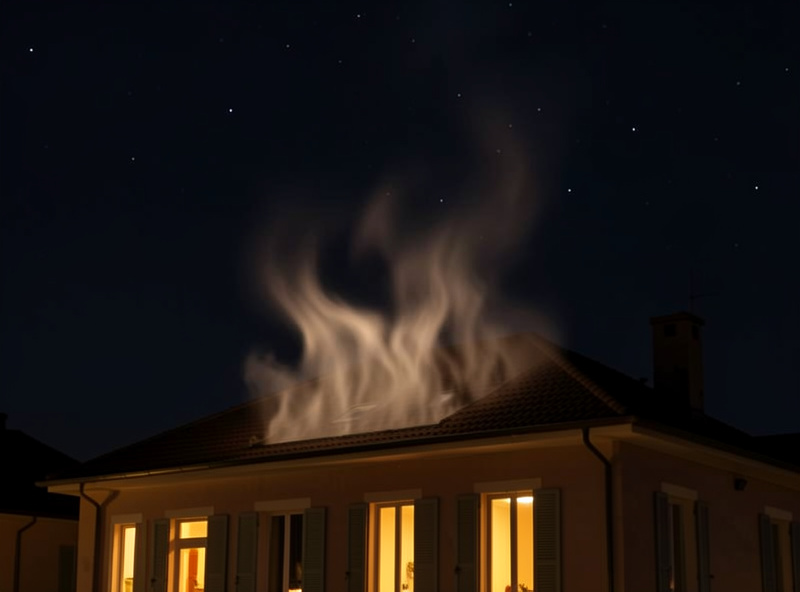
- Local ground turbulence. Heat radiating off rooftops, pavement, walls, and your own house long after sunset creates rising currents that wreck the view. Observing over a warm roof or across a heated driveway can ruin otherwise good seeing.
- Your own telescope. A scope warmer than the air sheds heat through its tube, creating turbulence inside the light path itself — bad seeing you brought with you.
How to read the seeing yourself
You don’t need instruments — your own eyes and a bright star tell you everything. A few field tests I use:
- Naked-eye star twinkle. Stars near your target that twinkle violently signal poor seeing; stars that shine steadily signal good seeing. Heavy twinkling is pretty, but it’s bad news for planets.
- The star test at the eyepiece. Point at a moderately bright star and defocus it slightly into a small disc. In good seeing the disc and its diffraction rings sit calm and well-defined; in poor seeing they boil, ripple, and break up. This is the most direct read there is.
- Watch the planet settle. When you first put the planet in the eyepiece, watch for a minute. Does it hold reasonably still with occasional moments of clarity, or does it churn constantly? The frequency and length of the steady moments tells you what kind of night you’re in for.
The astronomers’ shorthand is the Antoniadi scale (I to V, from perfect to terrible), but you don’t need the formalism — you just need to learn what “good,” “average,” and “give up” look like to your own eye, which comes quickly with practice.
Beating the seeing: what you can control
You can’t calm the jet stream, but you can stack the odds and squeeze the most out of whatever the night gives you:
- Cool your scope thoroughly. The single biggest controllable factor. Put the scope out 30–60 minutes early (longer for big closed tubes) so it stops generating its own internal turbulence. This alone transforms more sessions than any gear upgrade.
- Observe the highest-riding planets. Chase targets when they’re near their highest point in the sky, well away from the horizon murk. Plan your session around when the planet culminates.
- Get away from local heat sources. Don’t observe over a roof, across a warm driveway, or downwind of a heated building. Set up over grass or soil, which holds less heat, and avoid looking across the warmest parts of your surroundings.
- Check a seeing forecast. Dedicated astronomy seeing forecasts model the jet stream and upper-air stability. A glance before you commit to a session saves a lot of wasted setups.
- Be patient at the eyepiece. Even on an average night, the atmosphere comes in waves. Detail blooms in brief windows of calm that might last a second or two. Stay at the eyepiece, dark-adapted and relaxed, and pounce on those moments — that’s where the finest views live.
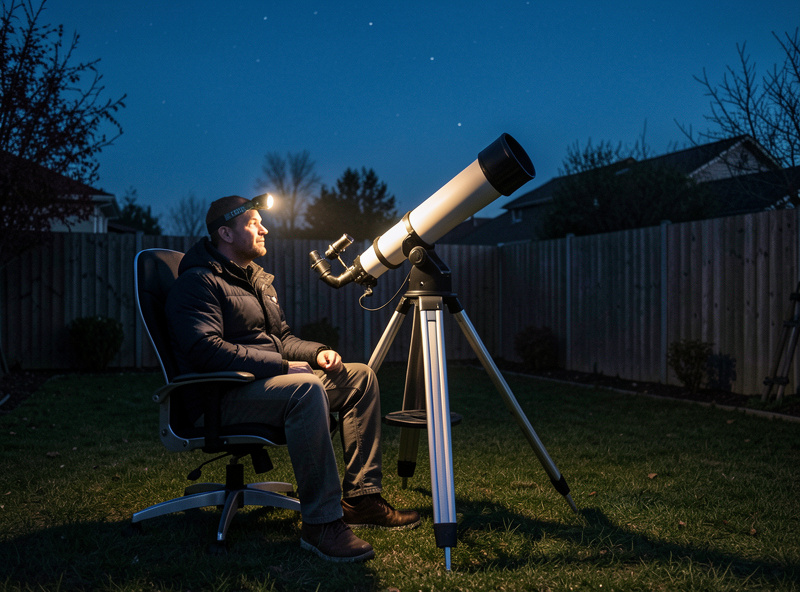
That last point — patience — is why comfort matters more than beginners think. You cannot wait out the steady moments if you’re hunched over, cold, and aching after five minutes. A proper adjustable astronomy observing chair keeps you at the eyepiece comfortably for the twenty or thirty patient minutes that planetary detail demands, and it’s one of the most underrated accessories in the hobby — I get measurably more detail simply because I stay relaxed and keep looking instead of giving up. Dress for cold and sit comfortably, and the seeing rewards you for it.
Disclosure: some links above are affiliate links. As an Amazon Associate I earn from qualifying purchases, at no extra cost to you. I only recommend gear I actually use at my own scope.
The Nordic-latitude reality
From a high northern latitude, seeing is a particular challenge worth naming honestly. The bright planets often ride low across the southern sky, mired in horizon turbulence, so there are whole stretches of the year when the seeing simply caps what’s possible no matter your aperture. The flip side is that long, cold, still winter nights — the ones that are brutal for almost everything else — can occasionally deliver beautifully steady air once you’ve let the scope acclimate to the deep cold. The lesson is to take what the sky offers: chase the planets when they’re highest, pounce on the rare calm nights, and don’t waste a fortune on aperture you can’t use through a turbulent slab of low horizon air. The observer who reads the sky beats the observer who just buys a bigger scope, every time.
What is atmospheric seeing in astronomy?
Seeing is the steadiness of the atmosphere between your telescope and the target. Turbulent air at different temperatures bends the light, making planets shimmer and blur at high magnification. Good (steady) seeing lets fine detail show; poor seeing limits you no matter how good your telescope is.
What’s the difference between seeing and transparency?
Transparency is how clear and dark the sky is, which matters for faint deep-sky objects. Seeing is how steady the air is, which matters for fine planetary detail. They often oppose each other — the crystal-clear nights are frequently turbulent, while hazy nights can have excellent steady seeing.
How can I tell if the seeing is good tonight?
Watch how much the stars twinkle — heavy twinkling means poor seeing. At the eyepiece, defocus a bright star slightly; if the disc and its rings sit calm it’s good seeing, if they boil and ripple it’s poor. Also check a dedicated astronomy seeing forecast that models the jet stream.
Why do planets look better when they’re higher in the sky?
A planet near the horizon shines through a much thicker, more turbulent slab of atmosphere than one overhead. The higher a planet rides, the less air its light traverses and the steadier the image. This is why observers plan sessions for when a planet is near its highest point.
Can I improve the seeing, or just wait for good nights?
You can’t change the jet stream, but you can control a lot: cool your telescope thoroughly to stop internal turbulence, observe high-riding targets, avoid looking across warm roofs and pavement, and be patient at the eyepiece to catch the brief moments of steady air. These free habits dramatically improve your views.
