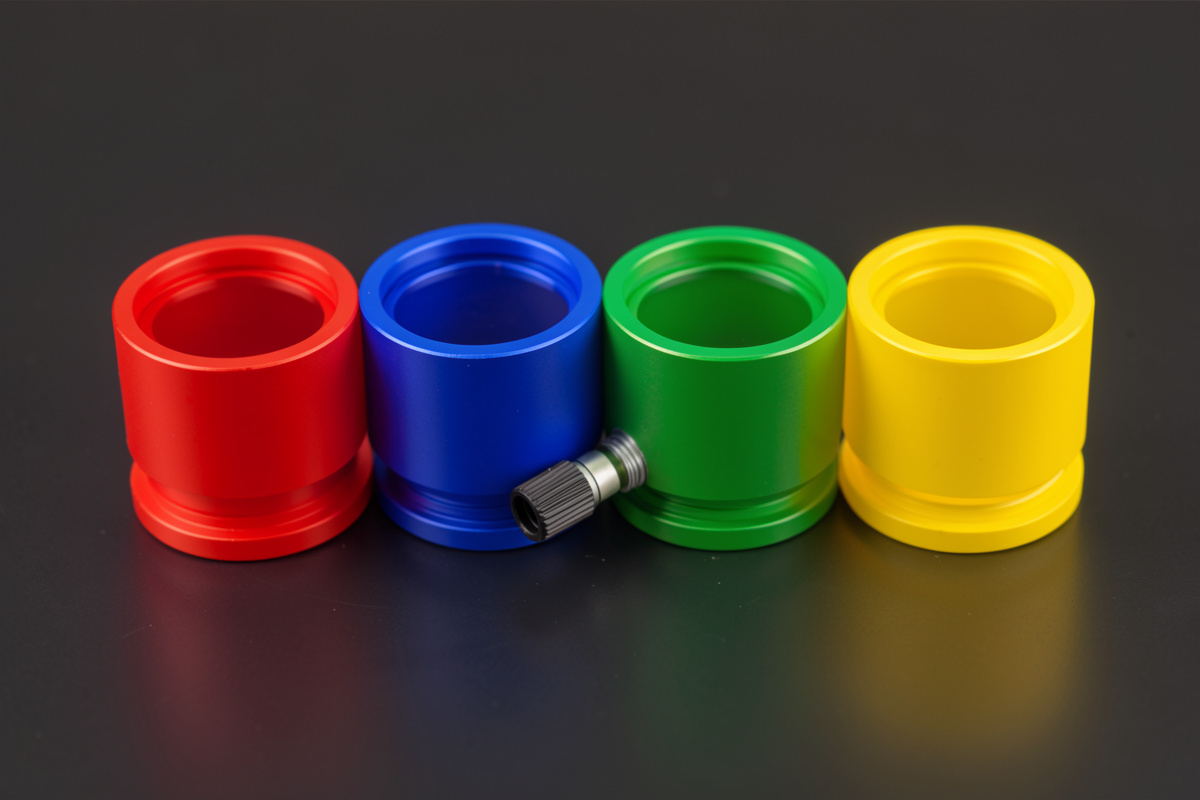

Coloured eyepiece filters are the most misunderstood accessory in planetary observing. Beginners either ignore them entirely, or buy a giant set of every colour and screw them in expecting magic. The truth sits in between: a small, well-chosen set of planetary filters genuinely lifts specific features on specific planets — darkening Mars’s surface markings, teasing out Jupiter’s belts, taming the glare off Venus — but they’re a refinement, not a rescue. A filter will never fix a warm scope, a turbulent sky, or bad optics. Used with realistic expectations, though, a few small pieces of coloured glass are some of the best value in the hobby. This guide explains exactly which colours do what, so you buy the two or three that earn their keep rather than a drawer full of glass you never thread in.
This is the planetary-specific deep dive; for the full filter landscape including light-pollution and nebula filters for deep-sky work, see the general telescope filters guide. It’s part of the planetary observing guide cluster, and pairs naturally with the per-planet technique in the Mars at opposition and observing Jupiter guides.
How coloured filters actually work
A coloured planetary filter is simply a piece of glass that passes its own colour and absorbs the others. By suppressing some wavelengths, it boosts the contrast of features that reflect or absorb light differently from their surroundings. A red filter, for instance, darkens the blue-grey markings on Mars relative to the red deserts, making them stand out. The trade-off is brightness: every filter dims the image, because it’s throwing away part of the light. That’s fine on the bright planets, but it means filters work best on larger apertures that have light to spare, and it’s why you flip them in and out to judge whether the contrast gain is worth the dimming on the night.
These filters are graded by the old photographic Wratten numbers, a standard system you’ll see on every planetary filter. You don’t need to memorise them, but knowing the key ones lets you buy precisely what you need.
The planetary filter reference table
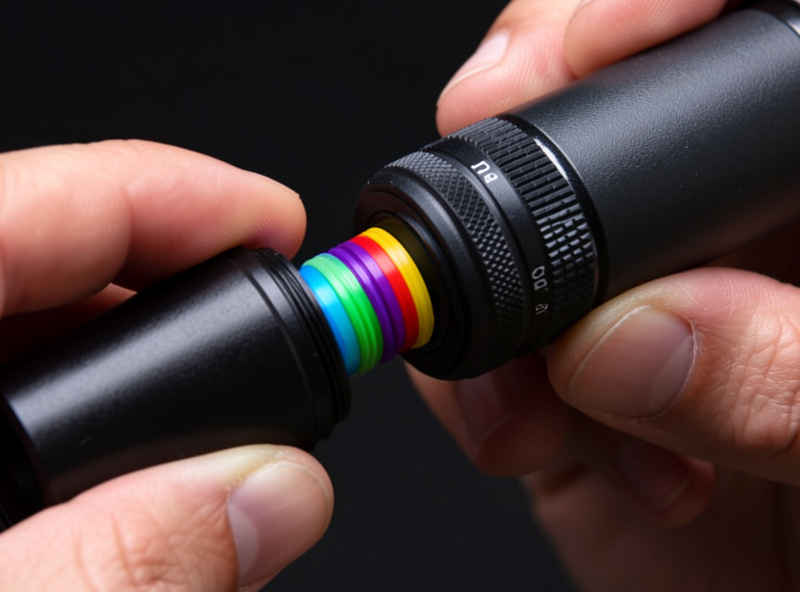
Here’s the working cheat sheet I’d hand a new planetary observer — the colours that earn their place, what they do, and where they shine.
| Filter (Wratten) | Colour | Best on | What it does |
|---|---|---|---|
| #21 / #23A | Orange / light red | Mars, Jupiter | Darkens Mars’s surface markings; sharpens Jupiter’s belts and festoons. The single most useful planetary filter. |
| #25 | Red | Mars | Strong contrast on Mars markings; needs a larger scope as it dims the image notably. |
| #80A | Blue | Jupiter, Saturn, Mars clouds | Boosts contrast in Jupiter’s belts and the Great Red Spot; reveals clouds and limb haze on Mars. |
| #56 | Green | Mars, Jupiter | Defines Mars’s polar caps and some markings; helps Jupiter’s reddish features. |
| #82A | Light blue | Jupiter, Saturn | Gentle contrast lift on belts with less dimming than a deep blue — a good all-rounder. |
| Neutral density | Grey (no colour) | Venus, Moon | Cuts glare without changing colour; tames dazzling Venus and a bright Moon. |
Filter by planet
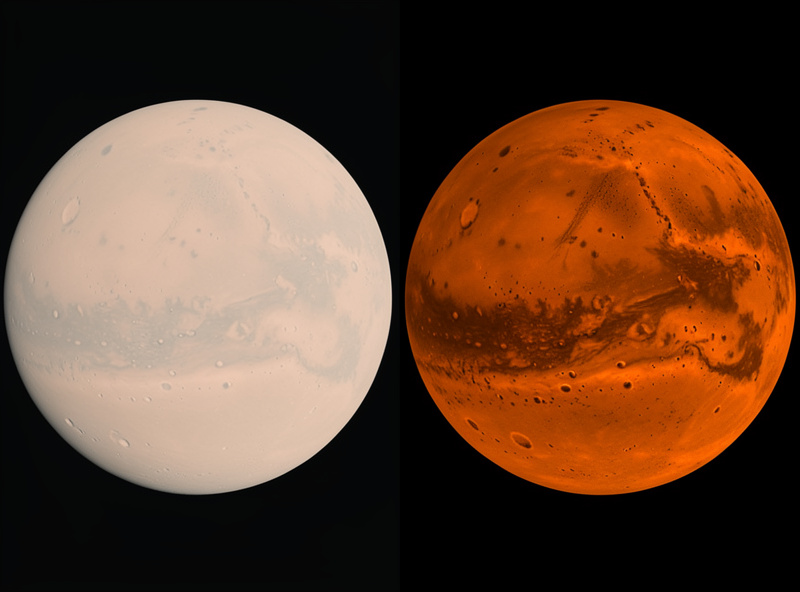
Mars is where filters matter most. An orange (#21) or red (#23A/#25) filter is transformative — the dark surface markings that are nearly invisible in white light snap into clear view, and the polar caps stand out crisply. A blue (#80A) filter does the opposite job, suppressing the surface to reveal clouds and limb hazes. If you buy filters for one planet, buy them for Mars.
Jupiter responds well to a light blue (#80A or the gentler #82A), which lifts the contrast of the brown equatorial belts and can make the Great Red Spot easier to pick out from the surrounding cloud. A green (#56) can help the reddish features. The gains are subtler than on Mars but real on a steady night.
Saturn is less filter-responsive — the rings and globe are fairly low-contrast pastel features — but a light blue can gently firm up the belts on the globe, and a neutral-density filter helps if a bright night has you squinting.
Venus shows no surface detail, so colour filters do little for features, but a neutral-density filter is genuinely valuable here purely to cut the planet’s overwhelming glare so the phase outline sharpens. The same neutral-density filter doubles as a Moon filter.
What to actually buy
Resist the urge to buy a twelve-filter mega-set; most of them will sit unused. For a planetary observer starting out, I’d get exactly three things: an orange (#21) for Mars and Jupiter, a light blue (#80A or #82A) for Jupiter and Saturn, and a neutral-density filter for Venus and the Moon. That trio covers the great majority of what filters can do for you. A sensibly chosen coloured planetary filter set often works out cheaper than buying singles and gives you the common colours to experiment with, while a dedicated neutral-density Moon filter handles the glare jobs. If you observe a lot of deep-sky too, a narrowband nebula filter is a separate, worthwhile purchase — but that’s a different job from these planetary contrast filters, and it’s covered in the general filters guide.
Disclosure: some links above are affiliate links. As an Amazon Associate I earn from qualifying purchases, at no extra cost to you. I only recommend gear I’d thread into my own eyepieces.
A note on filter quality and threading
Planetary filters are cheap relative to eyepieces, but quality still varies. The thing to check is that the glass is flat, properly coated, and accurately tinted to its Wratten spec — a poorly made filter can introduce its own softness or a colour cast that muddies rather than helps. The good news is that even mid-range filters from reputable optical brands are perfectly fine for visual planetary work; you don’t need premium glass here the way you do with eyepieces. Standard 1.25-inch filters thread directly into the bottom of the eyepiece barrel (2-inch filters exist for larger eyepieces), and they stay there until you unscrew them — so if you switch eyepieces mid-session you’ll need to move the filter across, which is a mild annoyance worth planning around. Keep them in their little cases when not in use; fingerprints and dust on a filter sit right in the light path and degrade the very contrast you bought them for.
Using filters well
Two habits make filters worth owning. First, always compare with and without. Thread the filter in, look, then take it out and look again. Sometimes the contrast gain is obvious; sometimes the dimming costs more than it gains on a faint or low night. Let your own eye decide rather than leaving a filter in permanently. Second, match the filter to the aperture. Deep red and dark blue filters dim the image a lot, so they pay off on a 6-inch or larger scope but can leave a small scope’s view too dark to be useful — on a small scope, stick to the lighter colours and the neutral density. Get those two habits right and a handful of small filters becomes a genuinely useful part of your planetary kit, exactly when the seeing is good enough to reward the extra contrast.
Do coloured filters really help with planets?
Yes, on the right planet. They boost the contrast of features that reflect light differently from their surroundings — an orange filter dramatically darkens Mars’s surface markings, a light blue lifts Jupiter’s belts. They’re a refinement that works best on a cooled scope under steady seeing, not a fix for poor conditions.
What is the most useful planetary filter to buy first?
An orange #21 filter. It darkens Mars’s surface markings and sharpens Jupiter’s cloud belts, covering the two planets where filters help most. After that, a light blue (#80A/#82A) for Jupiter and Saturn and a neutral-density filter for Venus and the Moon round out a complete starter set.
What do Wratten numbers mean on filters?
Wratten numbers are a standard photographic code identifying a filter’s exact colour and density — for example #21 is orange, #80A is blue, #25 is red. They let you buy precisely the colour you want regardless of brand, since the numbering is consistent across manufacturers.
Can I use planetary filters on a small telescope?
Light-colour filters and neutral density work fine on small scopes, but deep red or dark blue filters dim the image so much they can leave a small aperture’s view too dark to be useful. On a small scope stick to the lighter colours; the deeper filters pay off on 6-inch and larger apertures that have light to spare.
Is a neutral-density filter the same as a Moon filter?
Effectively yes — a neutral-density filter cuts brightness evenly without altering colour, which is exactly what you want to tame a dazzling Moon or the glare off Venus. The same filter serves both jobs, so you don’t need separate “Moon” and “Venus” filters.
