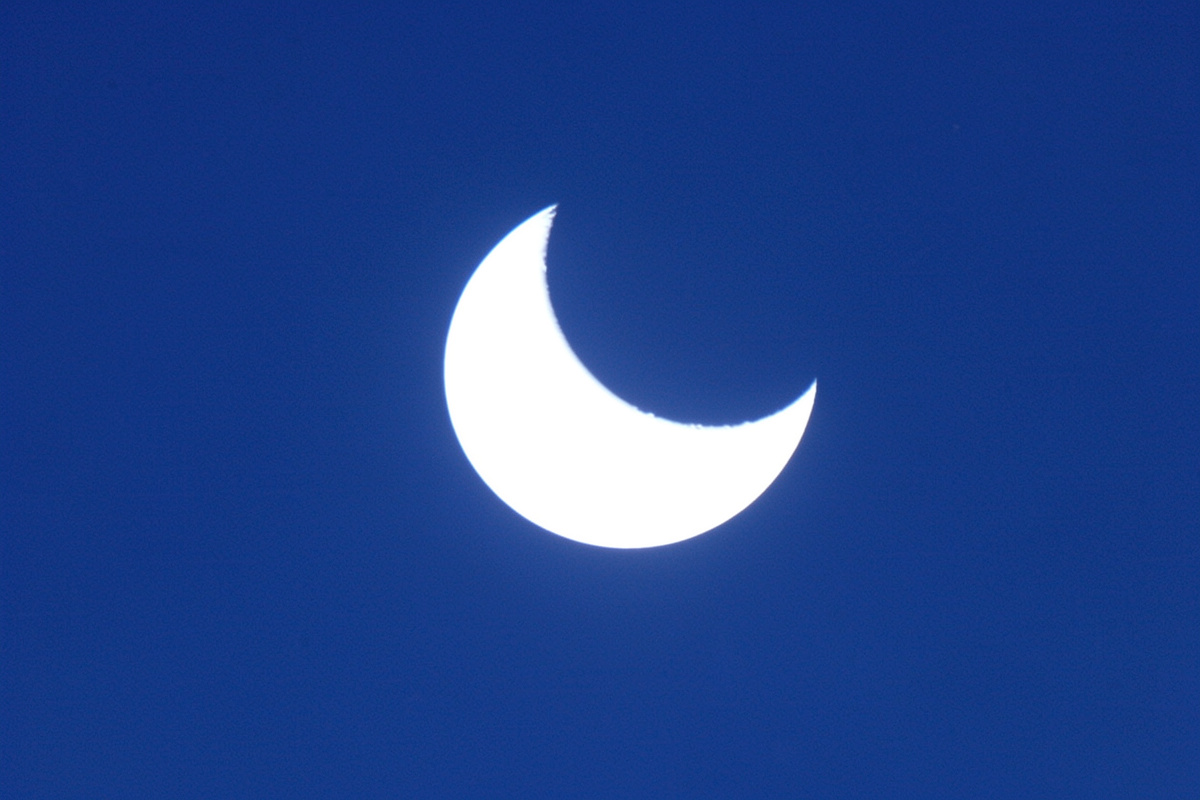

Venus is the brightest point of light in the night sky after the Moon — the dazzling “evening star” or “morning star” that’s so brilliant people regularly report it as a UFO. Swing a telescope to it expecting cloud detail or surface markings, though, and you’ll be disappointed: Venus is wrapped in a permanent, featureless deck of reflective cloud that shows nothing of the world beneath. So why bother? Because Venus does something no other planet does for the visual observer — it runs through a complete set of phases, exactly like the Moon, cycling from a small “full” disc through gibbous and half to a large, dramatic thin crescent. Watching that cycle unfold over weeks and months is one of the quiet, underrated pleasures of planetary observing, and it’s a direct, naked-eye-to-eyepiece demonstration that Venus orbits the Sun closer than we do.
This guide covers why Venus shows phases, what you’ll actually see at the eyepiece, how to observe a blindingly bright object without it overwhelming the view, and the all-important safety point about observing Venus near the Sun. It’s part of the planetary observing guide cluster, and the magnification discipline from the best magnification for planets piece applies here too.
Why Venus has phases
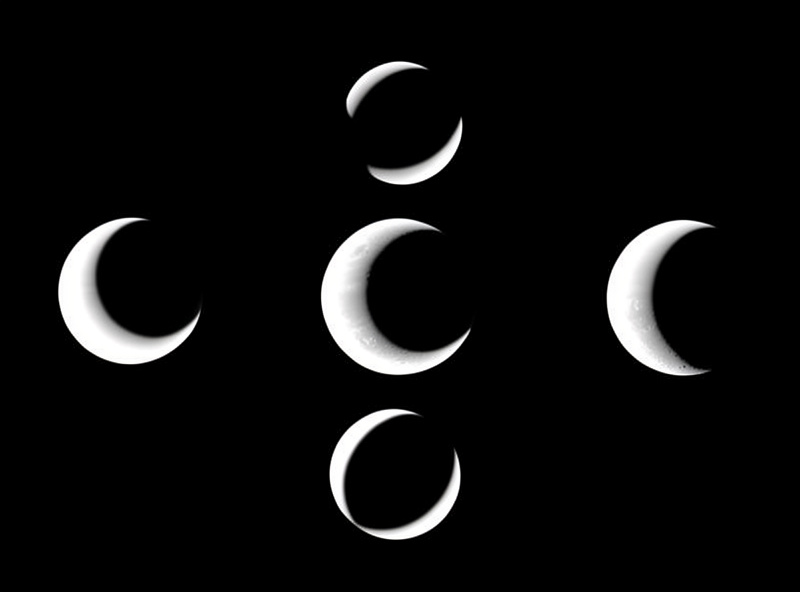
Venus orbits the Sun inside Earth’s orbit, so from our vantage point we see varying amounts of its sunlit side depending on where it is relative to us and the Sun — precisely the same geometry that gives the Moon its phases. When Venus is on the far side of the Sun from us it shows an almost fully lit, but small and distant, disc. As it swings around toward us on its faster inner orbit, it grows larger in apparent size while the lit portion we can see shrinks — passing through gibbous, then half (called dichotomy), then a steadily thinning crescent. At its closest, just before it passes between us and the Sun, Venus is a large, breathtakingly thin crescent.
This produces a lovely inverse relationship that surprises first-time observers: Venus is biggest in the eyepiece when it’s a thin crescent, and smallest when it’s “full.” The thin crescent phase is the one to wait for — a delicate, brilliant sliver that’s genuinely beautiful and visible in even a small scope. Galileo’s observation of exactly this phase cycle was a key piece of evidence that the planets orbit the Sun, which makes watching it yourself feel like repeating one of the foundational experiments of astronomy.
What you can actually see
Be clear-eyed about this: through any amateur telescope, Venus is a brilliant white, featureless shape. The phase — the shape of the lit portion — is the entire show, and it’s a good one. Even a modest scope at moderate power cleanly shows whether Venus is gibbous, half, or crescent. What you generally won’t see is detail in the clouds; the faint dusky cloud markings that some experienced observers chase require ultraviolet-passing filters and excellent conditions, and they’re at the very edge of visual perception — firmly in “advanced observers report” territory rather than something I’d promise a beginner. The honest, reliable reward is the phase itself, and the slow, satisfying change in that phase over weeks.
Taming the glare
Venus’s brilliance is its main observing challenge. Against a fully dark sky it can be so dazzling that the view washes out and the crescent’s edges blur in glare. Two simple fixes help enormously:
- Observe in twilight, not full darkness. Counterintuitively, the best time to observe Venus is when the sky still holds some blue — at dusk or dawn. The brighter background cuts the contrast and the glare, and the phase shows crisper against twilight than against black. This is my single best Venus tip.
- Use a filter to cut the brightness. A neutral-density Moon filter takes the harsh edge off Venus’s glare and lets the phase outline sharpen up. Some observers like a pale colour filter for the same reason.
For the kit, a neutral-density Moon filter is the most useful single accessory for Venus, and pairing it with a comfortable medium-power eyepiece (Venus doesn’t need extreme magnification — the phase is obvious at modest power) gives the cleanest view. If you like to fine-tune, a planetary zoom eyepiece lets you dial the magnification to frame the disc nicely without swapping glass in the cold. The general filter options are covered in the telescope filters guide.
Disclosure: some links above are affiliate links. As an Amazon Associate I earn from qualifying purchases, at no extra cost to you. I only recommend gear I’d use at my own eyepiece.
Elongation: when Venus is best placed
Because Venus never strays far from the Sun in our sky, it’s only well placed for observing around what astronomers call greatest elongation — the points in its cycle when it appears at its widest angular separation from the Sun, riding highest in a dark-enough sky. At greatest eastern elongation it’s the evening star, well up after sunset; at greatest western elongation it’s the morning star before dawn. Around half phase (dichotomy) tends to coincide roughly with these best-placed periods, so a half-lit Venus high in the twilight is the comfortable, accessible view, while the dramatic thin crescent comes when Venus is closer to us but lower and harder to catch. Knowing where Venus sits in this rhythm tells you not just what phase to expect but whether it’s even worth setting up — there are stretches when Venus is lost in the Sun’s glare and simply unobservable. A planetarium app will show you its current elongation at a glance.
A safety word: Venus near the Sun
Venus is never far from the Sun in the sky, and around its closest approach it can be very close indeed — sometimes observers chase it in broad daylight, when it’s actually easier to see the phase against a bright sky. This is where you must be careful. If you point a telescope anywhere near the Sun without a proper, full-aperture solar filter, even a momentary slip into the Sun’s disc through an unfiltered scope can cause instant, permanent eye damage. Never sweep for Venus in daylight by scanning near the Sun through the eyepiece or finder. If you observe Venus in daylight, do it only when you can place the Sun safely behind a building or other solid obstruction so there’s no way the scope can swing onto it, and ideally use a GoTo mount to slew straight to Venus’s known position. When in doubt, wait for twilight — it’s safer and the view is better anyway. I treat anything involving the Sun’s proximity with total caution, and so should you.
Observing Venus over time
The real payoff with Venus is patience across weeks, not minutes. Pick it up when it first appears as an evening or morning star, note its phase, and come back every week or two. You’ll watch it grow in apparent size as it thins from gibbous toward that gorgeous large crescent, then eventually disappear into the Sun’s glare before re-emerging on the other side. Tracking a full cycle is a months-long project that connects the dots between what you see and the actual geometry of the solar system — the same kind of slow, rewarding observing discipline that pays off when observing Mars at opposition or following Jupiter’s moons. Venus may show no surface, but in its phases it tells you exactly where it is in its orbit, and there’s a real satisfaction in reading that off the eyepiece for yourself.
Why does Venus have phases like the Moon?
Venus orbits the Sun inside Earth’s orbit, so we see varying amounts of its sunlit side as it moves relative to us and the Sun — the same geometry that gives the Moon its phases. It cycles from a small full disc through gibbous and half to a large thin crescent.
Can you see surface detail on Venus through a telescope?
No. Venus is wrapped in a permanent, featureless deck of bright cloud, so through any amateur telescope it appears as a brilliant white, detail-free shape. The phase — the shape of the lit portion — is the reward. Faint cloud markings require UV filters and are at the edge of visual perception.
When is the best time to observe Venus?
During twilight rather than full darkness. The brighter sky cuts Venus’s dazzling glare and the phase shows much more crisply against blue twilight than against a black sky. A neutral-density Moon filter also helps tame the brightness.
Is it safe to observe Venus in daylight?
Only with great caution, because Venus is always near the Sun. Never scan for it near the Sun through an unfiltered telescope or finder — even a momentary slip onto the Sun can cause instant, permanent eye damage. Place the Sun safely behind a solid obstruction, or simply wait for twilight, which is both safer and a better view.
