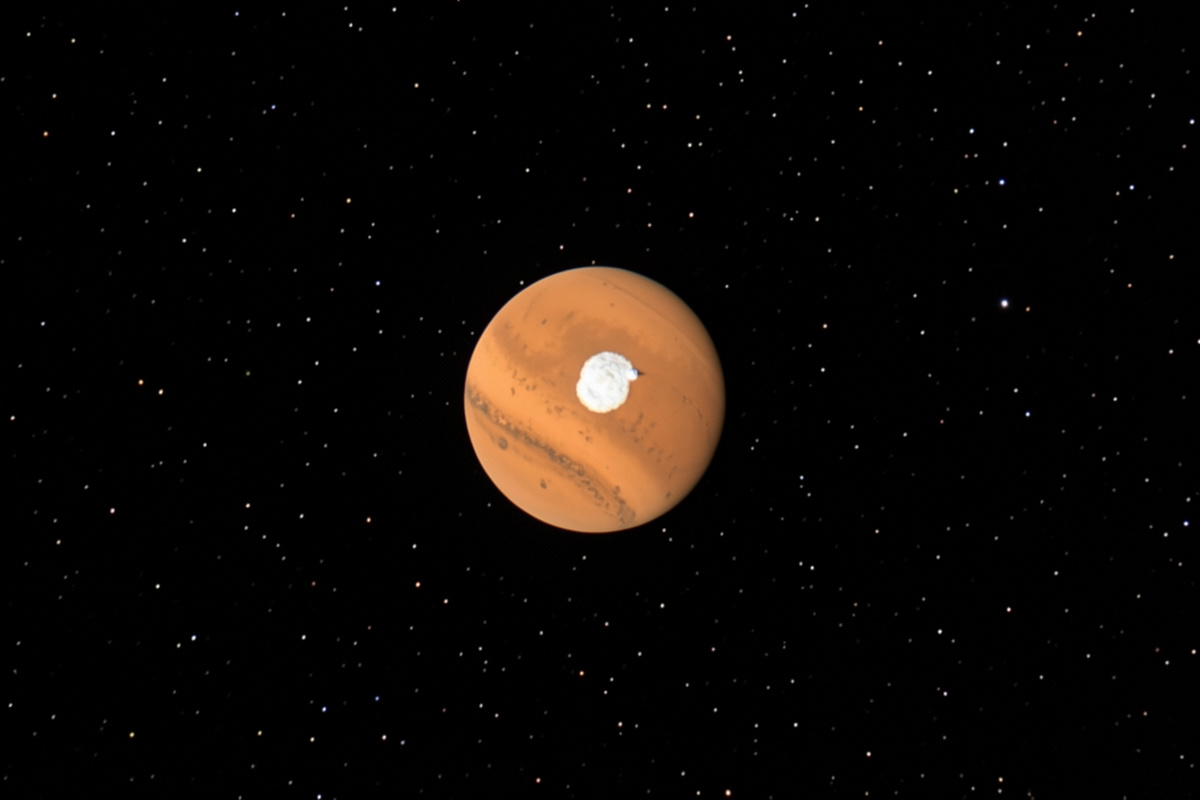

Mars is the planet that humbles people. After the easy rewards of Jupiter’s belts and Saturn’s rings, the new observer swings the scope to the famous Red Planet expecting another showpiece — and finds a tiny, featureless orange dot. That’s because for most of its cycle Mars is small and far away, and only briefly, around opposition, does it swell into a disc that shows real surface detail. Catching Mars at its best, and squeezing genuine detail out of it, is the connoisseur’s challenge of planetary observing. It takes timing, aperture, filters, and above all patience — and when it comes together, seeing a polar cap and the dark slash of a surface feature on another world with your own eye is one of the great thrills in the hobby.
This guide is written to stay useful in any year, because Mars opposition comes around on a roughly two-year rhythm — so rather than chase a date, I’ll teach you what opposition is, why it matters, and exactly how to observe Mars when its turn comes. It builds on the technique in the planetary observing guide and the magnification discipline from the best magnification for planets piece — both of which matter even more on a target this demanding. For the general timing of when each planet is well placed, the planets at opposition guide is the companion reference.
What opposition actually means
Opposition is when Earth passes directly between the Sun and an outer planet, putting that planet opposite the Sun in our sky — so it rises as the Sun sets and is up all night, fully illuminated. For Mars, opposition is doubly important because it’s also roughly when Earth, on its faster inner orbit, laps Mars and the two planets are at their closest. That proximity is everything: Mars’s apparent disc size swells dramatically around opposition and shrinks to a tiny dot the rest of the time. Observe Mars a few months either side of opposition and you’ll see a frustrating little disc; observe it within a few weeks of opposition and the polar caps and dark markings come within reach.
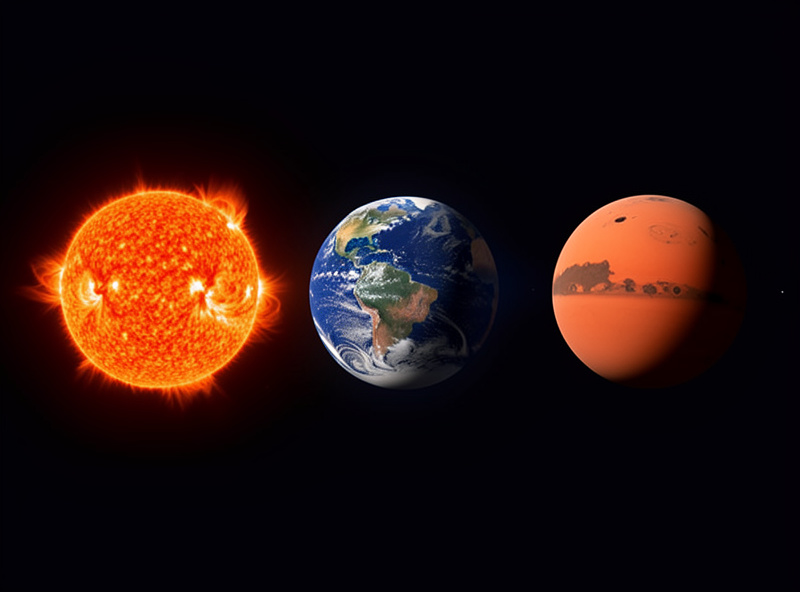
There’s a further wrinkle: not all Mars oppositions are equal. Because Mars’s orbit is noticeably elliptical, some oppositions bring it much closer than others. The “perihelic” oppositions, when Mars is near its closest point to the Sun, present a substantially larger disc than the more distant ones. The practical upshot is simple — every Mars opposition is worth observing, but some are far more generous than others, and it pays to know in advance whether the one coming is a close, large-disc apparition or a more modest one.
Why Mars is hard, honestly
Even at a good opposition, Mars is small — far smaller in the eyepiece than Jupiter or Saturn. The detail is there, but it’s subtle and demands everything go right: a well-cooled scope, decent aperture, steady seeing, and a patient, dark-adapted eye. This is the planet where a 6-inch or larger scope genuinely starts to pull ahead, because resolution matters more here than on any other planet. From my own benches, the 8-inch SCT and the 12-inch Dob show Mars in a way the little Maksutov simply can’t match at a good opposition — the extra aperture resolves the dark markings the smaller scope only hints at.
And from a high northern latitude there’s an extra hurdle: at some oppositions Mars sits low in the sky for northern observers, mired in horizon turbulence. When that’s the case, you take what the brief steady moments offer and don’t expect miracles. When Mars rides higher, make the most of it.
What you can actually see
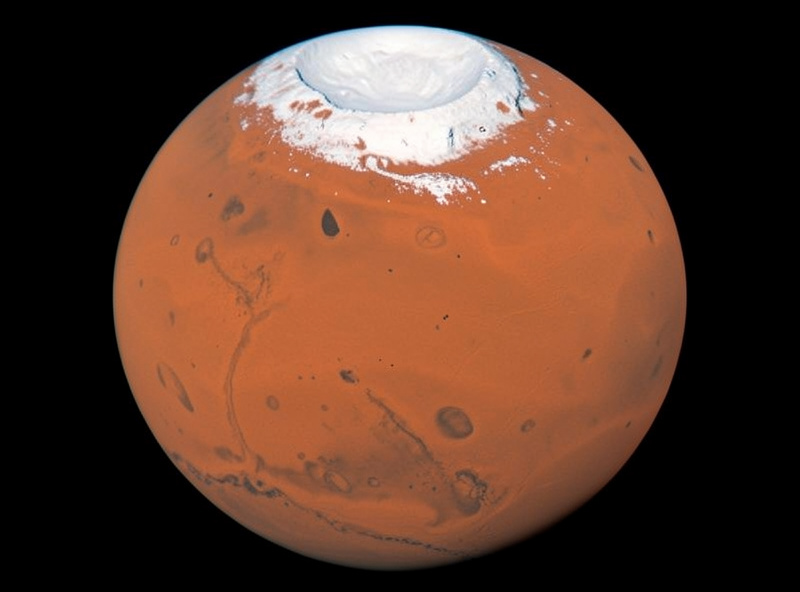
When Mars is well placed near opposition and the seeing cooperates, here’s the realistic menu, roughly in order of how easy each is to catch:
- A polar ice cap — usually the first feature beginners spot, a bright white patch at one limb of the disc. Which cap is tilted toward us depends on the Martian season.
- The major dark markings — the classic dark, roughly triangular feature (Syrtis Major) and other albedo markings that rotate across the disc over the night, since Mars’s day is close to Earth’s.
- The ochre deserts — the bright orange regions that give Mars its colour, contrasting with the darker markings.
- Clouds and hazes — on a good night and with the right filter, bright white cloud patches or a blue-white limb haze; during a global dust storm, by contrast, the markings can fade away entirely for weeks.
Because Mars rotates at nearly the same rate as Earth, the same face presents itself at a slightly later time each night, so over a couple of weeks of observing at the same hour you’ll gradually see the whole planet turn beneath you — a satisfying long game.
Managing expectations: the canals myth and what’s real
It’s worth saying plainly what Mars will not do, because misplaced expectations sink more Mars sessions than bad optics. You will not see the famous “canals” — those were an optical illusion and the product of eyestrain at the limit of perception in an earlier era of observing, not real features. You will not see a sharp, photo-like globe; even at a good opposition through a large scope, Mars is a small disc with subtle, low-contrast markings that reward patience over aperture-chasing. And you will not see surface detail at all if a global dust storm has kicked off, which can blanket the markings for weeks. What’s real and reliably attainable is the polar cap, the major dark albedo features rotating across the disc, the ochre desert tone, and — on a great night with the right filter — hints of cloud and limb haze. Calibrate to that reality and Mars stops disappointing and starts rewarding. It’s the planet that teaches you to observe like an expert: slowly, repeatedly, and with the discipline to wait for the air. Understanding exactly what the air is doing — and when to push the magnification and when to back off — is the subject of my atmospheric seeing for planetary observing guide.
Filters: where Mars detail is won
More than any other planet, Mars rewards coloured filters, because they boost the contrast of specific features that are otherwise washed out. This is the one place I’d genuinely urge a planetary observer to invest in a small filter set:
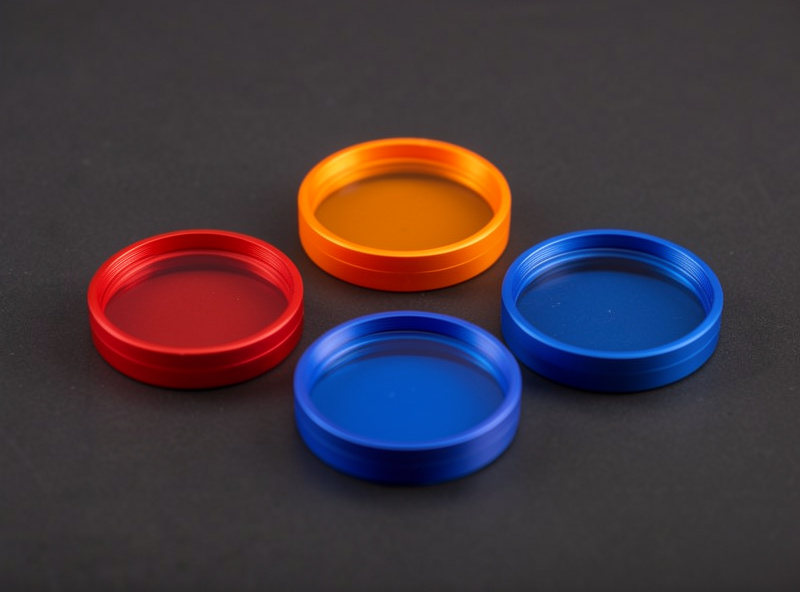
- Orange (Wratten 21) or red (Wratten 23A/25): darkens the dark surface markings and sharpens the contrast against the bright deserts — the single most useful Mars filter.
- Blue (Wratten 80A/38A): suppresses the surface and brings out clouds, hazes, and the bright limb — useful for catching atmospheric detail.
- Green (Wratten 56): can help define the polar caps and some markings.
A modest coloured planetary filter set covers all of these for less than the cost of a single decent eyepiece, and on Mars the difference is dramatic — features that are invisible in white light snap into view with the right filter. Pair them with a quality high-power eyepiece or a planetary zoom eyepiece so you can ride the magnification right up to the seeing limit, and you’ve got the Mars toolkit. The broader filter landscape is covered in the general telescope filters guide.
Disclosure: some links above are affiliate links. As an Amazon Associate I earn from qualifying purchases, at no extra cost to you. I only recommend gear I’d put in my own eyepiece case.
The observing method for Mars
The routine that gives me my best Mars views: cool the scope thoroughly (Mars detail is brutally unforgiving of tube currents); find and centre the planet; let my eye fully adapt at moderate power before pushing higher; then climb the magnification to the seeing limit and back off one step, exactly as on Jupiter and Saturn. Then comes the part unique to Mars — settle in for the long haul. Mars detail does not announce itself; it emerges in the brief seconds when the air stills, and you have to be looking, dark-adapted and patient, to catch them. Drop in an orange filter to firm up the markings, be ready to wait twenty or thirty minutes for the good moments, and the planet slowly gives up its secrets. The same patience that rewards you on Jupiter and Saturn is non-negotiable here.
Mars asks more of you than any other planet, and it gives back proportionally. The first time you hold the eyepiece long enough to watch Syrtis Major rotate into view above a gleaming polar cap, you’ll understand why seasoned observers count a good Mars opposition among the highlights of their observing lives — and why they mark the next one on the calendar the moment this one fades.
