
Observing planets with a telescope requires 150-300x magnification, thermal equilibrium, and steady atmospheric seeing. Jupiter shows cloud bands at 80x in a 4-inch telescope. Saturn’s rings are visible at 25x. Mars reveals surface features only during opposition at 200x or higher. The key to planetary observing is patience — both with the atmosphere and with your own training to see subtle detail.
Every planet presents a different observing challenge. Jupiter’s large disk and bright features reward any telescope. Saturn’s rings impress at any magnification but demand 200x to resolve the Cassini Division. Mars is the most demanding planet — small, low-contrast, and showing detail only during favorable oppositions every 15-17 years. Understanding each planet’s characteristics, the equipment it requires, and the timing that maximizes its visibility transforms planetary observing from a casual glance at a dot into a structured, rewarding program. The companion planetary observation guide covers the broader cluster context, and planets at opposition covers the dates that bracket each apparition.
How to Observe Jupiter
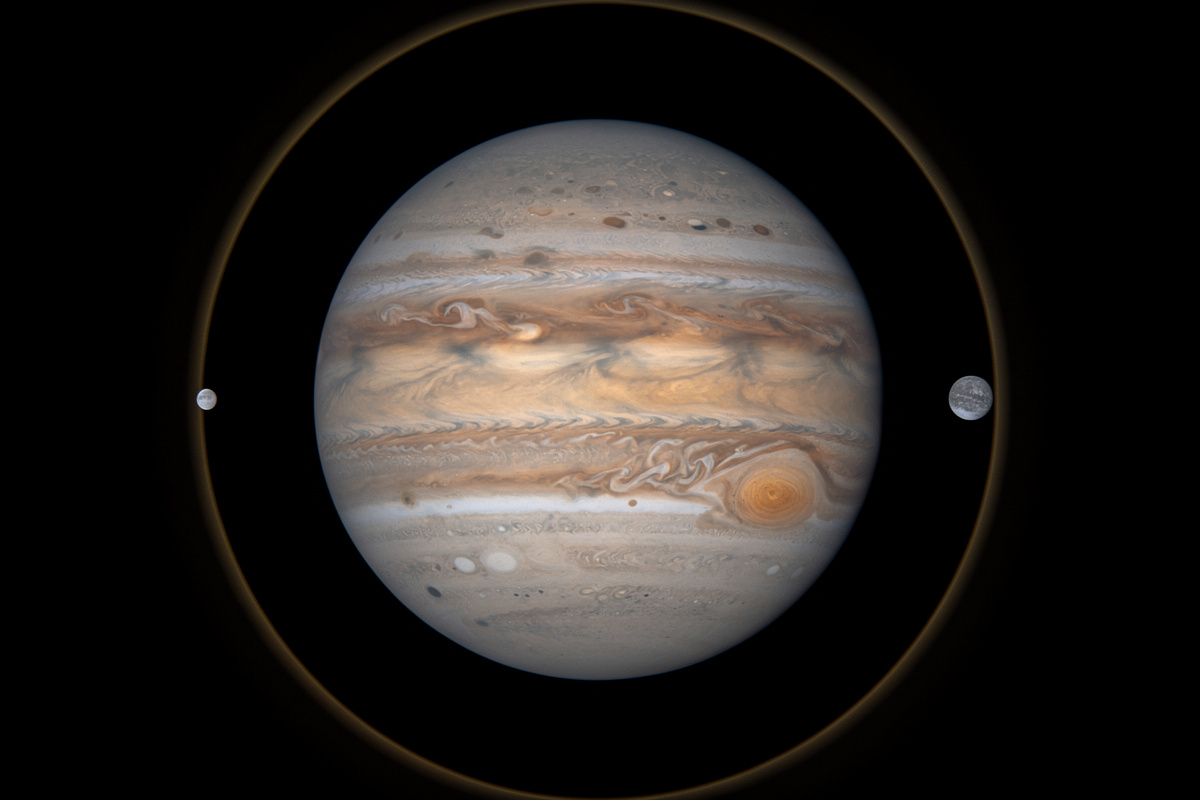
Jupiter is the best planet for beginners because its 30-50 arcsecond disk shows detail at any opposition and in any telescope from 3 inches upward. Set your telescope outside 30 minutes before observing to reach thermal equilibrium. Start at 100x to frame the entire disk, then increase to 150-200x to resolve the cloud belts.
The North and South Equatorial Belts are the most prominent features — two brownish bands straddling Jupiter’s equator. Between them lies the Equatorial Zone, usually brighter than the belts. The Great Red Spot appears as a salmon-colored oval in the South Equatorial Belt, visible when it faces Earth during Jupiter’s 10-hour rotation period. Stellarium or the Sky and Telescope app predicts when the Great Red Spot transits Jupiter’s central meridian — the best moment to observe it. The dedicated Jupiter through a telescope guide covers belt features and shadow transits in depth.
Jupiter’s four Galilean moons — Io, Europa, Ganymede, and Callisto — change position every night. Io orbits Jupiter every 1.7 days, causing visible changes within hours. Watch for moons passing in front of or behind Jupiter, or casting shadows on Jupiter’s cloud tops as small black dots. The first time I caught a double shadow transit (Io and Europa simultaneously) was on November 12, 2024 — Stellarium flagged the prediction two hours before, and that single event taught me to check the program every morning of the apparition.
How to Observe Saturn
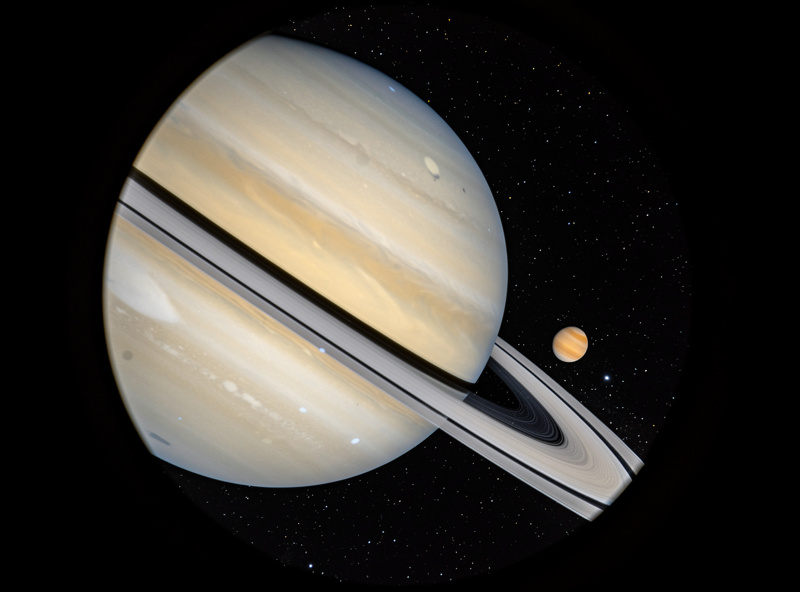
Saturn’s rings are visible in any telescope at 25x or higher magnification — the rings are separated from the planet’s disk at 100x. The Cassini Division — the dark gap between the A and B rings — requires 200x and 6-inch or larger aperture. The Encke Division in the A ring requires 14-inch or larger telescopes and exceptional seeing.
Saturn’s ring tilt varies over a 15-year cycle. At maximum tilt (26 degrees), the rings show maximum surface area and the Cassini Division is most prominent. The most recent ring-plane crossing was March 23, 2025; through 2026 the rings sit at 3-4° on the southern side and increasing each year toward the next maximum around 2032-2033. Saturn’s largest moon Titan (magnitude 8.5) is visible in any telescope and orbits Saturn every 16 days, changing position noticeably between sessions. The dedicated Saturn rings through a telescope guide covers ring tilt observing in detail.
Use a #80A light blue filter to enhance Saturn’s atmospheric banding. A medium-yellow #15 filter improves ring contrast. Saturn’s atmospheric features are more subtle than Jupiter’s — the belts are lower contrast and require steady seeing to distinguish.
How to Observe Mars
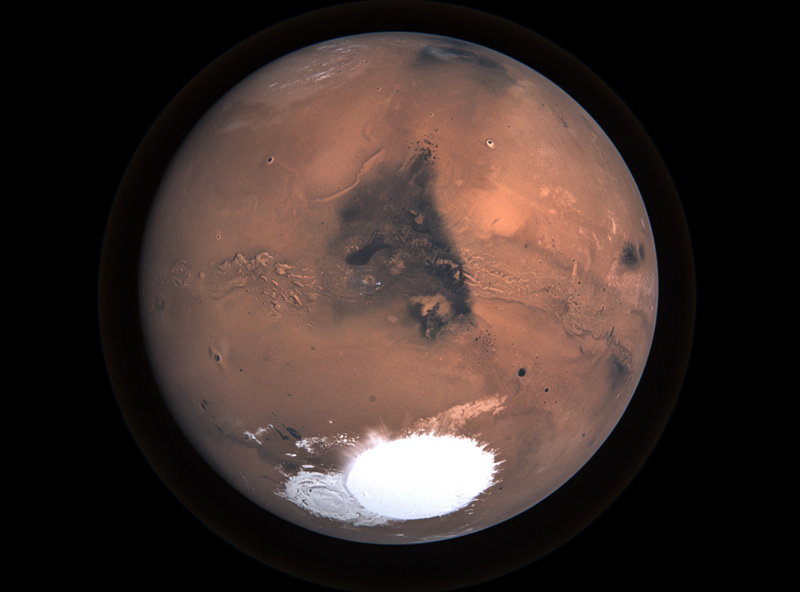
Mars is the most challenging bright planet because it is small (4-25 arcseconds depending on distance) and shows detail only during oppositions. During favorable oppositions at 20+ arcseconds, a 6-inch telescope shows the polar ice caps (bright white patches at one or both poles) and dark surface maria (Syrtis Major is the most recognizable feature — a dark V-shaped marking).
Mars requires 200-300x magnification and excellent seeing. The planet’s rapid rotation (24 hours 37 minutes) means surface features move noticeably during 30-60 minute observing sessions. A #21 orange filter enhances surface contrast. A #25 red filter emphasizes the polar caps. A #58 green filter reveals atmospheric clouds and hazes. During the January 2025 opposition I tracked Mars for nine consecutive nights through my 8-inch SCT at 240x — Syrtis Major rotated visibly across the disk over a single 90-minute session, and the third night I caught a faint frost halo around the south polar cap that I never would have noticed without sketching.
Mars oppositions occur every 26 months, but favorable oppositions when Mars is closest occur every 15-17 years. The 2033 opposition will be excellent at 24 arcseconds. Between favorable oppositions, Mars appears too small for meaningful detail in amateur telescopes — the 2025 and 2027 oppositions are unfavorable aphelion-era events.
How to Observe Venus and Mercury
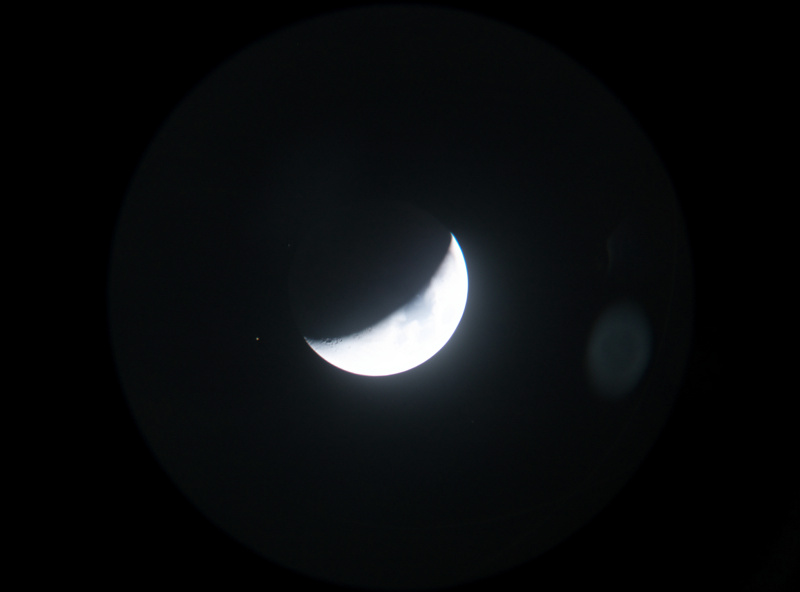
Venus shows dramatic phases — from a thin crescent at 60 arcseconds to a nearly full disk at 10 arcseconds. No surface detail is visible because Venus reflects sunlight from its thick cloud cover. The best Venus observations are of its crescent phase, where the thin illuminated sliver is visually striking at 100-150x. A deep violet #47 filter can reveal subtle atmospheric shrouding at the terminator.
Mercury also shows phases but is much harder to observe due to its proximity to the Sun — it never rises more than 28 degrees above the horizon. Mercury is best observed during evening or morning elongations when it is farthest from the Sun. A 4-inch telescope at 100-150x shows Mercury’s phase clearly. Mercury’s surface features are extremely difficult to see visually due to its small size and low altitude.
Planetary Observing Conditions
The three factors that determine planetary observing success are aperture (how much detail the telescope resolves), seeing (how steady the atmosphere is), and magnification (how much you enlarge the image). Aperture is fixed by your telescope. Seeing varies by night, season, and location. Magnification is your choice but is ultimately limited by seeing. The Moon is also a daily-available planetary-class target whose terminator features pair perfectly with planet sessions — the Moon observation guide covers what to chase by phase.
The best planetary seeing occurs on nights with stable temperature, no wind, and clear air after a weather front passes. Winter nights with temperature inversions often produce excellent seeing. Summer nights with rising thermals produce poor seeing. Observing from elevated locations above ground-level turbulence improves results. The ideal planetary seeing shows stars that barely twinkle — a steady, unwavering point of light. NASA’s Solar System exploration page publishes current planetary positions and apparition data that pair with night-of observing.
Common Mistakes I Made on Planet Nights
The first mistake was rushing through thermal equilibration. The first dozen Jupiter sessions I ran with my 8-inch SCT, I sat at the eyepiece within 5 minutes of bringing the scope outside. The image was a boiling mess and I assumed Jupiter just looked like that. The mirror needed 25-30 minutes to reach ambient temperature; once I started waiting, the planet looked like a different object. Now I set the scope outside while I make coffee, every time.
The second mistake was pushing 350x on Jupiter every clear night because “Jupiter is bright enough to take it.” Bright enough is not the constraint — the atmosphere is. On a 4-arcsecond seeing night, 350x just magnifies the boil. I now read the seeing scale at 100x for a full minute before deciding the night’s magnification ceiling. Most nights I land at 180-220x and stay there.
The third mistake was chasing Mars during the unfavorable 2022-2023 apparition. Mars was 14 arcseconds and 25 degrees high; I could not understand why my 8-inch SCT was not showing me the surface features I had read about in books. The books were written about favorable oppositions at 24-25 arcseconds and 50+ degrees altitude. Mars at 14 arcseconds is fundamentally a different target — there is less than half the surface area to resolve, and the atmospheric path doubles. I now plan Mars sessions around the geometry, not the calendar.
What I Would Do Tonight
If you have a 4 to 8-inch telescope and Jupiter or Saturn is up, here is the planet-night routine. Set the scope outside 30 minutes before you start. Insert a 12-15mm eyepiece (150-200x in most scopes) and find the planet; spend 5 minutes just watching it without changing anything. Note moon positions on a sketch pad. Push to 200-250x if seeing supports it; back off to 150x if the image is boiling. End the session by hopping to whichever planet you did not start with — the comparison between Jupiter’s belts and Saturn’s rings in the same hour is the moment planetary observing locks in. Tomorrow, return and notice the moons have moved. That is the observation Galileo made in 1610, and it never stops working.
Frequently Asked Questions
What magnification do you need to see planets?
Jupiter shows cloud bands at 80-100x. Saturn rings are clear at 100x, with the Cassini Division visible at 200x. Mars needs 200-300x for surface features during opposition. Venus shows phases at 100-150x. Start low to find the planet, then increase magnification to the highest power the atmosphere supports.
Can you see planets with a 4-inch telescope?
Yes. A 4-inch refractor or reflector shows Jupiter cloud belts and moons, Saturn rings, Venus phases, and Mars polar ice caps during favorable oppositions. A 4-inch APO refractor at f/7-f/9 produces some of the sharpest planetary views because it has no central obstruction and excellent contrast.
What is the best planet to observe for beginners?
Jupiter is the best beginner planet. Its large disk (30-50 arcseconds) shows detail at any opposition, its four Galilean moons change position nightly, and it is visible for months around its annual opposition. Jupiter detail is visible from urban backyards through moderate light pollution.
When is Saturn best to observe?
Saturn is best during opposition, when it is highest in the sky at midnight. Saturn oppositions occur roughly every 12.5 months, shifting about two weeks later each year. Saturn is visible for several months before and after opposition. The rings are most impressive at maximum tilt (26 degrees) and nearly vanish at ring plane crossing.
Why does my telescope show planets as blurry blobs?
Three possible causes: (1) The telescope has not reached thermal equilibrium — wait 30 minutes after bringing it outside. (2) Atmospheric seeing is poor — try a different night with steadier air. (3) Collimation is off — align the mirrors with a collimation tool. A fourth cause is using too much magnification for the conditions — reduce power until the image sharpens.
What color filter is best for planets?
A #80A light blue filter is the most versatile — it enhances Jupiter belts and Saturn atmospheric features. A #21 orange filter improves Mars surface contrast. A #58 green filter sharpens Venus and Jupiter Great Red Spot. Start with #80A (10-15 dollars) and add other colors as your interest develops.
Related Articles
Planetary Observation Guide — the complete planetary observing hub.
Jupiter Through a Telescope — bands, moons, and the Great Red Spot in depth.
Saturn Rings Through a Telescope — what to expect at every ring tilt.
Moon Observation Guide — the daily-available planetary-class target.
Planets at Opposition — opposition dates and apparition windows.
