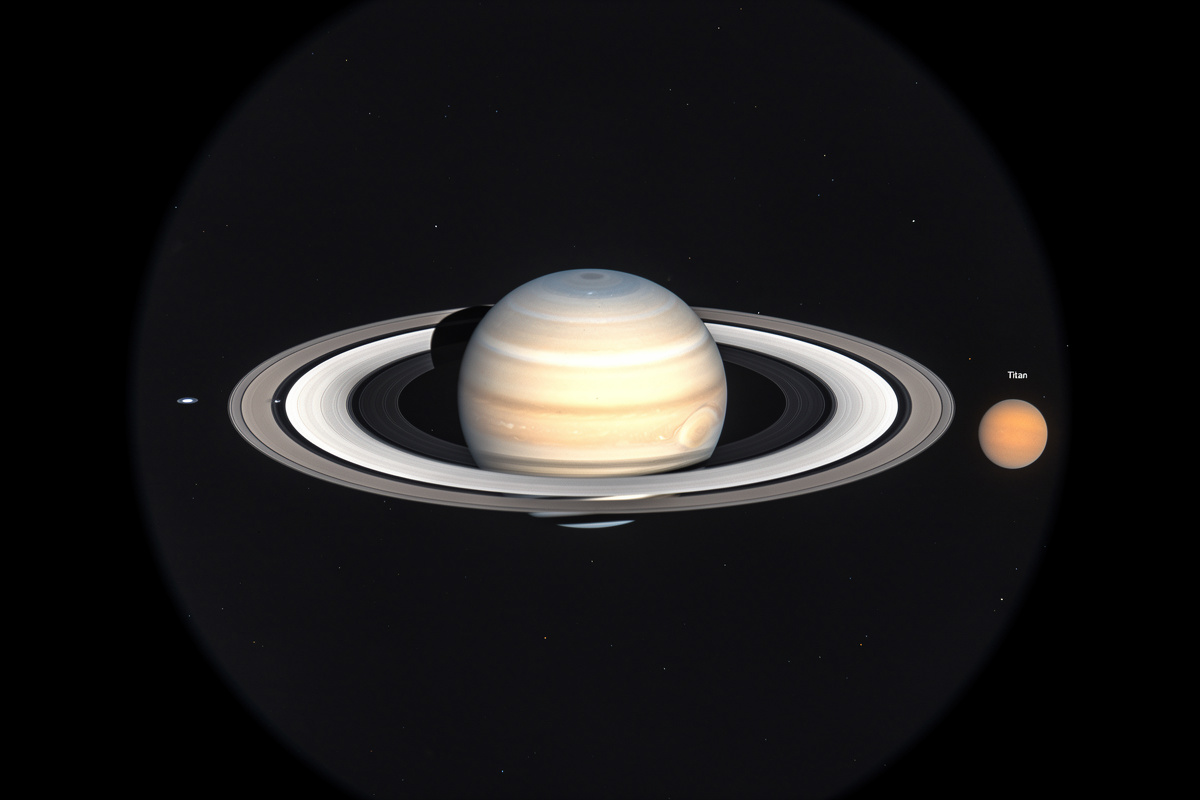

Planetary observation with a telescope reveals cloud bands on Jupiter, rings on Saturn, ice caps on Mars, and phases on Venus — details invisible in binoculars or small scopes. Telescopes of 4-inch aperture or larger at 150-300x magnification show meaningful planetary detail, with 8-inch and larger telescopes resolving surface features on all five bright planets.
Planetary observing is the most accessible branch of telescope astronomy because planets are bright, easy to find, and show detail even from light-polluted urban backyards. Unlike deep sky objects that require dark sites and wide-field eyepieces, planets concentrate their light into small apparent disks that punch through city skyglow. My own 8-inch SCT lives on a suburban driveway under a Bortle 7 sky, and I have pulled cleaner detail off Jupiter from there than friends have shown me through 16-inch Dobsonians dragged out to a dark site purely for galaxy hunting. Light pollution barely matters for planets — what matters is aperture, optical quality, and the air over your roof.
What Planets Can You See with a Telescope
Five planets show visible surface or atmospheric detail through amateur telescopes: Mercury, Venus, Mars, Jupiter, and Saturn. Uranus and Neptune appear as tiny blue-green disks with no surface detail in amateur instruments. Pluto requires a 12-inch telescope and a detailed chart to identify as a faint dot among thousands of similar stars.
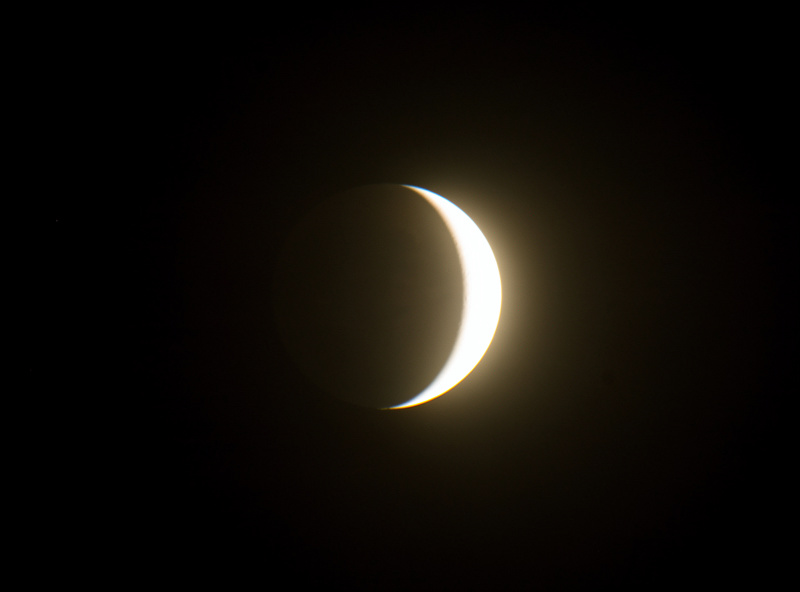
Mercury shows phases like the Moon — from a thin crescent when between Earth and the Sun, to nearly full when on the far side of its orbit. Mercury’s phases are visible in 3-inch telescopes at 100-150x, but its low altitude (always near the horizon) and small apparent size (5-13 arcseconds) limit the detail visible. Mercury is best observed during its greatest elongations — when it is farthest from the Sun in the sky — which occur several times per year.
Venus is the brightest planet and shows a dramatic range of phases and apparent sizes. At inferior conjunction (closest to Earth), Venus appears as a thin crescent 60 arcseconds across. At greatest elongation, it shows a half-moon phase at 25 arcseconds. At superior conjunction (farthest), it appears nearly full but only 10 arcseconds across. Venus’s brilliant cloud cover shows no surface detail because it reflects sunlight from its upper atmosphere.
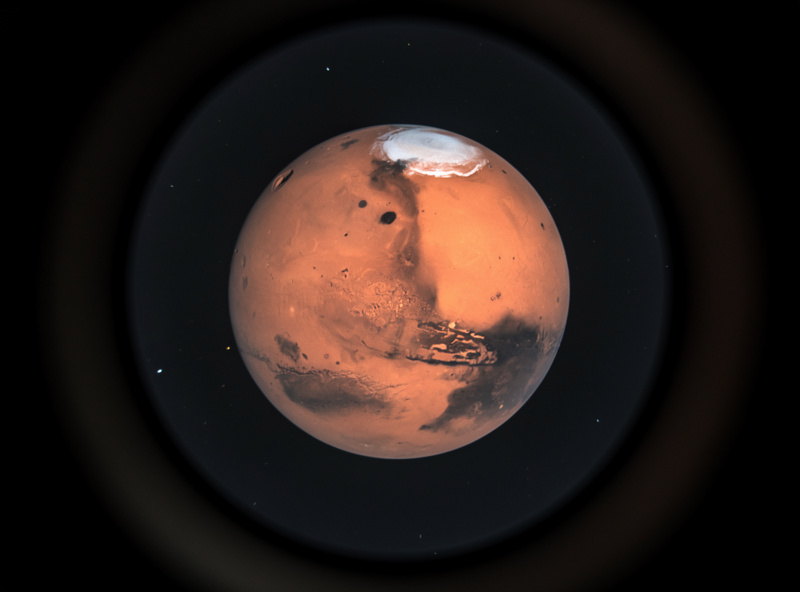
Mars is the most telescope-demanding planet because it is small (4-25 arcseconds depending on distance from Earth) and shows detail only during oppositions — when it is closest to Earth and directly opposite the Sun. Mars oppositions occur every 26 months, with favorable oppositions occurring every 15-17 years. During the January 2025 opposition I tracked Mars for nine consecutive nights through my 8-inch SCT at 240x — Syrtis Major rotated visibly across the disk over a single 90-minute session, and on the third night I caught a faint frost halo around the south polar cap that I never would have noticed without sketching. The next genuinely favorable opposition is 2033 at 24 arcseconds; everything before then is practice. How to observe planets walks through the session technique I learned the hard way.
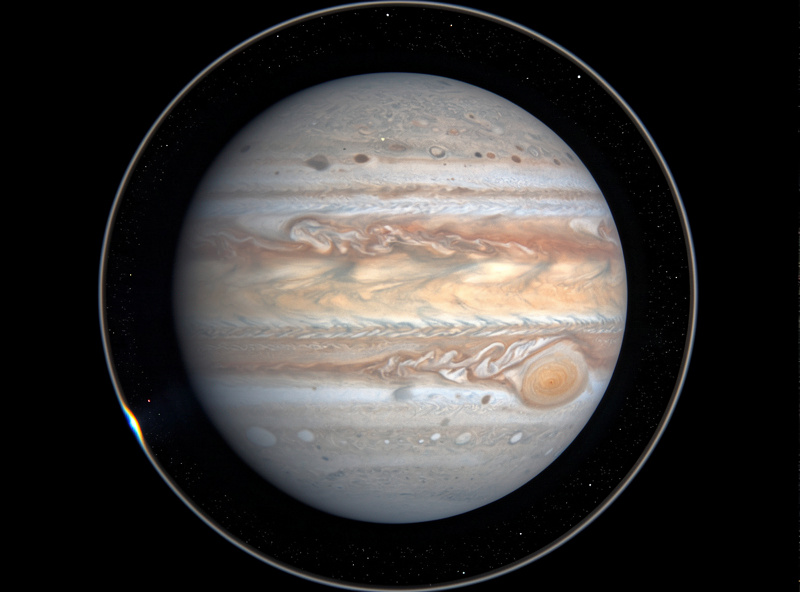
Jupiter is the most rewarding planet for amateur telescopes because its 30-50 arcsecond disk shows abundant detail at any opposition. The two main cloud belts — the North and South Equatorial Belts — are visible in 3-inch telescopes at 80x. A 6-inch scope at 150-200x reveals additional belts, festoons, and the Great Red Spot. Jupiter’s four Galilean moons — Io, Europa, Ganymede, and Callisto — are visible in any telescope and show nightly positional changes. Occultations, transits, and shadow transits are observable events that change every night. The first time I caught a double shadow transit (Io and Europa shadows crossing the disk simultaneously) was on November 12, 2024 — I had not planned for it, the prediction popped up in Stellarium two hours before, and I spent the entire event swapping between my 8mm and 5mm eyepieces while my hands shook from the cold. My full Jupiter guide lists the events worth setting an alarm for.
Saturn is the showpiece planet — the rings are visible in any telescope and never fail to impress. In a 3-inch refractor at 100x, Saturn shows the rings clearly separated from the planet’s disk. A 6-inch scope at 200x shows the Cassini Division — the dark gap between the A and B rings. Saturn’s largest moon Titan (magnitude 8.5) is visible in any telescope. Saturn’s ring tilt varies over a 15-year cycle — at maximum tilt (26 degrees) the rings are spectacular, at ring plane crossing they disappear edge-on. The most recent ring-plane crossing was March 23, 2025; I drove an hour to a clearer eastern horizon to catch the rings as a single hairline through 200x, and the next crossing is not until 2038-2039. Anyone starting now has a full 13-year arc of the rings tilting back open ahead of them. My Saturn rings guide covers what to expect at each ring tilt.
Best Telescopes for Planetary Observation
Planetary observing favors different telescope characteristics than deep sky work. Long focal lengths (f/8 to f/15) produce higher magnification with standard eyepieces. Large apertures resolve finer detail. Excellent optics with minimal wavefront error show cleaner images at high power. Refractors, Maksutovs, and SCTs are preferred over fast Newtonians for planetary work. If you are still narrowing down your first scope, the beginner telescope guide covers the budget tiers that actually deliver planetary detail.
| Telescope Type | Focal Ratio | Best Planets | Why |
|---|---|---|---|
| 4-5 inch APO Refractor | f/7-f/9 | Jupiter, Saturn, Mars | Sharp optics, no central obstruction, high contrast |
| 6-8 inch SCT | f/10 | All five planets | Long focal length in compact tube, versatile |
| 5-7 inch Mak | f/12-f/13 | Jupiter, Saturn | Excellent planetary contrast, sharp optics |
| 8-12 inch Dobsonian | f/5-f/6 | Jupiter, Saturn | Most aperture per dollar, needs quality eyepieces |
| 10-14 inch SCT | f/10 | All five planets | Maximum detail for serious planetary observers |
When to Observe Planets
Planets follow predictable visibility patterns based on their orbits. Jupiter is visible for months around opposition, which occurs roughly every 13 months. Saturn is visible for months around its annual opposition. Mars is visible for several months around its 26-month opposition cycle. Venus and Mercury alternate between evening and morning visibility throughout the year. The seasonal calendar in best planets to observe in 2026 lays out exact opposition windows for the current year.
Seeing conditions — atmospheric steadiness — determine how much detail a telescope reveals. The best planetary seeing occurs on nights of uniform temperature with no wind, typically after a weather front passes and the atmosphere stabilizes. Hot summer nights with rising thermals produce poor seeing. Cold winter nights with temperature inversions produce excellent seeing. The ideal planetary night has steady stars that barely twinkle.
Observing planets when they are highest in the sky minimizes atmospheric distortion. A planet at 60 degrees altitude passes through less atmosphere than one at 20 degrees altitude, producing sharper images. Planets in the eastern sky during evening hours are better positioned than those in the west, and planets crossing the meridian (the north-south line through the zenith) are at their absolute best.
Eyepieces and Filters for Planetary Observing
Planetary eyepieces should deliver 150-300x magnification — higher than most deep sky observing. Quality matters enormously at high magnification because any optical imperfection in the eyepiece is magnified along with the planet. Orthoscopic eyepieces ($50-100) offer the sharpest on-axis images and are traditional planetary favorites. Modern planetary eyepieces like the Astro-Tech Paradigm Dual ED ($60) and Explore Scientific 52-degree ($80) provide wider apparent fields with excellent sharpness. My own 8mm Astro-Tech Paradigm gets used every planetary night — at f/10 it gives me 254x in the 8-inch SCT, which is the magnification I actually live in 80% of the time on Jupiter and Saturn. The 5mm Paradigm comes out only when seeing is genuinely steady; on most nights it shows me a bigger but mushier planet, which is exactly the trap the mistakes section below warns about. The full eyepiece guide compares the lineup at each focal length, and a 2x Barlow lens stretches a small eyepiece set into a planetary kit cheaply.
Color filters are the most cost-effective planetary upgrade. A #80A light blue filter ($10-15) enhances Jupiter’s belts and Saturn’s atmospheric features. A #21 orange filter ($10-15) improves Mars surface contrast. A #58 green filter ($10-15) sharpens Venus’s terminator and Jupiter’s Great Red Spot. Wratten filter numbers are standardized across manufacturers — a #80A from any brand produces the same effect. The telescope filters guide walks through which filters earn their slot in your eyepiece case.
Planetary Observation Tips for Beginners
Start with Jupiter — it is the most rewarding planet for beginners because its large disk (30-50 arcseconds) shows detail at any opposition, and its four Galilean moons provide nightly entertainment as they change positions. Set up your telescope 30 minutes before you plan to observe, allowing the optics to reach thermal equilibrium with the outside air. Telescope tubes that are warmer than the ambient air produce tube currents — warm air rising inside the tube — that blur planetary detail. A telescope that has been outside for 30 minutes shows noticeably sharper images than one just brought from a warm room. If you own a Newtonian or Dobsonian, this is also when you should run a quick collimation check; the collimation guide covers the 5-minute version I run before every planetary session.
Use the highest magnification your telescope and the atmosphere support. The useful magnification limit for a telescope is roughly 50x per inch of aperture — a 6-inch scope supports up to 300x, while a 4-inch scope supports 200x. However, atmospheric seeing usually limits practical magnification to 150-250x regardless of telescope size. If the planet becomes blurry when you increase magnification, the atmosphere is the limiting factor, not your telescope. Back off to the highest power that shows a steady image.
Allow your eyes to dark-adapt for 15-20 minutes before observing planets, even though planets are bright. The reason is not light sensitivity — it is pupil dilation. A dark-adapted eye has a wider pupil, which admits more light from the planet but also admits more atmospheric aberration. For planets, a slightly unadapted eye with a smaller pupil actually produces sharper images by reducing the optical path through the eye. Some experienced planetary observers deliberately glance at a dim red light occasionally to keep their pupils from fully dilating.
Recording Your Observations
Sketching planetary features is the traditional method of recording observations and trains your eye to see more detail. Use a blank circle the size of the planet’s apparent disk (drawn on index cards before the session) and sketch the features you see using a graphite pencil. Begin by marking the brightest features — major belts on Jupiter, the rings on Saturn, the polar caps on Mars — then fill in fainter details. Compare your sketch to a planetarium program’s prediction of the planet’s appearance at the time of your observation. The first month I sketched Jupiter every clear night, I caught more detail in my 30th sketch than I had seen in the previous 29 — the act of drawing forces you to look at one feature long enough for it to actually resolve.
Digital photography through the telescope (planetary imaging) captures detail that visual observers miss. A webcam or planetary camera recording video at 100-200 frames per second captures thousands of frames during moments of atmospheric stillness. Stacking software (AutoStakkert, RegiStax) selects the sharpest 5-10% of frames and combines them into a single image with detail far beyond what visual observation reveals. A $200 planetary camera and free software can produce images rivaling those from professional observatories 30 years ago. The astrophotography guide covers the camera-to-laptop workflow if you want to move from sketches to stacks.
Timing Planetary Events
Jupiter’s moons provide the most frequent planetary events. Io orbits Jupiter every 1.7 days, causing eclipses, transits, and occultations that occur several times per week. Europa (3.6 days), Ganymede (7.2 days), and Callisto (16.7 days) produce less frequent but equally interesting events. Shadow transits — when a moon’s shadow crosses Jupiter’s disk — appear as small black dots moving across the planet’s face. Software like Stellarium or Sky and Telescope’s online calculator predicts all events months in advance.
Saturn’s rings change their apparent tilt over a 15-year cycle. At maximum tilt (26 degrees), the rings show maximum surface area and the Cassini Division is most prominent. At ring plane crossing, the rings appear edge-on and nearly disappear — the most recent crossing was March 23, 2025, and the next will be in 2038-2039. For the next decade the rings will gradually tilt back open, with each year showing more ring detail than the last. Saturn’s moon Titan transits across Saturn’s disk and casts shadows on Saturn’s cloud tops, visible in 8-inch and larger telescopes.
Mars surface features rotate as the planet spins, completing one rotation every 24 hours and 37 minutes. Observing Mars for 30-60 minutes reveals surface features moving from one limb to the other. Syrtis Major — a distinctive dark V-shaped feature — is the most recognizable surface feature and is used as a reference point for Mars rotation. The Mars WebTAS tool at the ALPO-Japan website calculates which features face Earth at any given time. The same time-based logic applies to the Moon: lunar terminator features change night by night, and the Moon observation guide works through which features to chase at each phase.
Atmospheric Seeing and Its Effects
Atmospheric seeing — the steadiness of the air above your telescope — determines how much planetary detail you can see. Poor seeing (large, rapid image movement) limits useful magnification to 100-150x regardless of telescope quality. Good seeing (small, slow image movement) enables 200-400x and reveals fine detail invisible at lower magnification. The difference between a poor seeing night and an excellent seeing night on Jupiter is the difference between seeing two blurry bands and resolving dozens of fine details, festoons, and the Great Red Spot’s internal structure.
Seeing is best on nights when the temperature is stable and wind is minimal. The hours after sunset in winter, when the ground cools rapidly, often produce temperature inversions that create excellent seeing. Summer evenings with rising thermals produce poor seeing. Observing from elevated locations above ground-level turbulence — rooftops, hillsides, or elevated decks — improves seeing by keeping the telescope above the worst atmospheric mixing layer. Unlike deep sky targets, planets do not require a dark sky site — they reward steady air over your driveway more than dark skies an hour away.
Common Mistakes I Made Starting Out
The first time I tried 350x on Jupiter the seeing was about 4 arcseconds and the disc boiled like a frying pan. I burned 90 minutes pushing magnification because I assumed the scope was the problem — fresh collimation, fresh diagonal, swapping eyepieces — when the real cause was a 22-degree temperature gradient over the city, and there was nothing I could do about it. Backing down to 180x gave me a sharp, steady Jupiter immediately. The lesson: when the planet refuses to look right, try less magnification before you try more.
I also wasted two summers chasing Mars during the 2022-2023 unfavorable apparition. Mars was 14 arcseconds and 25 degrees high, and I could not understand why my 8-inch SCT was not showing me the surface features I had read about in books. The books were written about favorable oppositions at 24-25 arcseconds and 50+ degrees altitude. Mars at 14 arcseconds is fundamentally a different target — there is less than half the surface area to resolve, and the atmospheric path doubles. I now plan Mars sessions around the geometry, not the calendar.
The third mistake: I bought a 2.5mm planetary eyepiece for my 8-inch SCT, assuming that 813x would give me the most detailed view possible. I used the eyepiece three times before retiring it permanently. The atmosphere over my driveway has never supported 813x — not once. The eyepiece I actually use 80% of nights is the 8mm at 254x, and I should have started there.
What I Would Do Tonight
If you are starting tonight with a 6 to 8-inch telescope and Jupiter is up, here is the first session I would build for you. Set the scope outside 45 minutes before you start. Insert an 8-12mm eyepiece (whatever gives you 150-200x in your scope) and find Jupiter low in the east. Spend the first 10 minutes just looking — let the atmosphere decide what magnification it will give you. Sketch the two main cloud belts, mark the four Galilean moons in their current positions, and note the time. Then push to your highest steady magnification (probably 250-300x) and look for the Great Red Spot. If Saturn is also up, end the session there — it is the planet that hooks people, and you want to leave the eyepiece smiling. Return tomorrow night and compare your moon positions to last night. That single comparison — seeing the moons have moved — is the moment planetary observing starts working on you, and it is the reason every spoke article on this site exists. If you want the full telescope-selection and technique framework before your next session, my planetary observing guide covers aperture, optical design, mount choice, and seeing — the decisions that set the ceiling for everything else.
Frequently Asked Questions
What telescope is best for viewing planets?
A 6-8 inch Schmidt-Cassegrain (SCT) or 5-7 inch Maksutov offers the best combination of aperture, focal length, and optical quality for planetary observing. A 6-inch SCT at $1,000-1,500 resolves Saturn’s Cassini Division, Jupiter’s Great Red Spot, and Mars surface features during opposition.
Can you see Saturn rings with a small telescope?
Yes. Saturn rings are visible in any telescope with 25x or higher magnification, including 60mm refractors and 3-inch reflectors. The rings appear clearly separated from the planet at 100x. The Cassini Division (gap between the A and B rings) requires 200x and 6-inch or larger aperture.
What magnification do you need to see Jupiter moons?
Jupiter four Galilean moons are visible at any magnification, including binoculars at 7-10x. They appear as bright dots flanking Jupiter. Individual moons can be distinguished by their different brightnesses and positions, which change nightly as they orbit Jupiter every 1.7 to 16.7 days.
When is the best time to observe Mars?
Mars is best observed during opposition — when it is closest to Earth and directly opposite the Sun. Mars oppositions occur every 26 months. Favorable oppositions (when Mars is closest) occur every 15-17 years. The next favorable opposition is in 2033, when Mars will be 24 arcseconds across.
Can you see planets from the city?
Yes. Planets are bright enough to show excellent detail through city light pollution. Unlike deep sky objects that need dark skies, planets concentrate their light into small disks unaffected by skyglow. The main limitation in cities is atmospheric turbulence from heat islands and buildings, not light pollution.
What is the best color filter for planets?
A #80A light blue filter is the most versatile planetary filter — it enhances cloud belts on Jupiter and Saturn for all observers. A #21 orange filter improves Mars surface features. A #58 green filter sharpens Venus and Jupiter Great Red Spot. Start with #80A and add others as your interest grows.
Related Articles
How to Observe Planets with a Telescope — session-by-session technique for Jupiter, Saturn, and Mars.
Jupiter Through a Telescope — bands, moons, and the Great Red Spot in detail.
Saturn Rings Through a Telescope — what to expect at every ring tilt.
Moon Observation Guide — best lunar features to chase at each phase.
Best Planets to Observe in 2026 — opposition dates and apertures for the year ahead.
