
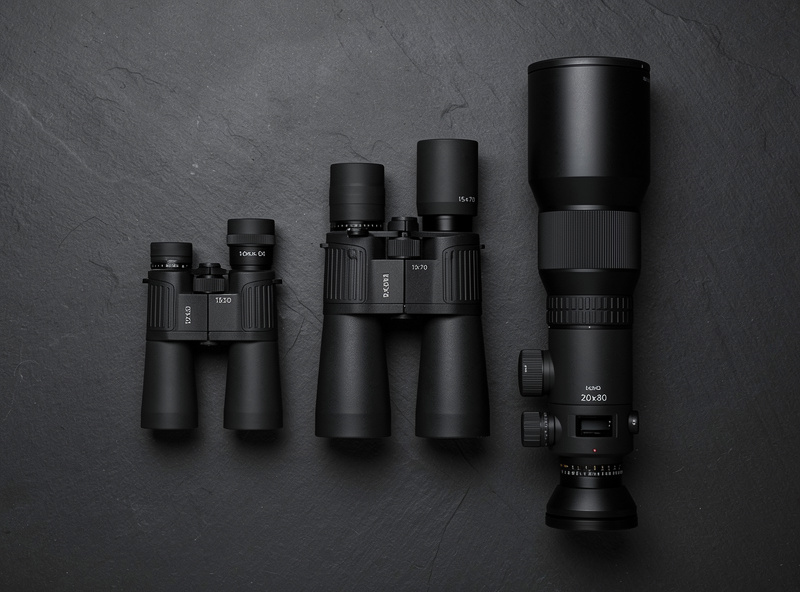
For astronomy, 10×50 binoculars are the best handheld all-rounder, 15×70 is the reach upgrade that needs a mount, and 20×80 is a dedicated deep-sky instrument that lives on a tripod. The right choice is decided less by aperture envy than by one practical question: will you hold them, or mount them? Get that answer right and the rest follows. I have run all three side by side from a Swedish backyard and a dark Nordic site, and the differences are bigger in practice than the numbers suggest.
Disclosure: some links below are Amazon affiliate links. If you buy through them I may earn a small commission at no extra cost to you. I only point at gear I would actually recommend.
This is the magnification comparison I wish more buying guides made honestly. Bigger is not automatically better — past a certain point you are buying a small telescope that demands a mount, a chair, and patience. If you want the underlying optics first, my astronomy binoculars guide covers exit pupil and field of view in depth; here I put the three classic formats head to head.
The Quick Verdict
If you can own only one and want to use it tonight without buying anything else, get the 10×50. It is the only one of the three that is genuinely handheld for a full session, and its 5mm exit pupil is matched to a dark-adapted eye. Step up to 15×70 when you have a mount and want fainter targets; reach for 20×80 only when mounted deep-sky observing is the whole point and weight no longer matters.
The progression is really about commitment, not just aperture. Each jump roughly doubles the light grasp and the reach, but also the weight and the dependence on support. A 10×50 weighs under a kilogram; a 20×80 is past two and impossible to hold steady. Decide how much setup you will tolerate on a cold night, because that — not the spec sheet — determines which pair you actually use.
10×50 vs 15×70 vs 20×80: The Numbers
The table below lays the three formats out on the specifications that actually change the view. Exit pupil drives brightness, true field drives how much sky you frame, and weight drives whether you can hold it. Notice how the exit pupil shrinks as magnification climbs faster than aperture — that is why the giants need a darker sky to look their best.
| Spec | 10×50 | 15×70 | 20×80 |
|---|---|---|---|
| Exit pupil | 5.0mm | 4.7mm | 4.0mm |
| True field (approx.) | ~6.5° | ~4.4° | ~3.2° |
| Approx. weight | ~0.9 kg | ~1.4 kg | ~2.1 kg |
| Handheld? | Yes | Briefly only | No |
| Light grasp vs eye | ~50x | ~100x | ~130x |
| Best use | All-round, grab-and-go | Faint clusters, comets | Mounted deep-sky |
The field-of-view numbers tell the real story for beginners. At 6.5 degrees the 10×50 frames the whole Pleiades with room to spare and makes star-hopping easy; at 3.2 degrees the 20×80 magnifies more but shows you a smaller patch of sky, so finding targets without a finder gets harder. More power is not more sky — it is a tighter, brighter, harder-to-aim window.
10×50: The Handheld All-Rounder
The 10×50 is the pair I recommend to almost everyone first. It is light enough to hold for a long session, especially braced against a chair, and the 5mm exit pupil delivers a bright image in any sky. From a suburban backyard it shows the Andromeda Galaxy, the Double Cluster, the brighter Messier clusters, and stunning Moon detail; from a dark site it becomes a Milky Way sweeping machine.
Its other virtue is that it is complete. No mount, no chair, no adapter — you walk outside and observe. That immediacy is why a 10×50 gets used ten times as often as a giant binocular that needs a setup ritual. For the ranked model picks at this size, see my best binoculars for astronomy guide, or browse 10×50 astronomy binoculars on Amazon. If you do nothing else, buy this and learn the sky with it.
15×70: The Reach Upgrade
The 15×70 is the natural second pair or the ambitious first pair for someone who already owns a tripod. The jump from 50mm to 70mm of aperture roughly doubles the light grasp, pulling fainter clusters and galaxies out of the background and starting to granulate the brighter globulars. It is the format that turns binocular astronomy from casual sweeping into genuine deep-sky hunting.
But 15x is over the handheld line. Your pulse smears the image, and the difference between a shaking and a steadied 15×70 is dramatic — a mounted pair reveals 30 to 40 percent more faint stars in a cluster simply because they stop wobbling below the eye’s threshold. Plan on a tripod with an L-adapter or a parallelogram arm from day one. Treat handheld 15×70 as a quick grab at a bright object, never a real session. If the reach appeals, you can compare current 15×70 binoculars on Amazon — just price the mount in too.
20×80: The Mounted Deep-Sky Instrument
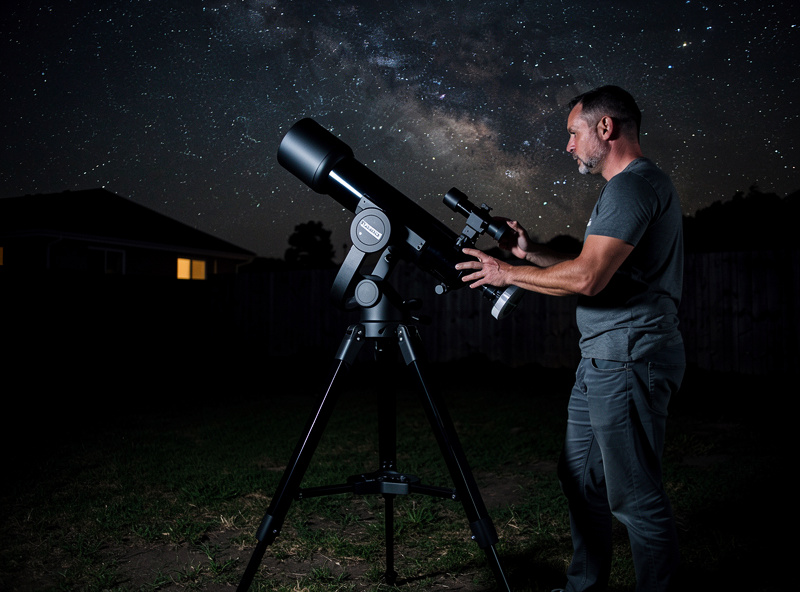
The 20×80 is no longer really a binocular in the grab-and-go sense — it is a two-eyed telescope. At over two kilograms it is impossible to hold, the 3.2-degree field demands you know roughly where your target is, and the 4mm exit pupil means it rewards a darker sky. On a solid mount under good transparency, though, it is glorious: it splits some globulars, shows galaxy shape, and frames large nebulae in a way no single-eyepiece scope reproduces.
The honest caveat is the support burden. A 20×80 needs a heavy-duty tripod or a parallelogram mount and a reclining chair, because pointing it near the zenith handheld-style will wreck your neck. Budget for the mount as part of the purchase. If your pull is toward the very biggest, my main binoculars guide covers the giant formats and the chairs and mounts they demand. For the dedicated mounted giants and how I actually use them, my giant binoculars for astronomy guide goes deeper on the 20×80 to 25×100 class. I treat my 20×80 as a complement to a telescope, not a replacement.
Aperture or Magnification: Which Number Matters More?
New buyers fixate on magnification, but for astronomy aperture is the number that changes what you can see. Aperture is light, and light is what lets you reach a fainter star or pull structure out of a dim galaxy. Magnification only spreads that light over a larger image — push it too far without enough aperture and you get a big, dim, blurry view. This is why a 10×50 beats a 20×50 for the night sky: same aperture, but the 20×50’s tiny 2.5mm exit pupil throws away the light advantage and demands a mount for no gain.
The useful rule is to keep the exit pupil in the 4–7mm range and let aperture do the heavy lifting. All three formats here respect that: 10×50 at 5mm, 15×70 at 4.7mm, 20×80 at 4mm. Each step up adds real aperture, not just empty magnification, which is exactly why they represent genuine upgrades rather than marketing inflation. When you see a format with an exit pupil under about 3mm, treat it with suspicion — it is selling power it cannot feed with light.
The Middle Ground: 12×60
There is a fourth option worth knowing about that splits the difference: the 12×60. It keeps the 5mm exit pupil of the 10×50 while adding a little aperture and reach, and at around 1.2 kilograms it sits right on the handheld borderline — usable braced for short bursts, better on a monopod. For someone who finds the 10×50 not quite enough but balks at committing to a mounted 15×70, the 12×60 is a sensible compromise that few buying guides mention.
That said, I rarely recommend it as a first pair. The 10×50 is lighter and cheaper and does almost everything; the 15×70 is a clearer step up once you accept a mount. The 12×60 occupies a narrow niche between them. Know it exists, but most observers are better served by picking a side of the handheld line rather than straddling it.
Which One Should You Buy?
Choose by your honest setup tolerance. Want to observe tonight with zero extra gear? 10×50. Already own a tripod and want fainter targets? 15×70. Committed to mounted deep-sky sessions and willing to carry weight and set up a chair? 20×80. Most observers are happiest owning a 10×50 for grab-and-go and adding a mounted 15×70 or 20×80 later, rather than starting with a giant they rarely deploy.
One last word on light pollution: the bigger the exit pupil, the more a bright sky hurts you, so giants reward dark skies most. From a washed-out suburban sky the 10×50’s contrast advantage narrows the practical gap to the giants more than the aperture numbers imply. Match the pair to your sky and your patience, not to the biggest number on the box.
Frequently Asked Questions
Is 10×50 or 15×70 better for astronomy?
A 10×50 is better if you want a handheld all-rounder you can use tonight with no extra gear. A 15×70 shows fainter targets thanks to double the light grasp, but it needs a tripod or parallelogram mount because 15x is over the handheld steadiness limit.
Can you hold 15×70 binoculars by hand?
Only briefly. At 15x your pulse smears the image enough to hide faint detail. A steadied 15×70 can reveal 30 to 40 percent more faint stars than a shaking one, so a tripod with an L-adapter or a parallelogram mount is strongly recommended.
Are 20×80 binoculars worth it?
Yes, if you commit to mounting them. A 20×80 is a two-eyed deep-sky instrument that splits some globulars and shows galaxy shape, but at over two kilograms it cannot be handheld and needs a heavy tripod and a reclining chair to use comfortably.
Why does a higher magnification binocular show less sky?
Higher magnification narrows the true field of view. A 10×50 shows about 6.5 degrees of sky, while a 20×80 shows around 3.2 degrees. More power magnifies a smaller patch, which also makes targets harder to find without a finder.
Do giant binoculars work in light pollution?
Less well than smaller ones. Their larger exit pupils fill with sky glow under bright skies, washing out contrast. Giant binoculars reward a dark site most, while a 10×50’s smaller exit pupil holds contrast better in a light-polluted suburban backyard.
