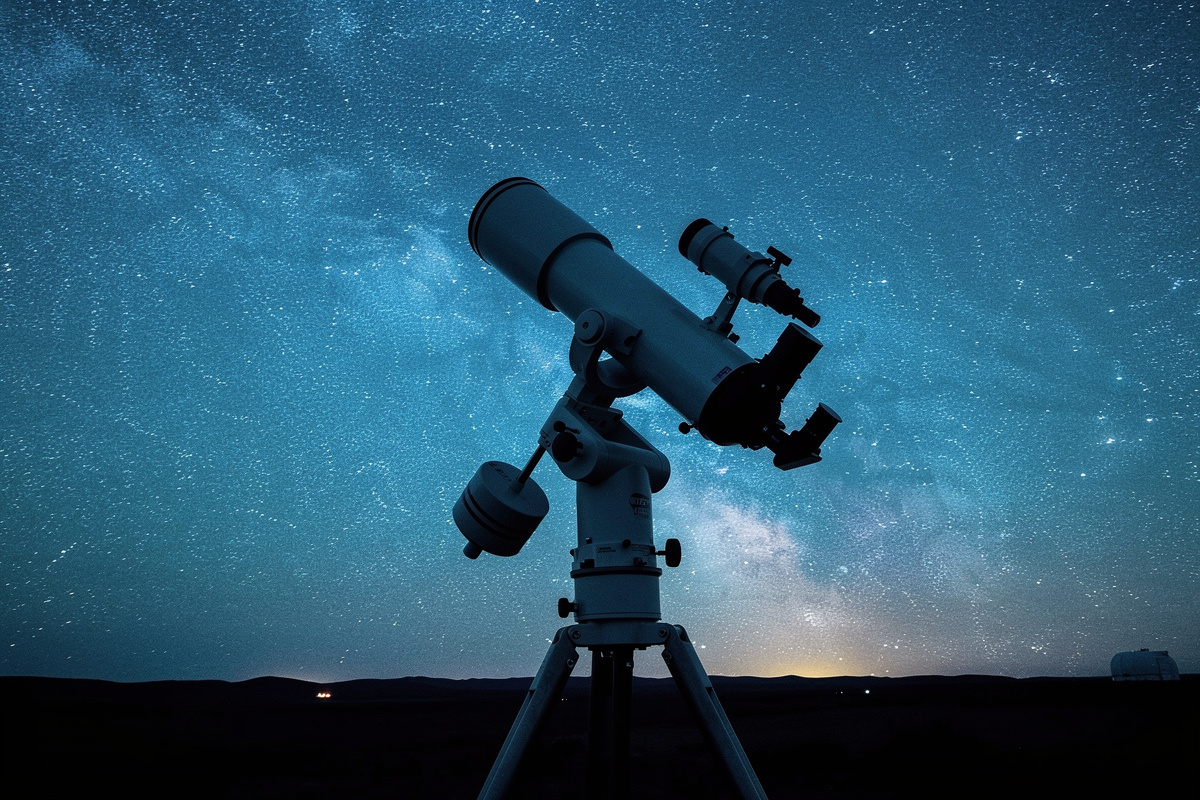

Giant binoculars — 20×80, 25×100, and beyond — turn the binocular format into a genuine two-eyed deep-sky telescope. With 80mm to 100mm of aperture per side, they gather enough light to split some globular clusters, show galaxy shape, and frame large nebulae with an immersive, upright, both-eyes view that no single-eyepiece scope reproduces. The catch is absolute: every giant binocular needs a serious mount, because at two to four kilograms they cannot be held, and pointing one near the zenith without a parallelogram arm will wreck your neck.
Disclosure: some links below are Amazon affiliate links. If you buy through them I may earn a small commission at no extra cost to you. I only recommend gear I would actually use.
This guide covers what giants do well, what they demand in return, and how to choose between the common formats. If you are earlier in the decision, start with my astronomy binoculars guide — giants are the deep end of the pool, and most observers should learn to swim with a 10×50 first.
What Giant Binoculars Show You
The appeal of a giant binocular is aperture with two eyes. An 80mm or 100mm objective gathers far more light than a 50mm pair, so the brighter globular clusters like M13 and M22 begin to granulate into a sparkling ball rather than a smooth glow, larger galaxies show their elongated shape, and big nebulae like the North America Nebula or the Veil sprawl across a wide field. Using both eyes adds a comfort and a perceived depth that pulls faint detail out of the background better than one eye at a telescope eyepiece.
The wide, low-power, upright view is the giant’s signature. Where a telescope crops the Andromeda Galaxy or the Pleiades, a 20×80 frames them whole, surrounded by their star fields, in a view that feels like flying over the sky. For rich-field sweeping of the Milky Way at real aperture, nothing else feels quite like it. This is why so many telescope owners — myself included — keep a giant binocular around as a complement, not a replacement.
The Mount Is Not Optional
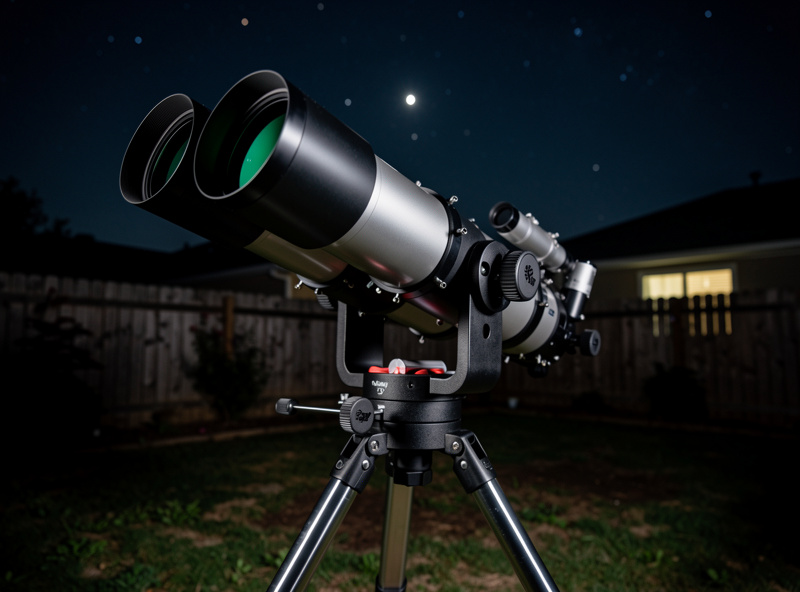
Here is the rule that no giant-binocular buyer can escape: the mount matters as much as the glass. A 20×80 weighs over two kilograms and a 25×100 around four, and at 20x to 25x even a tiny tremor smears the image into uselessness. You cannot hold these. A steadied giant reveals dramatically more than a shaking one — the same 30 to 40 percent gain in visible faint stars that mounting brings to any high-power binocular, but here it is the difference between a usable instrument and a paperweight.
The best support for a giant is a parallelogram mount, whose hinged arm lets you reach the zenith from a seated position and swing the view to share it without re-aiming. A heavy-duty photo or video tripod with a sturdy head works for lower targets but fights you near the zenith. Whatever you choose, budget for it as part of the purchase — a giant binocular plus its mount is a system, and skimping on the mount throws away the aperture you paid for. My binocular mounts guide covers the options in depth.
Choosing a Giant Format
Giants come in a few common formats, and the right one balances aperture against weight and how much mount you are willing to carry. The table below lays out the trade-offs. Notice that as aperture climbs, the exit pupil holds around 4mm but the weight and the mount demands escalate fast — the 25×100 and up are committed, fixed-location instruments, not anything you sling over a shoulder.
| Format | Exit pupil | Approx. weight | Mount needed | Best for |
|---|---|---|---|---|
| 15×70 | 4.7mm | ~1.4 kg | Sturdy tripod | Entry to giants, transportable |
| 20×80 | 4.0mm | ~2.1 kg | Heavy tripod or parallelogram | All-round deep-sky |
| 25×100 | 4.0mm | ~4 kg | Parallelogram + chair | Serious mounted observing |
| 30×125 | 4.2mm | ~6+ kg | Heavy parallelogram or pier | Dedicated fixed setup |
For most people stepping up to giants, the 20×80 is the sweet spot — enough aperture to transform the view, light enough to manage on a good tripod or parallelogram, and affordable. The 25×100 is the next serious tier and rewards a dark site, but its weight and the chair it demands make it a deliberate commitment. Above that, you are into specialist territory for observers who have built their setup around the instrument.
Collimation and Quality in Big Glass
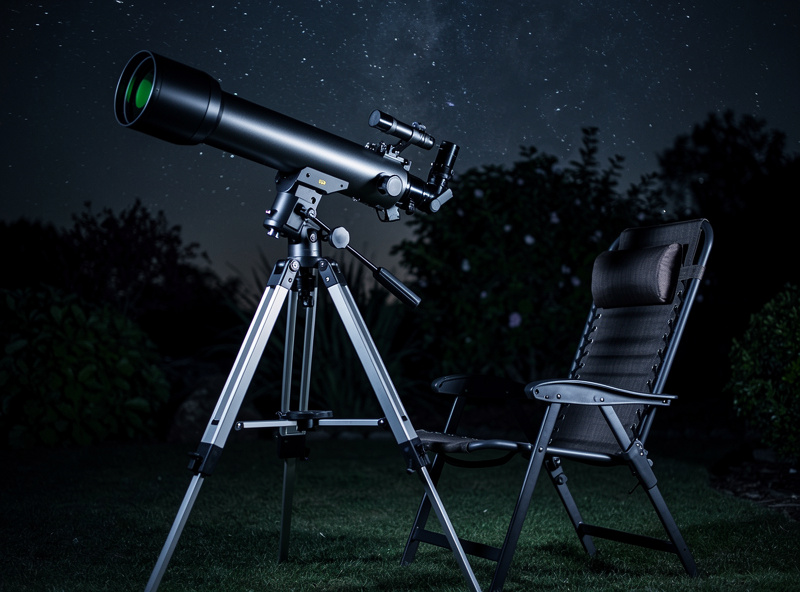
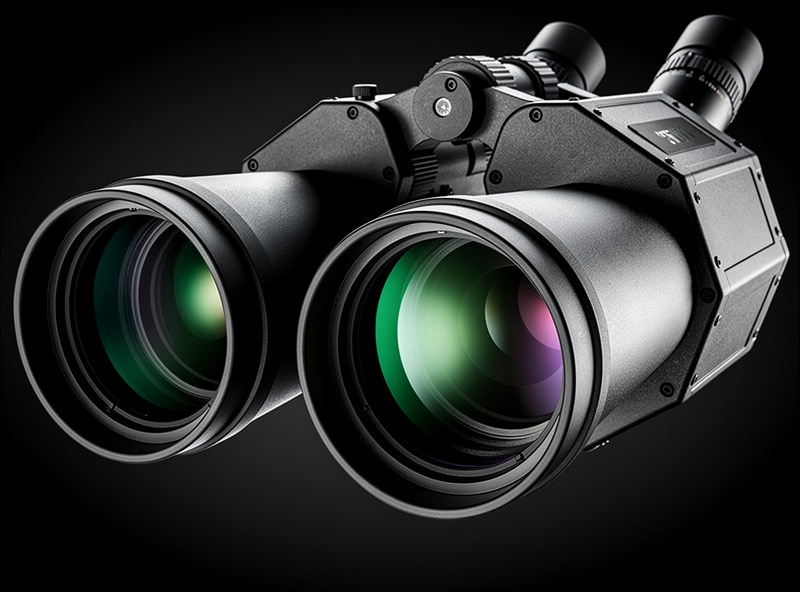
Giant binoculars are harder to build well than small ones, and collimation — both barrels pointing at precisely the same spot — is the make-or-break quality. A miscollimated giant forces your eyes to fight each other, causing eye strain and headaches within minutes and defeating the whole two-eyed advantage. The bigger and cheaper the binocular, the more likely it ships slightly out, so buy from a maker with a real warranty and a return policy, and test a new pair on a bright star the first clear night.
Some giants offer individual eyepiece focus (IF) rather than a centre-focus wheel, which is normal at this size and actually preferable for astronomy since everything beyond a few hundred metres is at infinity anyway — you set each side once and leave it. Look for fully multi-coated optics and BaK-4 prisms as always, and accept that a quality giant costs real money; the cheap ones disappoint exactly where it matters, in collimation and coatings. You can browse 20×80 giant binoculars on Amazon and compare 25×100 models to gauge the range.
The Targets Giants Were Made For
Giant binoculars have a sweet spot of objects that play perfectly to their strengths. Large open clusters and rich star fields are sublime — the Double Cluster in Perseus, the clusters strewn through Auriga and Cassiopeia, and the Coma Star Cluster sprawl across the wide field with hundreds of resolved points. The brighter globulars (M13, M22, M5, M4) start to show their granular texture at 20x to 25x rather than the smooth ball a small pair shows.
Galaxies reward the aperture too: M31 and its companions fill the field, M81 and M82 sit together in one view, and from a dark site the larger, brighter members of the Virgo cluster become reachable smudges. Big, low-surface-brightness nebulae — the North America Nebula, the Veil, the Rosette — are arguably better in a giant binocular than in most telescopes, because the wide field keeps the whole object visible and the two-eyed view boosts contrast. And the Milky Way at 80mm to 100mm of aperture is simply overwhelming. These are the views that justify the weight and the mount.
The Real Cost of a Giant Setup
Budget honestly, because the binocular is only part of the bill. A giant binocular plus the parallelogram mount it demands plus a comfortable reclining chair can rival the cost of a small telescope — and skimping on any of the three throws away the value of the others. A superb 25×100 on a flimsy tripod is a frustrating instrument; the same glass on a proper parallelogram with a good chair is a window onto the deep sky.
This is the same total-cost-of-ownership thinking I bring to every instrument decision: the headline item is never the whole story. The good news is that, like all binoculars, a quality giant has no further hidden costs — no eyepieces, no diagonals, no upgrades — so once the mount and chair are sorted, you are done. Treat the mount and chair as non-negotiable line items in the original budget and you will be happy; treat them as afterthoughts and the giant will gather dust. The accessories guide applies the same discipline to scopes.
Living With Big Glass in the Cold
Giants are heavy, dense, and slow to cool, which matters more than beginners expect. Like any large optic, a giant binocular needs time to reach the outside air temperature or thermal currents inside the tubes will soften the image — set it out on its mount fifteen or twenty minutes before you start. The large objective lenses are also dew magnets, so a pair of simple dew shields (or extending the built-in hoods fully) buys you precious extra time before the lenses fog on a damp night.
When you finish, do not wipe dew off the cold glass; let the binocular warm and clear slowly in its case to avoid trapping moisture that breeds fungus. Store it dry with a desiccant pack. The mechanical bulk that makes giants awkward also makes them durable — treated with this basic cold-climate discipline, a quality giant binocular holds collimation and serves for decades. On a long, dark northern winter night it is, despite the setup, one of the most rewarding instruments I own.
Are Giant Binoculars Right for You?
Giants suit the observer who has already fallen for binocular astronomy and wants more aperture without giving up the two-eyed, wide-field view — and who has a fixed observing spot, a mount, and the patience for a small setup ritual. They are superb as a complement to a telescope, handling rich-field sweeping and large objects while the scope works the high-power targets. From a dark site, a mounted 25×100 is a deeply rewarding deep-sky instrument.
They are the wrong first purchase. A beginner who buys a 25×100 before owning a mount and learning the sky usually ends up with an expensive object that never gets used, because the setup friction defeats the spontaneity that makes binocular astronomy stick. Start with a 10×50, add a mounted 15×70 or 20×80 when you know you want more, and grow into the giants. If you are still deciding between binoculars and a scope entirely, my binoculars vs telescope guide frames that choice.
