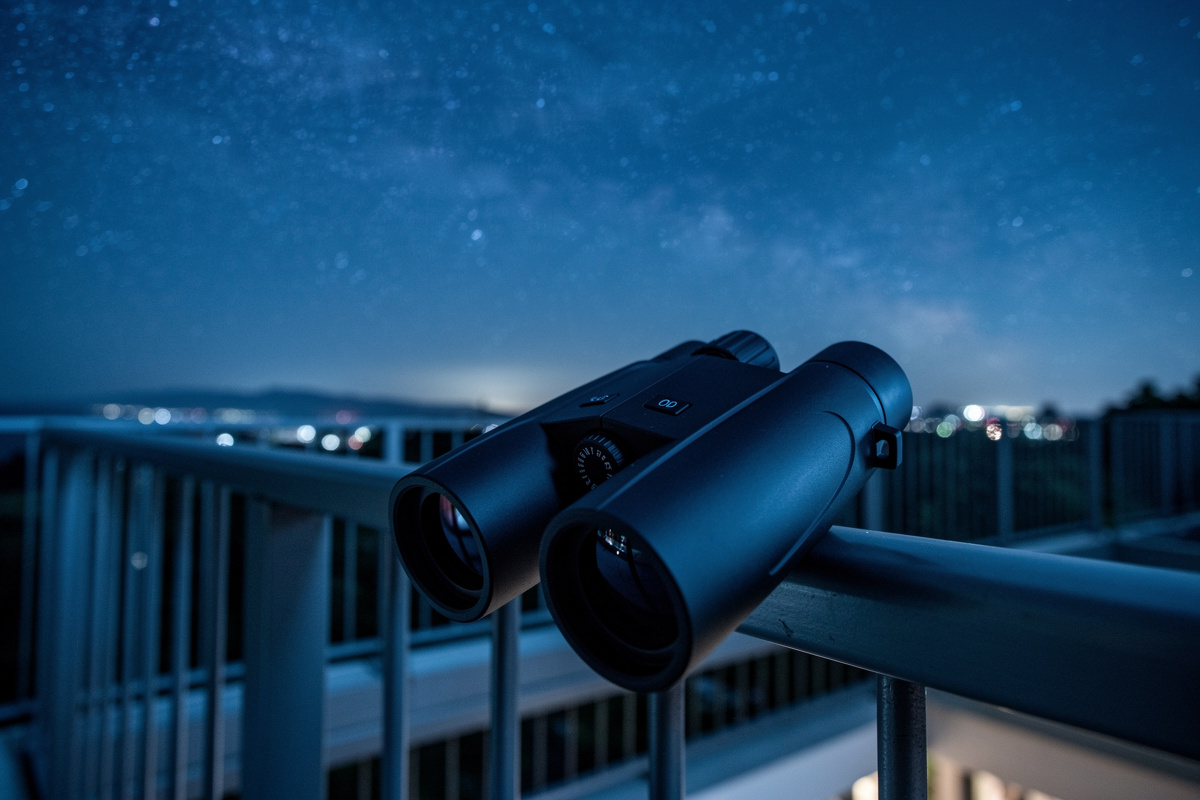

Image-stabilized binoculars use an internal gyro or lens-shift system to cancel hand shake electronically, letting you hold 14x or even 18x steady without a tripod — magnifications that are an unusable blur in conventional binoculars. For astronomy that is genuinely transformative: at the press of a button the field freezes, and faint stars, cluster members, and Jupiter’s moons that were smeared by your pulse simply snap into view. They are the one category of binocular that breaks the old rule that anything above 10x needs a mount.
Disclosure: some links below are Amazon affiliate links. If you buy through them I may earn a small commission at no extra cost to you. I only recommend gear I would actually use.
This guide explains how image stabilization works, where it shines for the night sky, and the trade-offs against a conventional mounted pair. For the broader format decision, start with my astronomy binoculars guide and the best binoculars for astronomy picks; this is the specialist branch for observers who value going handheld above all.
How Image Stabilization Works
Image-stabilized binoculars sense the small involuntary movements of your hands with internal gyroscopes and counter them, either by shifting an optical element or by mounting the prisms on a motorized gimbal. The result is that your tremor — the same heartbeat-driven shake that smears a conventional 15×70 — is cancelled before it reaches your eye. You press and hold a button (or toggle it on), and the jittering field settles into stillness within a fraction of a second.
The effect has to be seen to be believed. Steadying any binocular reveals more faint detail — the difference can be 30 to 40 percent more visible stars in a cluster — and image stabilization delivers that steadiness in a handheld package you can sweep freely across the sky. There is no tripod to set up, no parallelogram arm to swing, just a button. For grab-and-go astronomy at real magnification, nothing else matches the convenience.
Two main technologies appear on the market. Lens-shift systems move an internal element to compensate and tend to be lighter and more responsive; mechanical gimbal systems suspend the prism assembly and can offer a very stable, almost floating image at the cost of more weight. Both work well for astronomy, and the practical differences between good implementations are smaller than the marketing suggests — aperture and optical quality still matter more than which stabilization method a given model uses.

Why They Suit Astronomy
The night sky is exactly where stabilization pays off most, because faint astronomical detail lives right at the edge of perception where the smallest wobble hides it. A stabilized 12x or 14x shows globular clusters as granular balls, resolves more stars in open clusters, and turns Jupiter into a tiny disc flanked by its four Galilean moons in a crisp line — all handheld, all while you stand or sit comfortably. Comet hunting becomes a joy because you can sweep large areas of sky steadily.
There is also a real benefit for older observers and anyone whose hands are not rock-steady. Conventional binocular astronomy above 10x effectively requires a mount, which adds weight, cost, and setup friction that keeps the binocular in the cupboard. Stabilization removes that barrier entirely — the instrument is always ready, always steady, and that convenience translates directly into more nights under the stars, which is the whole game.
The Trade-Offs Against a Mounted Pair
Stabilization is not free, and honesty about the trade-offs matters. The biggest is aperture: image-stabilized astronomy binoculars typically top out around 42mm to 50mm of aperture, far less than a 70mm or 80mm giant on a mount. So while a stabilized 14×42 is steadier and more convenient, a mounted 15×70 or 20×80 simply gathers more light and reaches fainter objects. For the deepest deep-sky work, aperture on a mount still wins.
The table below lays out the honest comparison. There is also the matter of cost and batteries — stabilized units are pricier than a conventional pair plus tripod, and they need power to work, so you carry spare batteries on a long cold night where the cold drains them faster. Weigh convenience against aperture and budget to decide which side you fall on.
| Factor | Image-stabilized | Conventional + mount |
|---|---|---|
| Typical aperture | 42–50mm | 70–100mm |
| Handheld at high power? | Yes, up to ~18x | No, needs mount |
| Setup time | None | Minutes |
| Light grasp | Moderate | High |
| Needs batteries? | Yes | No |
| Best for | Grab-and-go, sweeping, comets | Faint deep-sky on a chair |
What to Look For
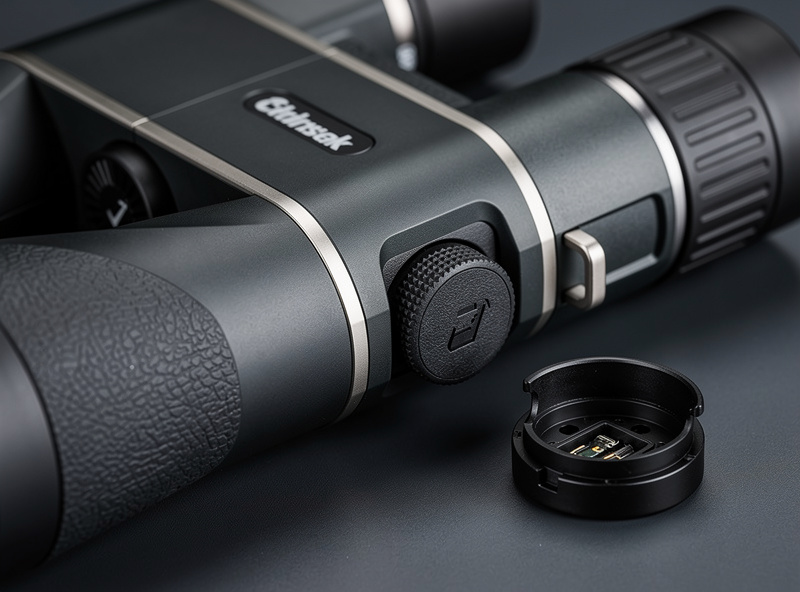
If you decide stabilization is your path, a few things matter more than the headline magnification. Aperture is still king for astronomy, so favour the largest objective you can get in a stabilized unit — a 42mm or 50mm gathers meaningfully more light than a 30mm. Check the stabilization range and whether it holds continuously or only while a button is pressed; for long observing, a toggle you can lock on is far less tiring than holding a button.
Battery type and runtime matter for cold-weather use, and so does weight, since these units are denser than conventional binoculars of the same size. Fully multi-coated optics and BaK-4 prisms remain non-negotiable. You can compare image-stabilized binoculars on Amazon to see the current range of apertures and magnifications, and weigh them against a conventional 15×70 plus a mount for the same money.
Getting the Most From Them at Night
A few habits make stabilized binoculars even better under the stars. Engage the stabilization before you settle on a target, not after — sweeping with it on lets you find objects in a steady field rather than a jittering one. For faint targets, hold the steady view for several seconds and use averted vision, looking slightly to the side of the object so its light falls on the more sensitive part of your retina; the combination of a still field and averted vision pulls out detail you would otherwise miss entirely.
Mind the batteries in the cold. Northern winter nights — the best observing of the year at my latitude — drain cells fast, so keep a spare set warm in an inside pocket and swap them when the stabilization weakens. Some observers rest their elbows on a railing or a chair even with stabilization on, which adds a little extra steadiness for the very faintest work. And give your eyes the usual 20 minutes to dark-adapt; no amount of stabilization substitutes for a properly dark-adapted eye.
Are They Worth the Price?
Image-stabilized binoculars cost noticeably more than a conventional pair, and often more than a good 15×70 plus a solid tripod. Whether that premium is worth it comes down to a single question: how much do you value going handheld? If you will actually use a tripod, the conventional route gives you more aperture for the money. If a tripod is the thing that keeps you indoors, the stabilized unit’s convenience may be the difference between observing and not — and an instrument you use beats a better one you leave in the cupboard.
For travellers and balcony observers with no room for a mount, the value calculation tips firmly toward stabilization. For a backyard observer with space and patience, a mounted giant is the better deep-sky buy. Both are legitimate; just be honest about which observer you are. You can see current image-stabilized binocular options on Amazon across the price range to judge where you land.
Who Should Buy Them
Image-stabilized binoculars are the right choice for the observer who prizes convenience and portability above maximum aperture — the traveller, the balcony astronomer, the comet sweeper, and anyone whose hands shake enough that conventional high-power binoculars are unusable. They are also superb as a wide-field complement to a telescope, giving you a steady high-power scan with zero setup while the scope does the heavy lifting on faint targets.
They are the wrong choice if your goal is the faintest possible deep-sky from a fixed observing spot, where a mounted 80mm or 100mm giant gathers far more light for less money. As always, match the instrument to how you actually observe. If you are weighing this against a full telescope setup instead, my binoculars vs telescope comparison frames that larger decision.
Frequently Asked Questions
Are image-stabilized binoculars good for astronomy?
Yes. They let you hold 12x to 18x steady without a tripod, revealing faint stars, cluster detail, and Jupiter’s moons that hand shake normally smears. The trade-off is smaller aperture than a mounted giant binocular, so they favour convenience over maximum light grasp.
How do image-stabilized binoculars work?
Internal gyroscopes sense your hand movements and counter them by shifting an optical element or tilting the prisms on a motorized gimbal. This cancels tremor before it reaches your eye, freezing the image at the press of a button so you can hold high magnifications steady.
Do image-stabilized binoculars need batteries?
Yes. The stabilization system is powered, so you need charged batteries to use it, and cold weather drains them faster. Most units still work as ordinary binoculars without power, but you lose the stabilization that makes high magnification usable handheld.
Are stabilized binoculars better than a tripod?
For convenience and sweeping, yes, since there is no setup and you can move freely. For light grasp, no, because a mounted 70mm or 80mm binocular gathers far more light than a stabilized 42mm to 50mm unit and reaches fainter deep-sky objects.
What magnification can you hold with image stabilization?
Up to about 18x handheld, far beyond the roughly 10x limit of conventional binoculars. The stabilization cancels the pulse-driven shake that would otherwise smear the image, which is why these units enable high-power handheld astronomy that is impossible otherwise.
