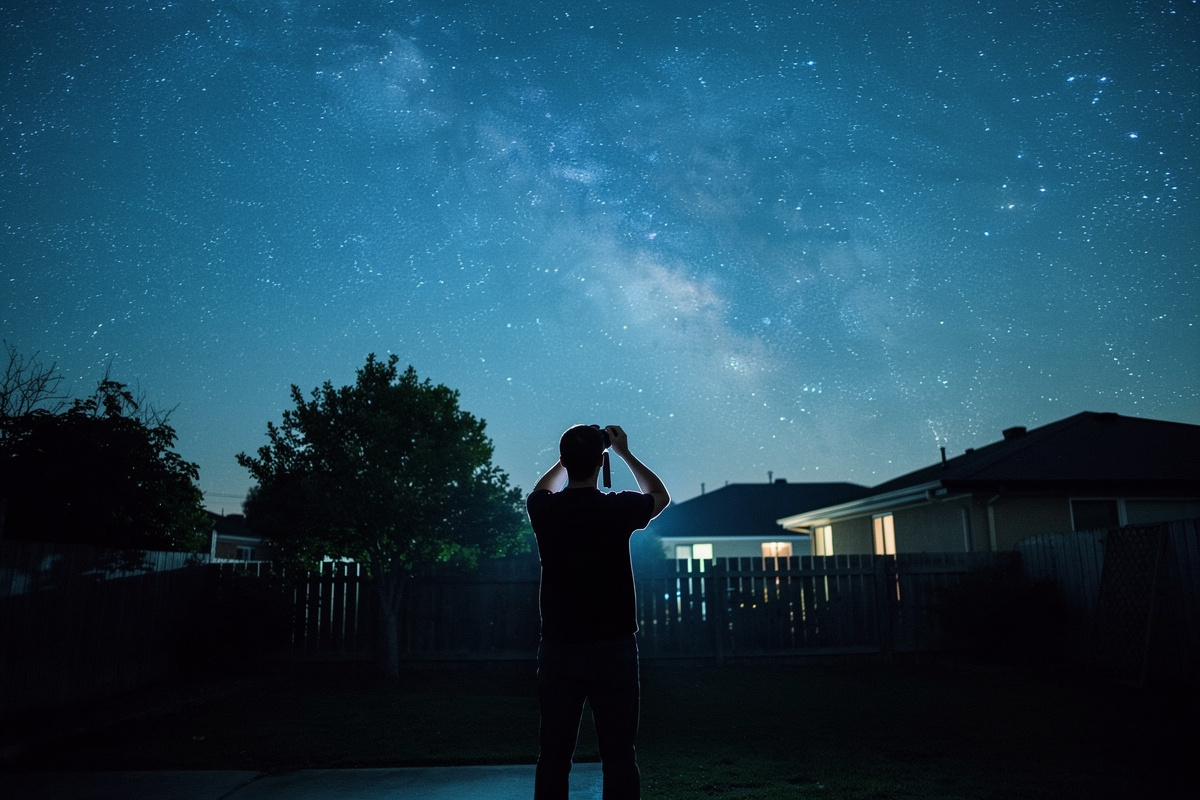

The best things to see with binoculars are large, bright objects that a telescope crops or overpowers: the Moon, the Milky Way star clouds, big open clusters like the Pleiades, and the Andromeda Galaxy. A simple 10×50 from a suburban backyard reaches dozens of these targets, and from a dark site the list runs into the hundreds. Binoculars are not a consolation prize for people who cannot afford a scope — for a whole category of objects, two eyes and a wide field are genuinely the better instrument.
This is the target list I hand beginners, organized so you can work through it season by season rather than wandering the sky at random. For the gear behind it, see my astronomy binoculars guide and the best binoculars for astronomy picks. Everything below assumes a handheld or lightly braced 10×50, the size most readers own.
Start With the Moon
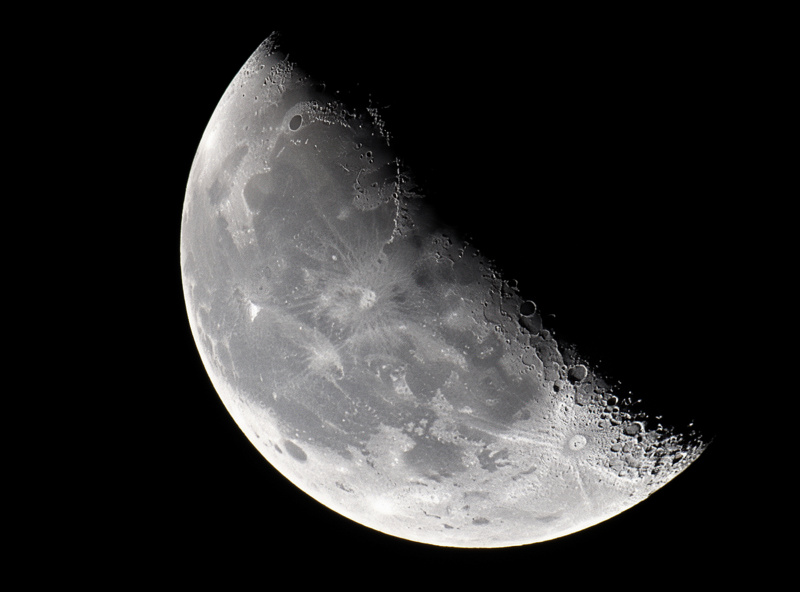
The Moon is the gateway drug of binocular astronomy, and it is spectacular even at 10x. Aim for the days around first or last quarter, not full Moon — along the terminator, the line between lunar day and night, low sunlight throws crater rims and mountain ranges into sharp relief that a flat full Moon hides entirely. You will pick out the big dark maria, the bright crater Tycho with its rays, and the rugged southern highlands.
Steady the binocular against a wall or a chair and the detail jumps. The Moon is also the one target light pollution cannot touch, which makes it the perfect first object from any city balcony. Just resist full Moon — it is so bright it washes out its own detail and dazzles your dark adaptation for the rest of the night. My Moon observation guide goes feature by feature.
Sweep the Milky Way
If you have any kind of dark sky, slowly sweeping the Milky Way is the single most rewarding thing you can do with binoculars. The band that looks like faint mist to the naked eye explodes into countless stars, glowing star clouds, and dark dust lanes scrolling past the field. Through Sagittarius and Scorpius in summer the star clouds are dense enough to look almost three-dimensional; through Cygnus and Cassiopeia the field is a river of stars.
There is no target list for this — you just drift, and you will stumble onto clusters and nebulae without trying. It is the purest pleasure in the hobby and the one that makes people fall in love with a dark site. From a light-polluted backyard the effect is muted, which is the best argument I know for occasionally driving somewhere dark, as I cover in the dark sky locations guide.
Open Clusters: The Binocular Showpieces
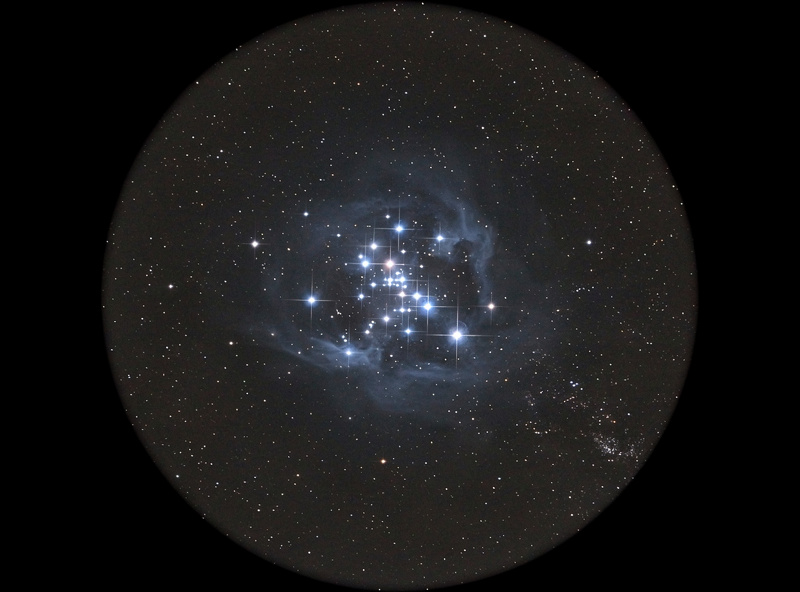
Open star clusters are where binoculars truly outshine telescopes, because their wide field frames the whole group while a scope crops it. The Pleiades (M45) is the crown jewel — a tight knot of blue-white stars that fits perfectly in a binocular field and looks cramped in most telescopes. Nearby, the Hyades form a big V that only binoculars can contain, and the Beehive (M44) in Cancer is a soft glow that resolves into stars the moment you raise the binocular.
The Double Cluster in Perseus is unmissable: two side-by-side knots of stars in a rich field, one of the finest binocular sights in the entire sky. In summer, sweep Sagittarius for M6, M7, and M23; in winter, work through Auriga’s trio of clusters. These objects are bright enough to survive a suburban sky, making them reliable targets when the deep stuff is washed out. For more, my star clusters guide ranks the best.
Galaxies and Nebulae You Can Reach
The Andromeda Galaxy (M31) is the headline deep-sky target and an easy binocular object even from the suburbs — an elongated oval glow, the most distant thing your eye can see unaided and obvious in 10×50. From a dark site its companions M32 and M110 join it, and the fainter Triangulum Galaxy (M33) becomes a large, low-surface-brightness smudge that actually shows better in binoculars than in many telescopes because the wide field preserves its faint glow.
For nebulae, the Orion Nebula (M42) is the winter star — a clear grey wing of gas around the middle “star” of Orion’s sword, with the trapezium stars sparkling inside. The Lagoon (M8) and the North America Nebula reward dark skies and a 10×50. Globular clusters round out the list: M13 in Hercules and M22 in Sagittarius show as round fuzzy balls of light, hinting at the swarms of stars a telescope would resolve. The nebulae guide and the galaxy guide go deeper on each.
Double Stars and Bright Comets
Binoculars are wonderful for wide double stars and asterisms that a telescope splits too far apart to enjoy. Mizar and Alcor in the handle of the Big Dipper separate easily, a classic naked-eye-and-binocular pair. Albireo in Cygnus shows its gold-and-blue colour contrast, one of the prettiest sights anywhere. The Coathanger asterism in Vulpecula is a perfect little upside-down hanger of stars that exists only at binocular scale.
Comets are the binocular wildcard. When a reasonably bright comet appears, binoculars are often the ideal instrument — their wide field shows the whole coma and the start of the tail, which a telescope’s narrow view chops up. A comet that is an unimpressive smudge to the naked eye becomes a distinct glowing head with a hint of tail in 10×50. Keep an eye on observing news, and when one comes around, the binoculars by your door will be the first thing you grab.
A Season-by-Season Shortlist
The sky turns through the year, so the best targets change with the season — one reason a target list beats random sweeping. In spring, point north and east for the realm of the galaxies around Leo and Virgo (faint, but M81 and M82 in Ursa Major are reachable from a dark site) and the Coma Star Cluster, a lovely loose binocular group. Summer belongs to the Milky Way: Sagittarius and Scorpius blaze with clusters and the Lagoon Nebula, and the Coathanger sits high overhead.
Autumn brings Andromeda to the zenith with its companion galaxies, plus the Double Cluster climbing in the northeast. Winter is the richest of all — Orion’s nebula, the Pleiades and Hyades framing Taurus, the Beehive rising in the east, and Auriga’s string of clusters. At my northern latitude winter also means the longest dark hours of the year, so it is the season I do most of my binocular observing despite the cold. Work the season that is overhead and you will never run out of targets.
What Binoculars Cannot Do
Honesty matters, so know the limits before you are disappointed. Binoculars will not show you Saturn’s rings, Jupiter’s cloud belts, or Mars as anything but a tiny orange dot — planetary detail needs the higher magnification and steadiness of a telescope. They will not resolve a globular cluster into individual stars, and most galaxies remain faint smudges rather than the spiral structure of photographs. The dramatic colour you see in nebula images comes from long-exposure cameras, not the eye; visually, deep-sky objects are grey.
That is not a failing — it is simply a different instrument for a different job. Binoculars own the wide, bright, large-object end of the sky, and a telescope owns the high-power, small-object end. The two complement each other, which is exactly why I keep a 10×50 by the door even though I own scopes of every design. If planets and high-power detail are your goal, that is the telescope’s territory, and my telescope buying guide covers the move.
Planning a Binocular Session
A little planning turns a frustrating night into a productive one. Check the Moon phase first — the dark-of-the-Moon window each month is when faint targets are reachable, while a bright Moon limits you to the Moon itself, double stars, and the brightest clusters. Let your eyes dark-adapt for at least 20 minutes, use a red flashlight to read charts without ruining your night vision, and dress far warmer than you think you need to.
A planisphere or a free star app helps you find targets and learn the sky, which is half the reward. Work one constellation at a time rather than hopping randomly. And get comfortable — a reclining chair lets you point near the zenith without strain and keeps you out long enough to actually see the faint stuff, the same comfort-is-an-optical-upgrade lesson from my binocular mounts guide.
Frequently Asked Questions
What can you see with 10×50 binoculars?
A 10×50 shows the Moon’s craters, the Milky Way star clouds, open clusters like the Pleiades and the Double Cluster, the Andromeda Galaxy, the Orion Nebula, the globular M13, and wide double stars. From a dark site the reachable list runs into the hundreds of objects.
Can you see Saturn’s rings with binoculars?
No. At 10x to 20x Saturn looks like a tiny oval or bright dot, not a ringed planet, because splitting the rings needs around 30x and a steady, sharp telescope. Binoculars do show Jupiter’s four bright Galilean moons as a line of dots beside the planet.
What is the best deep-sky object to see with binoculars?
The Pleiades (M45) and the Andromeda Galaxy (M31) are the two standout binocular targets. The Pleiades frames perfectly in a wide field where a telescope crops it, and Andromeda is an easy bright oval glow even from a light-polluted suburban backyard.
Can you see nebulae with binoculars?
Yes, the brighter ones. The Orion Nebula (M42) shows as a clear grey wing of gas, and from dark skies the Lagoon Nebula and others appear as soft glows. Most nebulae are faint, so a dark site dramatically increases how many you can reach.
When is the best time to observe with binoculars?
During the dark-of-the-Moon window each month, when no bright Moon washes out faint targets. For the Moon itself, the days around first or last quarter show the most crater detail along the terminator. Always allow 20 minutes for your eyes to dark-adapt.
