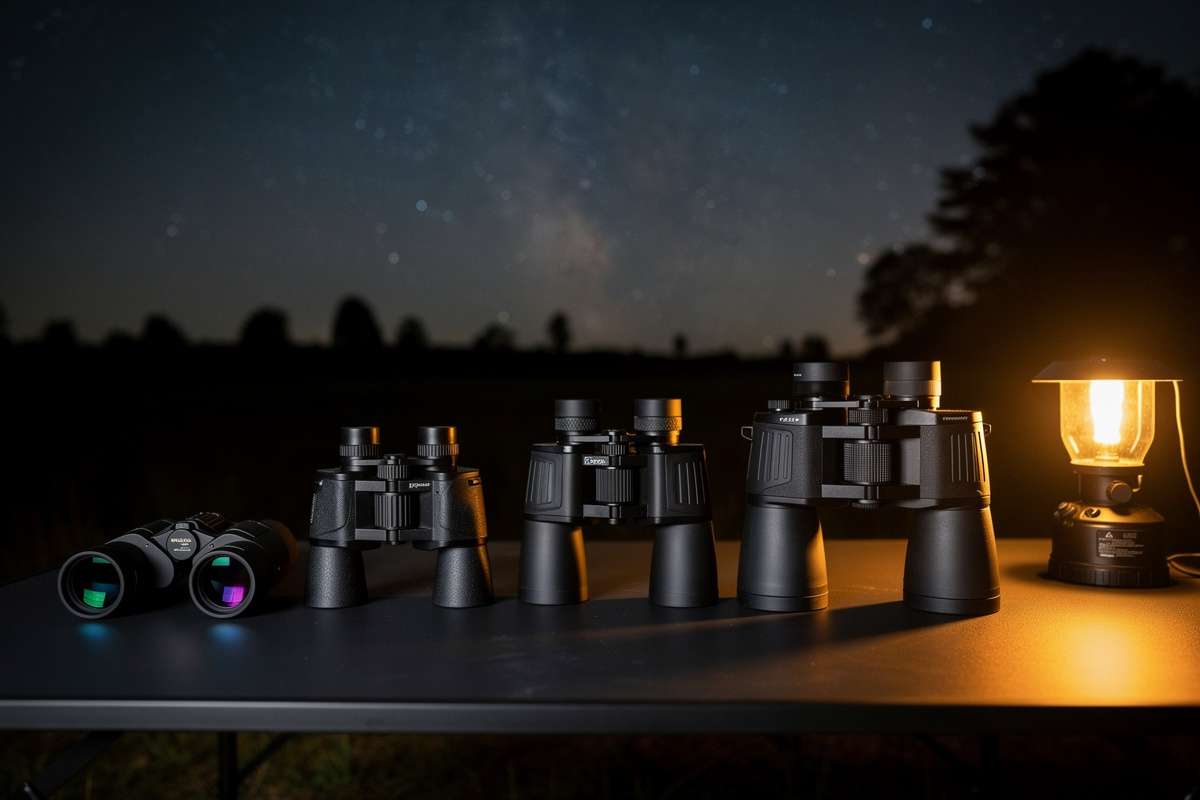

The best binoculars for astronomy for most people is a quality 10×50 — it gathers enough light to show the brighter Messier objects, stays light enough to hold by hand, and costs far less than any telescope that beats it. After years of putting astronomy binoculars side by side from a Swedish backyard and a dark Nordic site, that recommendation has not changed, and below I break down the picks by budget and by what you actually want to observe.
This is a buying guide written the way I would advise a friend, not a spec-sheet listicle. I care about coatings, prism glass, and how a pair feels at 1 a.m. in the cold far more than I care about marketing numbers. If you want the full theory behind these picks — exit pupil, true field, light grasp — start with my astronomy binoculars guide; this article is the shortlist that comes out the other end.
Disclosure: some links below are Amazon affiliate links. If you buy through them I may earn a small commission at no extra cost to you. I only point at gear I would actually recommend.
The All-Round Best: A Quality 10×50
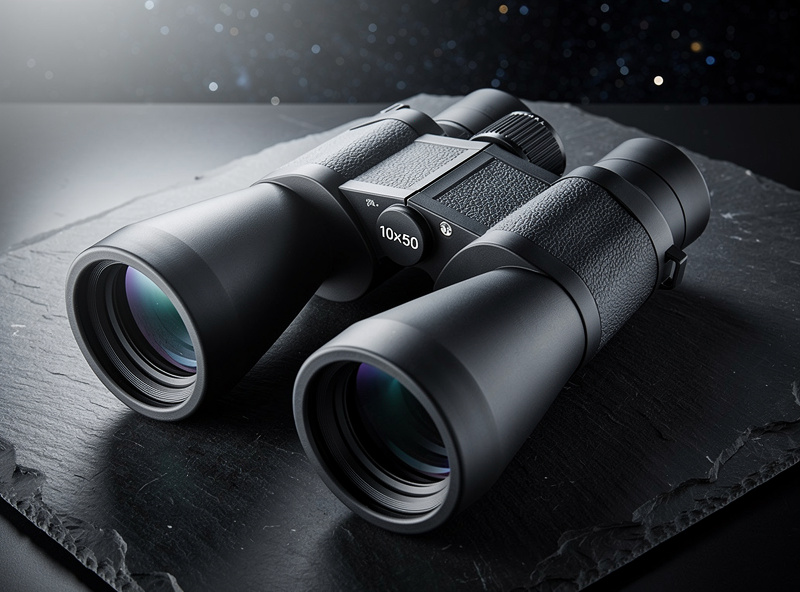
If you buy one pair and never think about it again, make it a fully multi-coated, BaK-4 porro-prism 10×50. The 5mm exit pupil matches a dark-adapted adult eye, the roughly 6-degree field frames big objects like the Pleiades and the Double Cluster, and at under a kilogram you can hold it steady braced against a wall or a chair. It does 90% of what beginners want from astronomy and asks for nothing else in the box.
Look for a reputable optics maker rather than the cheapest clone of the same spec — the difference is in the coatings and the collimation, not the numbers. A solid astronomy 10×50 is widely stocked; you can browse current 10×50 astronomy binoculars on Amazon and filter for “fully multi-coated” and “BaK-4.” That single pair will outlast most of the telescopes its owners later buy.
Best by Budget Tier
Astronomy binoculars sort cleanly into three price tiers, and the right one depends on how serious you already are rather than how much you can spend. Below is how I steer people, with the trade-off that matters at each level. The numbers in the table are exit pupil and the honest verdict, not a star rating.
| Tier | Format | Exit pupil | Who it is for | Watch out for |
|---|---|---|---|---|
| Entry | 10×50 porro | 5.0mm | First-ever pair, all-round use | Avoid zoom and ruby-coated models |
| Wide-field | 7×50 porro | 7.1mm | Dark-sky Milky Way sweeping | 7mm exit pupil wasted in light pollution |
| Reach | 15×70 porro | 4.7mm | Fainter clusters, comets, mount user | Needs a tripod; heavy to hold |
| Premium | 10×50 roof, ED glass | 5.0mm | Dual day/night, sealed and sharp | Diminishing returns for pure astronomy |
If your sky is genuinely dark, the 7×50 deserves a look — that 7.1mm exit pupil floods the eye with light and the wide field makes Milky Way sweeping unforgettable. But in a suburban Bortle 5–6 sky the bright background fills that big exit pupil with sky glow, so the 10×50’s smaller exit pupil actually gives better contrast. Match the binocular to your sky, not to the spec that sounds biggest.
The Step-Up: 15×70 for More Reach
When a 10×50 stops being enough, the natural next step is a 15×70. The extra aperture pulls fainter clusters and galaxies out of the background, and 15x starts to resolve the edges of the brighter globulars into a granular glow. The catch is that 15×70 is the size where handheld stops working — above 10x your pulse smears the image, and a steadied 15×70 shows dramatically more than a shaking one.
Plan on a tripod and an L-adapter, or better a parallelogram mount, from the day you buy it. A well-made 15×70 plus support is a genuine deep-sky instrument for a fraction of a telescope’s cost; you can see current 15×70 astronomy binoculars on Amazon. Just budget for the mount in the same breath, because a handheld 15×70 will frustrate you into leaving it in the cupboard.
The Features That Actually Matter
Ignore most of the marketing and check four things. First, coatings: the box must say fully multi-coated, not “coated” or “multi-coated” (those are weaker). Second, prism glass: BaK-4, confirmed by a clean round exit pupil when you hold the binocular at arm’s length toward a bright wall. Third, build: a rugged chassis, smooth firm focus, and ideally nitrogen-purged waterproofing so dew and cold do not fog the insides.
Fourth, and most overlooked, is collimation — both barrels must point at exactly the same spot, or your eyes fight each other and you get a headache in minutes. This is the one defect you cannot usually fix at home, so buy from a maker with a real warranty and test a new pair on a distant object the first clear night. Eye relief rounds out the list if you wear glasses: 15mm or more, with twist-up eyecups. Get those right and the brand on the prism almost stops mattering.
What to Skip
Three categories waste your money. Zoom binoculars (10-30×60 and friends) trade away optical quality and steadiness for a feature no serious observer uses. Magnification-bragging models (30x, or the absurd “144x” boxes) sell a number that is unusable handheld and gives you a pinhole exit pupil. And ruby-coated or “night vision” lenses use a red coating that blocks light — the exact opposite of what the night sky needs.
Also be skeptical of the no-name brand that clones a respected model’s spec at a third of the price; the spec is not the binocular, the coatings and quality control are, and those are what the clone quietly skips. The same logic that keeps people away from a hollow department-store telescope applies here, which I cover in the telescope buying guide.
The Accessories Worth Buying With Them
A new pair of astronomy binoculars needs very little, which is part of their charm, but a few cheap additions transform the experience. A wide, padded neck strap or a binocular harness takes the weight off your neck during a long session — the standard thin strap that ships in the box is an afterthought. A microfiber cloth and a lens blower keep the coatings clean without scratching them; never use your shirt.
The one accessory that pays for itself is some form of support. Even for a handheld 10×50, a simple monopod or a tripod with an L-adapter steadies the view enough to pull out fainter stars, and a reclining lawn chair saves your neck when you point near the zenith. For anything 12x and up, treat the mount as part of the purchase, not an optional extra — I cover the full range of options in my binocular mounts and tripods guide. Add a red flashlight to preserve dark adaptation and a planisphere or a star app to find targets, and you have a complete observing kit for the price of a single decent telescope eyepiece.
How I Judge an Astronomy Binocular
My test is not a lab bench, it is the sky. On a new pair I check three things on the first clear night. I point at a bright star near the zenith and look for clean, tight points across the central field — soft, flaring, or comet-shaped stars at the edge tell me about the field curvature and the prism quality. I check the exit pupils against a bright background for that round BaK-4 circle. And I sweep a rich star field like the Double Cluster to judge contrast and how far toward the edge the image stays sharp.
Then I live with it. A binocular that is a joy to use is one I reach for on a marginal night, and the things that decide that are unglamorous: comfortable eyecups, a focus wheel that moves smoothly but holds its place, balance that does not fatigue my hands, and a view bright enough that the Andromeda Galaxy is obvious rather than a hunt. Those qualities never appear on a spec sheet, which is exactly why spec-sheet listicles get the recommendation wrong so often.
Frequently Asked Questions
What is the best all-round binocular for astronomy?
A fully multi-coated, BaK-4 porro-prism 10×50 is the best all-round choice. Its 5mm exit pupil suits a dark-adapted eye, the wide field frames big objects, and it stays light enough to hold by hand while costing far less than a telescope.
Are 7×50 or 10×50 binoculars better for astronomy?
It depends on your sky. The 7×50’s 7.1mm exit pupil floods the eye with light and excels under dark skies, but in light-polluted suburbs that large exit pupil fills with sky glow, so the 10×50’s smaller exit pupil gives better contrast.
Do astronomy binoculars need to be expensive?
No. A quality entry-level 10×50 is a complete, lifetime instrument with no hidden costs. Spending more buys sealing, sharper edges, and roof-prism compactness, but the jump from a bad cheap pair to a good entry pair matters far more than the jump to premium.
What should I avoid when buying astronomy binoculars?
Avoid zoom binoculars, models that brag about extreme magnification like 30x or 144x, and ruby-coated or night-vision lenses that block light. Also skip no-name clones of respected specs, since they cut the coatings and quality control you cannot see.
How big can binoculars get before I need a tripod?
Around 12x is the handheld limit. A 10×50 holds steady braced, 12x is borderline, and 15x and up smear with your pulse unless mounted. Steadying a 15×70 on a tripod can reveal 30 to 40 percent more faint stars than holding it.
