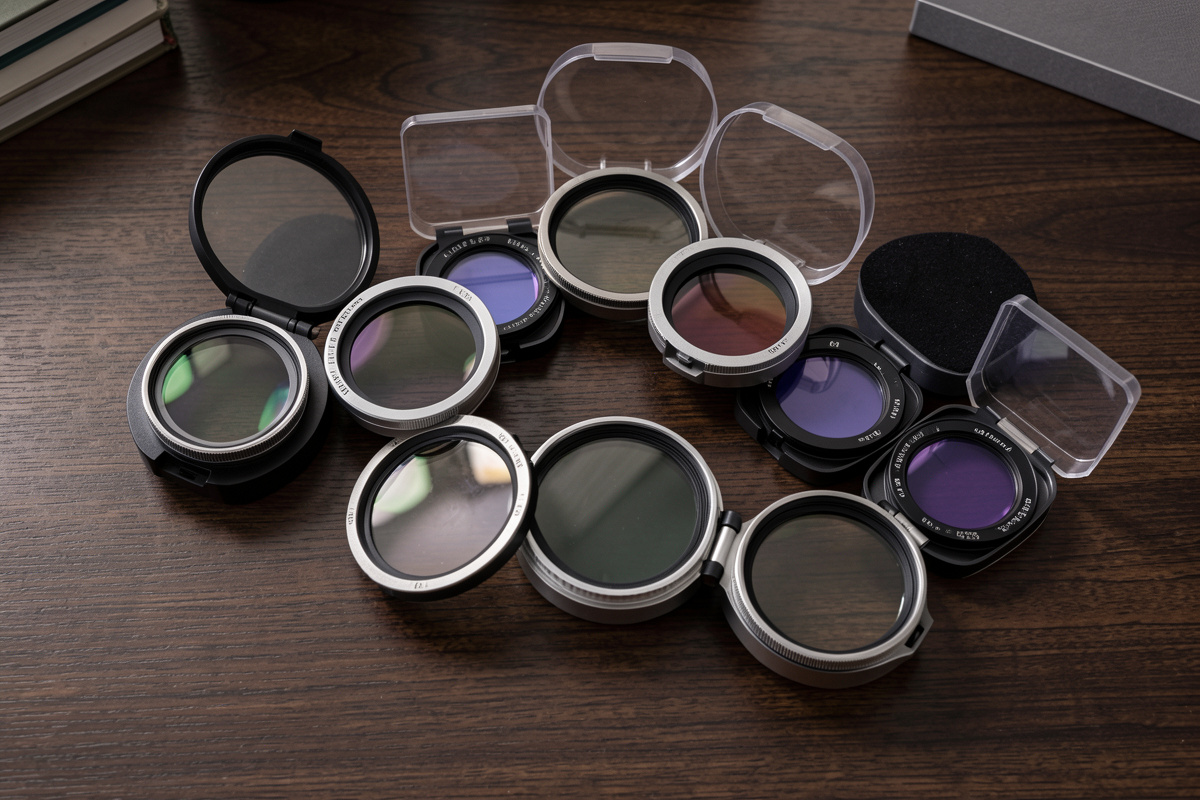

Walk into the filter section of any astronomy retailer and you’ll find a dozen products all promising to beat light pollution — broadband, UHC, OIII, H-beta, “city light suppression,” dual-band. Most buyers grab whichever says “light pollution” loudest and are disappointed. The truth is that these filters do genuinely different jobs, and comparing them on price alone is how people end up with the wrong glass. This is the side-by-side comparison I wish existed when I was building my own filter kit.
I run a UHC and an OIII for visual work and a dual-band narrowband filter on my cooled imaging camera, across scopes from a 127mm Maksutov to a 12-inch Dobsonian, from a Bortle 5 suburb and a Bortle 2 dark site. So this compares filters by what they actually deliver at the eyepiece and on the sensor, not by marketing tier. For the underlying theory, pair this with my narrowband vs broadband explainer; this article is about choosing between the products in front of you.
The Five Filter Categories, Compared
Before comparing brands or prices, you have to compare categories, because a cheap filter in the right category beats an expensive one in the wrong category every time. Here is how the five light-pollution-relevant filter types stack up on what matters: what they help, how aggressive they are, and who they’re for. Note that two of these are visual filters, two are primarily imaging filters, and one — the broadband LPR — is increasingly a legacy product.
| Filter | Type | Primary Use | Helps Most | Verdict |
|---|---|---|---|---|
| Broadband LPR | Wide notch | Visual/imaging | Old sodium skies only | Skip under modern LED lighting |
| UHC | Narrowband | Visual | Most emission nebulae | Best first filter for visual |
| OIII | Line filter | Visual | Planetary & SNR nebulae | Strong second buy |
| H-beta | Line filter | Visual | A few faint nebulae | Specialist, buy last |
| Dual-band (Ha/OIII) | Narrowband | Imaging | Emission nebulae on a camera | The city imager’s key filter |
The most important line in that table is the first: the broadband “light pollution reduction” filter, the one most often marketed by that exact name, is the weakest choice under the white-LED street lighting that now dominates. It was designed to block the narrow lines of old sodium lamps, and modern lighting gives it almost nothing to grab. If a shop pushes a “light pollution filter” at you for visual use, make sure it’s a narrowband UHC, not a broadband LPR.
Reading the Marketing Names That Mislead
Part of why filter comparison is so confusing is that manufacturers name the same broad ideas differently, and some names blur the line between categories. “Light pollution,” “CLS” (city light suppression), “LPR,” “skyglow,” and “deep-sky” all tend to describe broadband-ish filters with varying passbands — some genuinely useful, some barely doing anything under modern lighting. Meanwhile “UHC” is used fairly consistently for the true narrowband all-rounder, and “OIII” and “H-beta” name specific line filters. The lesson: read the bandpass specification, not the marketing name. A filter calling itself “ultra light pollution” with a 90nm-wide passband is doing far less than a UHC with a 25nm band.
This matters most online, where you can’t hold the filter up to a light. Before buying, find the published transmission curve or at least the bandpass width in nanometres. A genuine narrowband visual filter passes a tight window around the key emission lines; anything passing most of the visible spectrum is a broadband filter wearing aggressive marketing, and under LED skies it will underwhelm. When the spec sheet is missing entirely, that absence is itself a useful comparison data point.
Visual vs Imaging: A Different Comparison Entirely
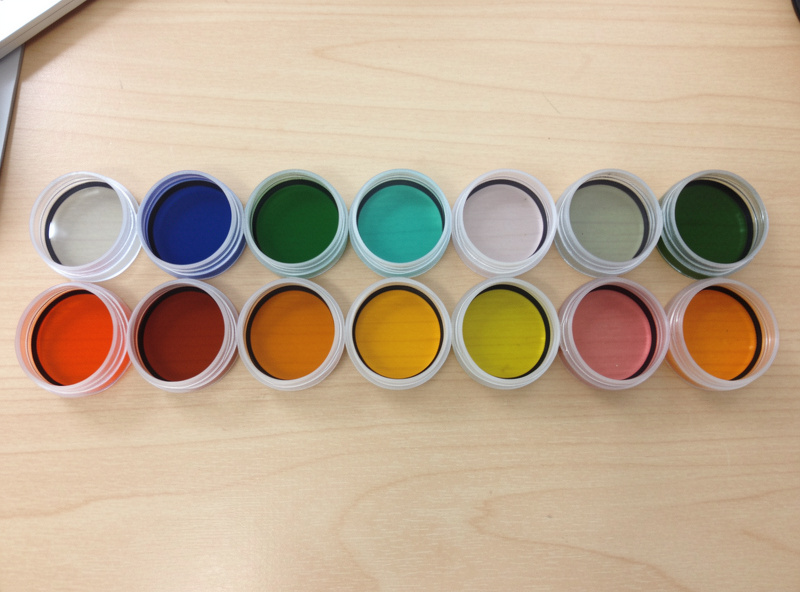
The single biggest mistake in filter comparison is treating visual and imaging filters as the same market. They are not. For visual observing, your filter has to work with the human eye, which means wider passbands (UHC, OIII) that pass enough light to register contrast at low light levels. For imaging, a cooled camera integrating for hours can use far tighter passbands — dual-band and tri-band narrowband filters that isolate the hydrogen and oxygen lines and reject almost all light pollution, letting you shoot colourful emission nebulae from a city backyard.
This is why a like-for-like price comparison falls apart. A premium visual OIII and a premium imaging dual-band cost similar money but cannot be swapped — the imaging filter is far too dark to use by eye, and the visual filter passes too much skyglow to be ideal for long exposures. Decide which side of the hobby you’re buying for first, then compare within that category. If you’re imaging from light pollution, my guide to electronically assisted astronomy in light pollution covers how these dual-band filters change what’s possible from a city sky.
How to Compare Two Filters in the Same Category
Once you’ve picked the right category, the specs that actually distinguish good from mediocre filters are bandpass width, peak transmission, and build quality. Bandpass width is how wide a window the filter passes: tighter usually means more skyglow rejected, but too tight and a visual filter gets too dark to be pleasant. Peak transmission is how much of the wanted wavelength gets through — premium filters hit the low-to-mid 90s percent, cheap ones much less, which is why a bargain filter can look feeble even in the right category. Build quality means the coatings, the threading that has to seat cleanly in your eyepiece, and the sealing against the humidity that plagues filters in cold, damp Nordic air.
The honest field experience: the gap between a no-name budget filter and a quality mid-range one is large and obvious, while the gap between a quality mid-range filter and a flagship premium one is real but subtle — visible mostly to experienced eyes on the hardest targets. For most observers, a quality mid-range UHC and OIII are the sweet spot. A solid UHC filter and OIII filter in the mid tier will serve you for years. As an Amazon Associate I earn from qualifying purchases.
Price Tiers: Where the Money Actually Goes
Within the right category, filters span a wide price range, and understanding what each tier buys keeps you from both overspending and false economy. Budget filters are tempting but often have wide, sloppy passbands and lower transmission, so the contrast boost is weak — the classic “I bought a filter and saw no difference” story usually traces back here. Mid-range filters from the established astronomy brands are where transmission, bandpass control, and coatings reach the level where the effect is unmistakable, and this is where I’d point almost everyone. Premium filters refine bandpass precision and edge steepness further, which matters on the faintest targets and to experienced observers, but the jump from mid to premium is far smaller than the jump from budget to mid.
| Tier | Typical Transmission | Bandpass Control | Worth It For |
|---|---|---|---|
| Budget / no-name | Often low or unstated | Wide, imprecise | Rarely — false economy |
| Mid-range (brand) | High (low-to-mid 90s%) | Tight, consistent | Most observers, best value |
| Premium / flagship | Highest, well-characterised | Very steep edges | Faint targets, experienced eyes |
My own kit is deliberately mid-range, and it has shown me everything from the Veil to the Orion Nebula’s faint wings without complaint. I’d rather a beginner put the premium-versus-mid difference toward a dark-sky trip or a better eyepiece, both of which move the needle more than the last few percent of filter transmission. The exception is serious imagers, for whom narrowband filter quality directly limits image quality — there, paying up is justified.
Size, Threading, and the Mistakes That Cost Money
Two practical comparison points that buyers overlook. First, filter size: 1.25-inch filters fit standard eyepieces and are cheaper, while 2-inch filters fit large wide-field eyepieces and cost considerably more. If most of your eyepieces are 1.25-inch, buy that size; don’t pay for 2-inch glass you can’t thread on. Second, the “filter wheel vs single filter” question for imagers — if you’ll shoot narrowband seriously you’ll eventually want multiple filters, so factor the ecosystem, not just one filter, into the comparison.
The classic money-wasting mistakes, in order: buying a broadband LPR filter for visual use under LED skies (wrong category), buying the cheapest no-name filter (poor transmission and wide bandpass), buying a 2-inch filter for 1.25-inch eyepieces (wasted money), and buying an OIII before a UHC (wrong order — UHC is the more versatile first filter). Avoid those four and you’ll spend well. None of this replaces a dark sky for galaxies and clusters, which no filter touches — that decision lives in my dark sky sites and Bortle scale guide.
The Comparison, Distilled
If you observe visually under light pollution, the comparison resolves quickly: a mid-range UHC first, an OIII second, both in the size that matches your eyepieces, and skip the broadband LPR entirely. If you image, the answer is a quality dual-band narrowband filter sized to your camera. Everything else is refinement. The filter category matters far more than the brand, the brand matters more than the price tier, and none of it matters at all if you point it at a galaxy.
For the next step, read on: my best filters for light polluted skies turns this comparison into specific picks by scenario, nebula filters for visual observing shows you how to use them at the eyepiece, and the full light pollution and astronomy guide puts filters in the context of maps, dark sites, and realistic expectations. The broader accessory picture lives in my telescope filters guide.
