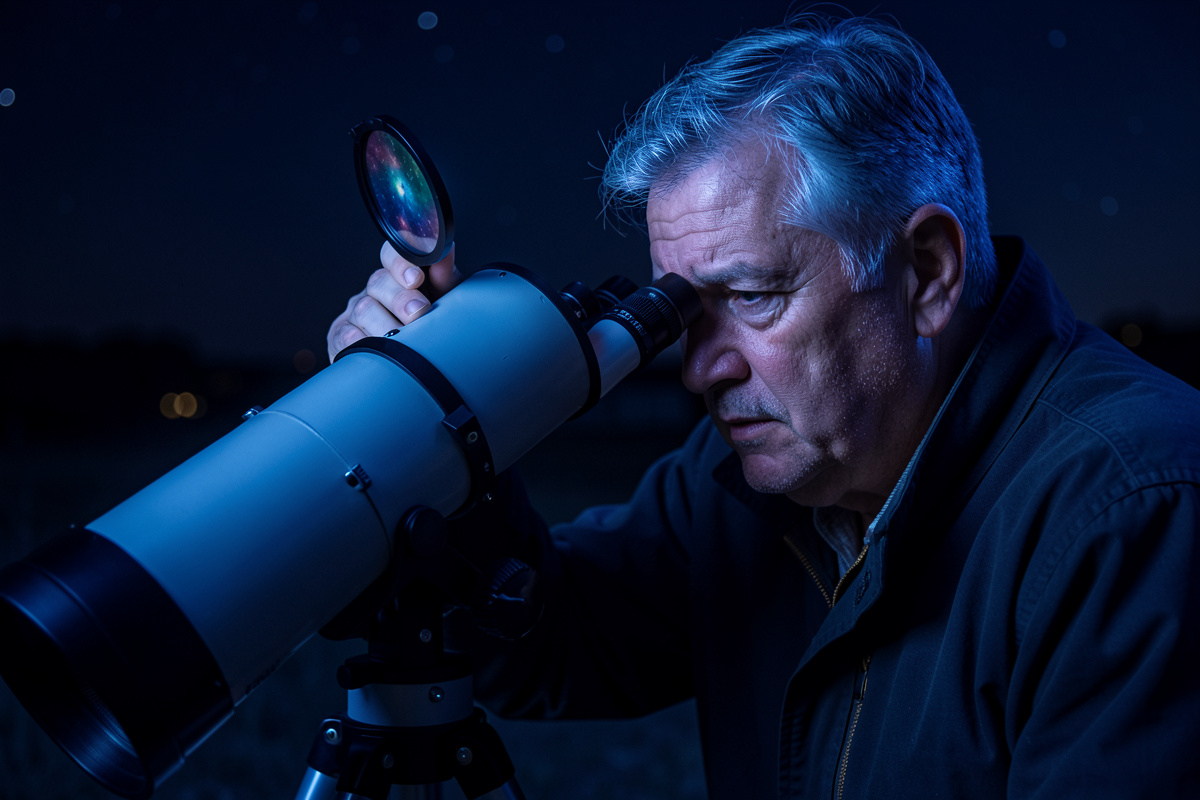

A nebula filter is the only accessory I own that can make an object appear that was simply invisible a moment before. Lift a UHC or OIII filter between your eye and the eyepiece on the right target and the contrast jumps — the Veil Nebula goes from “is that something?” to a structured ribbon of gas. But filters only work on emission nebulae, and only if you use them correctly. Point one at a galaxy and you have just made an expensive piece of glass that dims the view.
This is the practical, at-the-eyepiece guide: which filter to lift on which object, the technique that doubles their effect, and the targets where they genuinely transform the view from a light-polluted backyard. I run a UHC and an OIII across a 127mm Maksutov, an 8-inch SCT, and a 12-inch Dobsonian, from both my suburban yard and a Nordic dark site, so the recommendations here come from the eyepiece, not a spec sheet. For the underlying physics of why they work, see my narrowband vs broadband filters guide; this article is about using them.
Which Nebula Filter Does What
There are three filters worth knowing for visual nebula observing, in order of how often you’ll use them. The UHC (ultra-high-contrast) is the all-rounder — it passes a band covering both the hydrogen-beta and oxygen lines, so it improves the widest range of emission nebulae and is the filter I reach for first on almost everything. The OIII passes a tighter band around just the doubly-ionised oxygen lines, giving a stronger, more aggressive boost on planetary nebulae and supernova remnants, at the cost of dimming stars more heavily. The H-beta is a specialist that helps on only a short list of faint nebulae — famously the Horsehead and the California Nebula — and is the last filter most observers buy, if ever.
The single most important rule: nebula filters only help emission nebulae. They do nothing for galaxies, star clusters, or reflection nebulae, because those emit broadband light. If you put a UHC on the Andromeda Galaxy expecting a miracle, you’ll get a dimmer galaxy and a lesson. Keep the filters in the case for those targets and lift them only for the glowing gas.
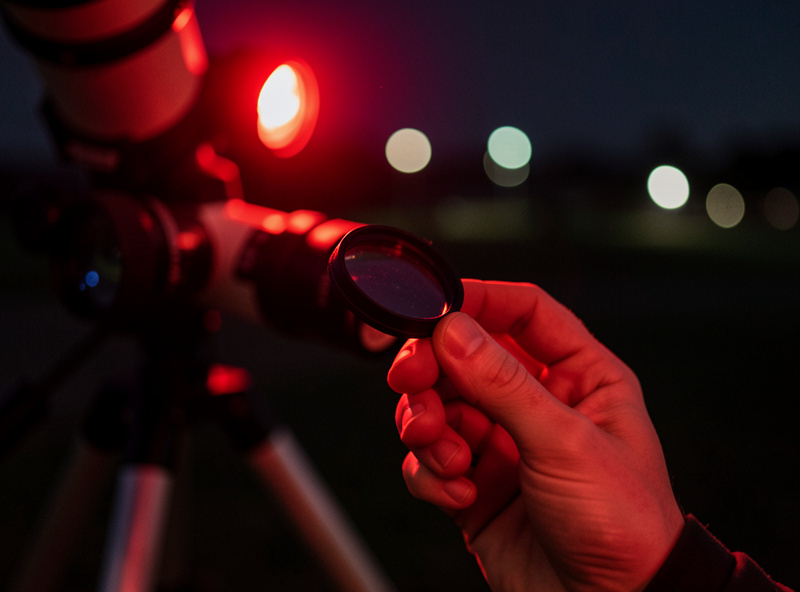
The Blink Technique and How to Actually Use Them
The fastest way to confirm a filter is helping is the “blink” — hold the filter between your eye and the eyepiece and move it in and out of the light path while looking at the target. On an emission nebula, the nebula jumps in contrast as the filter comes in and the stars dim; on a galaxy or cluster, everything just gets dimmer. This trick instantly tells you whether a filter belongs on this object, and it’s how I decide in the field rather than swapping filters blindly.
Beyond the blink, three things make or break the filtered view. First, exit pupil: nebula filters give their best contrast at a fairly large exit pupil, roughly 3 to 5mm, so use them in low-to-medium power eyepieces, not your highest magnification. Second, dark adaptation: a filter raises contrast, but only a fully dark-adapted eye can use that contrast, so give yourself 20 to 30 minutes in the dark with red light only. Third, patience and averted vision — look slightly off to the side of the target so the light falls on the more sensitive part of your retina, and let the view build over a minute rather than glancing once and moving on.
Target by Target: What to Lift and When
Here is the working reference I’d hand a friend at the eyepiece — the emission targets where filters earn their keep and which filter to use. The big diffuse nebulae and planetaries are where you’ll see the most dramatic gains; on a few faint targets the right filter is the difference between seeing the object and not.
| Target | Type | Best Filter | What Changes |
|---|---|---|---|
| Orion Nebula (M42) | Emission | UHC | Wings and detail extend dramatically |
| Veil Nebula | Supernova remnant | OIII | From near-invisible to structured filaments |
| Ring Nebula (M57) | Planetary | OIII | Brighter, crisper ring against darker sky |
| Dumbbell (M27) | Planetary | UHC or OIII | Shape and brightness both improve |
| Lagoon (M8) | Emission | UHC | Nebulosity around the cluster pops out |
| North America Nebula | Emission | UHC | Shape becomes traceable under dark skies |
| Horsehead | Dark on emission | H-beta | The faint backdrop glow becomes visible |
| Galaxies & clusters | Broadband | None | No filter helps — remove it |
Filters in Light Pollution vs at a Dark Site
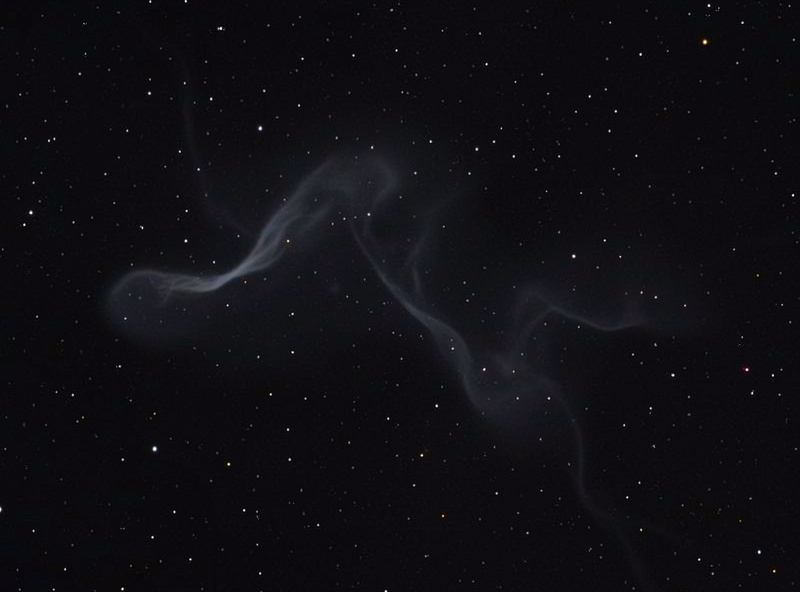
Filters and dark skies are not substitutes — they stack. A UHC filter from my Bortle 5 yard pulls the brighter emission nebulae out of the skyglow enough to be genuinely worth observing, and an OIII on the Ring Nebula from the backyard is a satisfying view. But the same filters at my Bortle 2 dark site are on another level entirely, because the filter is now removing a much thinner layer of skyglow and the nebula is starting from a darker background. The Veil through an OIII at a dark site is one of the great sights in visual astronomy; from the suburb it’s merely good.
The practical takeaway: a nebula filter is the highest-value accessory for light-polluted emission-nebula observing, and it’s the one filter I tell backyard observers to buy. But it does not replace the drive to dark skies for faint targets, and it does nothing for the galaxies and clusters that make up much of the deep-sky catalogue. Match expectations to the physics. For where the dark skies actually are, see my dark sky sites and Bortle scale guide and the light pollution map guide.
The Mistakes That Waste a Good Filter
Most disappointment with nebula filters comes down to a handful of avoidable errors. The first is using one on the wrong target — galaxies, clusters, and reflection nebulae like the Pleiades nebulosity get no benefit, only dimming. The second is cranking up the magnification; a filter at high power dims the image past the point where the contrast gain helps, so drop to a longer-focal-length eyepiece. The third is not being dark-adapted, which quietly halves the effect of any filter.
Two more catch people out. Buying the cheapest filter often means a passband too wide to reject much skyglow, so the contrast boost is feeble — filter quality genuinely matters here in a way it doesn’t for, say, a Moon filter. And expecting colour: visual nebulae through a filter are still grey to the eye on all but the very brightest targets, because at low light levels your colour vision barely operates. The filter buys you contrast and structure, not the saturated teal of a photograph. Set that expectation and the filtered view is a revelation rather than a letdown.
Buying Your First Nebula Filter
For most observers the answer is simple: start with a quality 1.25-inch UHC filter, which fits the bottom of standard eyepieces and covers the widest range of targets. A good UHC nebula filter is the single best contrast upgrade for backyard nebula hunting, and an OIII filter is the natural second buy once planetary nebulae and the Veil are on your list. As an Amazon Associate I earn from qualifying purchases. Get the filter size to match your eyepieces (1.25-inch is standard; 2-inch for large wide-field eyepieces), and avoid the cheapest no-name filters, whose passbands are often too wide to do much. For a head-to-head of which filters are worth it, see my light pollution filter comparison, and the quick picks in best filters for light polluted skies. The full kit context is in my light pollution and astronomy guide.
Frequently Asked Questions
Do nebula filters work in light pollution?
Yes, on emission nebulae. A UHC or OIII filter rejects most skyglow while passing the wavelengths the nebula glows at, so brighter emission nebulae become observable even from a suburban backyard. They do not help galaxies, star clusters, or reflection nebulae at all.
Which nebula filter should I buy first?
A UHC filter. It covers the widest range of emission nebulae and is the best all-rounder for visual observing. Add an OIII second for planetary nebulae and supernova remnants like the Veil, where its tighter passband gives a stronger contrast boost on the right targets.
What is the blink test for nebula filters?
Hold the filter between your eye and the eyepiece and move it in and out of the light path. On an emission nebula the target jumps in contrast as the filter comes in; on a galaxy or cluster everything just dims. It quickly confirms whether a filter belongs on that object.
Why does my nebula filter make galaxies look worse?
Because galaxies emit a continuous spectrum across all wavelengths. Any filter narrow enough to block skyglow also blocks the galaxy’s own light, so the view only gets dimmer. Nebula filters help emission nebulae only; remove them for galaxies and star clusters.
What magnification works best with a nebula filter?
Low to medium power, giving an exit pupil of roughly 3 to 5mm (aperture divided by magnification). Nebula filters need the image bright enough on your retina for the contrast gain to register, so very high magnification usually makes the filtered view too faint to reward.
Do I need a dark site if I have nebula filters?
Filters and dark skies stack rather than substitute. A UHC pulls brighter nebulae out of suburban skyglow, but the same filter at a dark site is far more dramatic because it starts from a darker background. For faint nebulae and any galaxy, a darker sky remains essential.
