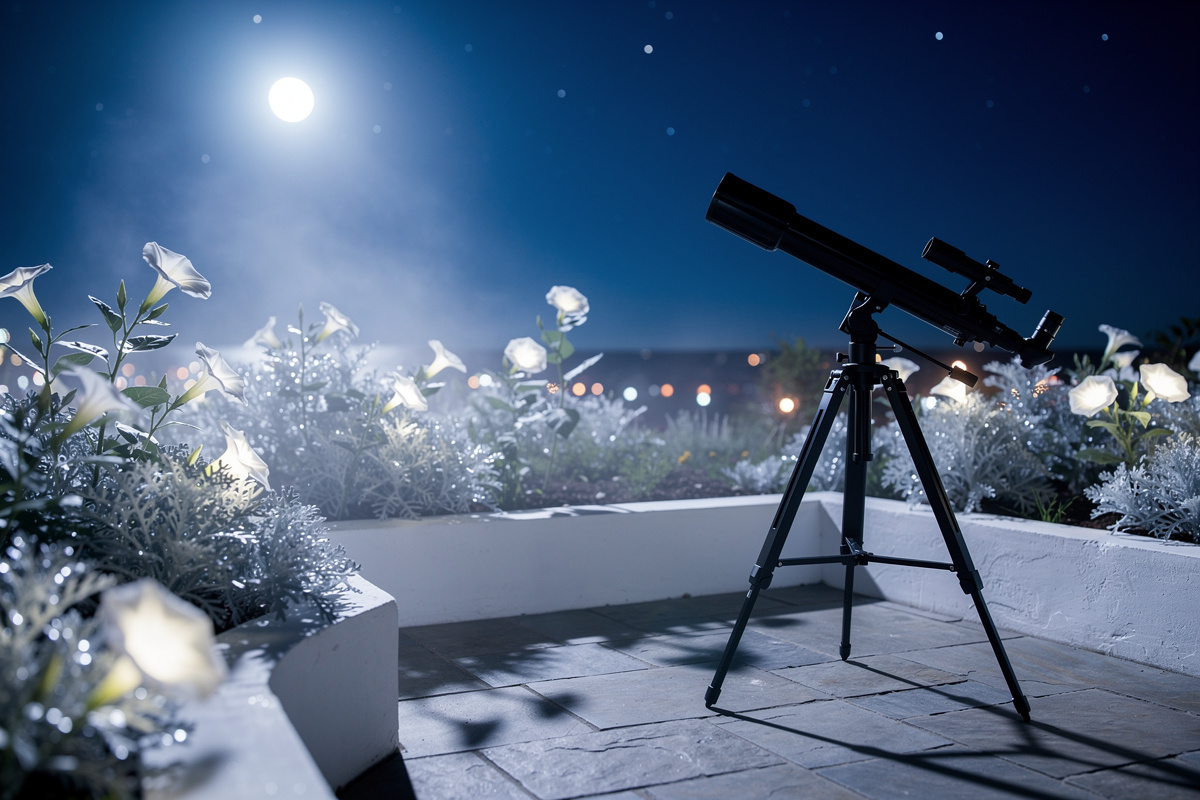

A moon garden surrounding an observing patio solves a problem most amateur astronomers don’t realize they have: the 20-30 minutes you wait between target acquisitions are dead time on a bare patio, but they’re prime time in a garden designed to bloom and shimmer in lunar and starlight. White-flowering plants, silver foliage, and night-fragrant species become a sensory backdrop that makes a stargazing session into something a family can enjoy together — not just an enthusiast hobby pursued in cold isolation.
This guide walks through the 14 plant species that work best in moonlight (plus the ones to avoid because they smell wrong or bloom only at noon), the patio layout that preserves observing dark-adapted vision while still making the garden visible, and the lighting and material choices that don’t ruin your sky.
Why a Moon Garden Pairs With Astronomy Specifically
Three converging reasons:
- White flowers and silver foliage are designed for moonlight. Evolutionary pressure on night-blooming species favored white pigments because moths, the primary nocturnal pollinators, see white best in low-light conditions. Those same plants are visible to dark-adapted human eyes at the brightness levels you have at the eyepiece.
- Night-fragrant plants peak at observing time. Many night-bloomers (jasmine, evening primrose, gardenia, night-scented stock, four-o’clocks) release their strongest scent between 9 PM and 1 AM — exactly the hours of typical amateur observing.
- The garden hides the patio infrastructure. A telescope on a bare slab looks utilitarian. A telescope inside a frame of moonlit foliage looks deliberate, which makes the rest of the household more inclined to come out and join you.
The 14 Plants That Work for Astronomy Patios
White-Flowering Annuals (Tier 1: must-haves)
Moonflower (Ipomoea alba): 6-inch white trumpets that open at dusk and bloom through the night. Climbing vine, needs trellis or arch. Spectacular when planted near the eyepiece — fragrance is light vanilla. Reliably self-seeds in zones 8+, treat as annual elsewhere.
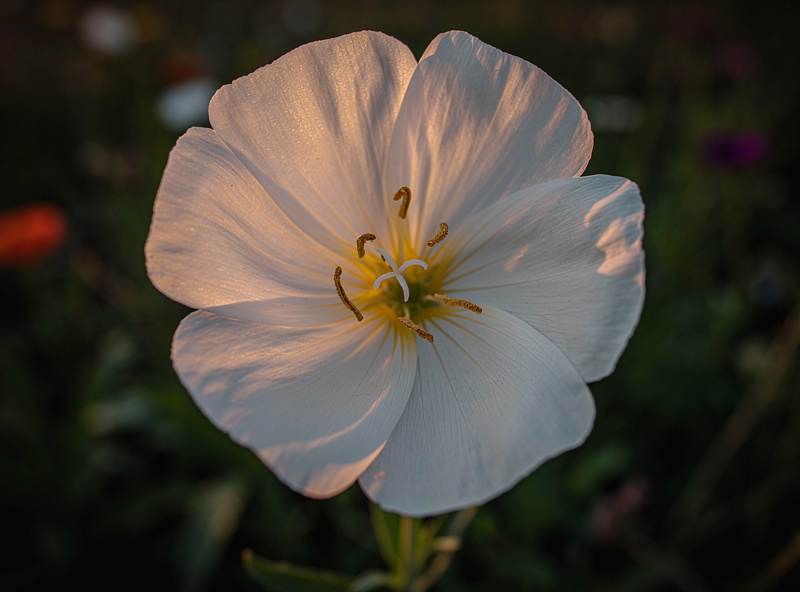
Evening Primrose (Oenothera biennis): Yellow-white 2-inch flowers that open in 30-60 seconds at dusk. Native, easy, prolific. The watching-them-open part is almost as good as the looking-up part.
Night Phlox (Zaluzianskya capensis): Tiny white starbursts that release a powerful honey-vanilla scent at night. Compact 8-inch plants — perfect for the front edge of an observing border.
Datura (Datura wrightii) — caution: poisonous to pets and kids. Spectacular 6-8 inch white trumpets. Skip if you have small children or animals on the patio. Where it’s safe, no other moon garden plant is more dramatic.
White-Flowering Perennials (Tier 1)
White Coneflower (Echinacea ‘White Swan’): Visible in lunar-bright conditions, attracts moths during the day’s last hour. Reliable perennial in zones 3-8.
White Phlox (Phlox paniculata ‘David’): Tall, fragrant, glows in moonlight. Mildew-resistant cultivar. Zones 4-8.
White Iris (Iris germanica) — bearded varieties: Spring bloomer with strong fragrance, tall enough to read against a dark sky.
Silver Foliage (Tier 1: glows in moonlight)
Lamb’s Ear (Stachys byzantina): Soft silver-fuzzy leaves that catch and reflect moonlight more visibly than any flower. Hardy, easy, drought-tolerant. The single best foliage plant for a moon garden.
Dusty Miller (Senecio cineraria): Silver-gray finely cut foliage. Annual in cold zones, perennial in zones 8+.
Artemisia ‘Silver Mound’: Mounded silver perennial, perfect for the front edge of a border. Zones 3-7.
Night-Fragrant Shrubs and Vines (Tier 2)
Night-Blooming Jasmine (Cestrum nocturnum): Powerful sweet fragrance. Tropical — pot it for cold zones. The intensity can be overwhelming in a small patio; plant 15+ feet from observing position.
Sweet Autumn Clematis (Clematis terniflora): Cloud of small white flowers, vanilla scent, vigorous climber. Excellent for trellis screens around the patio edge.
Gardenia (Gardenia jasminoides): Strongest night fragrance of any plant on this list. Zone 8+ outdoors, container culture elsewhere.
Night-Scented Annuals (Tier 2)
Night-Scented Stock (Matthiola longipetala): Insignificant by day, intensely fragrant after sunset. Direct-sow easily.
Four O’Clocks (Mirabilis jalapa): Open at 4 PM (hence the name) and bloom through the night. Multicolor — choose white-flowered varieties for moonlight visibility.
What NOT to Plant
Three classes of plants that wreck the experience:
- Strongly red or purple flowers. Disappear in moonlight (eyes process red poorly in low light) and add nothing. Save the dark-purple petunias for daytime gardens.
- Heavy citrus or eucalyptus fragrance plants near the eyepiece. Mosquitoes hate these, but so do many people, and the headache they cause during long sessions isn’t worth it. Plant them at the patio perimeter, not within 6 feet of where you stand.
- Tall hedges that block sky. Even attractive evergreens (boxwood, holly, juniper) reduce sky access. Keep all border planting under 4 feet within 20 feet of the observing position.
The Patio Layout That Preserves Dark Adaptation
Dark-adapted vision takes 20-30 minutes to fully develop and is destroyed by a single bright glance. The moon garden has to support both observing and casual presence — and the design rules conflict with normal landscape lighting practice.
- Zero white-light sources within 30 feet of the patio. Solar walkway lights, porch lights, motion sensors all need to be either disabled, switched to deep red (longest wavelength, doesn’t kill dark adaptation), or moved.
- Red-filtered LED accent lighting only. Strips of red LED rope (around 660 nm) can mark walking paths without compromising vision. Available from astronomy retailers and any RV supply.
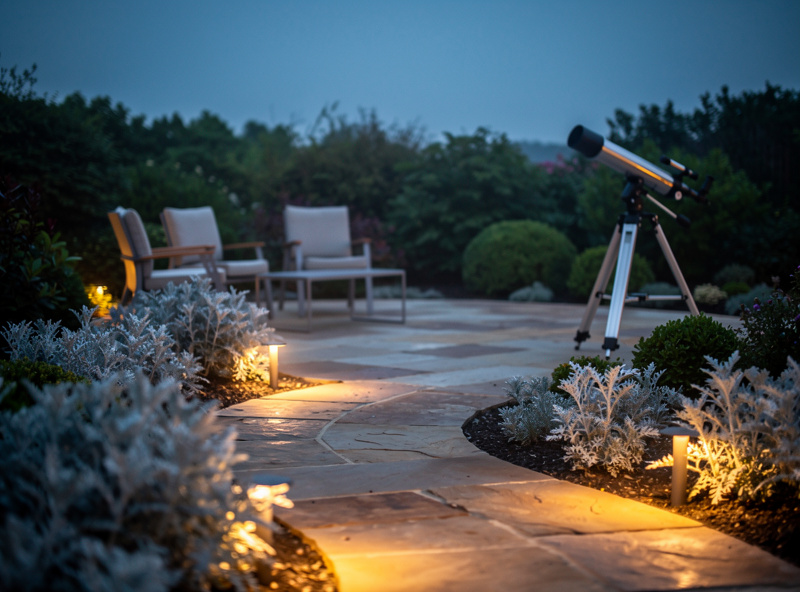
- Light-colored walking surfaces. White or pale-tan crushed gravel, light-colored pavers — visible by ambient sky-glow and starlight without artificial lighting. Dark slate looks great by day but becomes a tripping hazard at night.
- Tall plants on the north side. Most observing in the northern hemisphere happens looking south or overhead. North-side plantings can be tall (climbing roses, fruit trees) without blocking sky.
- Telescope pad placement away from heat sources. Asphalt, brick walls, and concrete slabs hold daytime heat that creates atmospheric shimmer through the night. Position the scope 10-15 feet from any heat-storing surface.
Plant Comparison: Moonlight Visibility and Fragrance
| Plant | Moonlight visibility | Fragrance strength | Bloom window | Hardiness |
|---|---|---|---|---|
| Moonflower | Excellent | Light vanilla | Dusk to dawn | Annual / Zone 8+ |
| Evening Primrose | Very good | Light citrus | Dusk to mid-night | Zones 3-9 |
| Lamb’s Ear | Excellent (foliage) | None | Foliage all season | Zones 4-8 |
| Night-Blooming Jasmine | Moderate | Powerful (overwhelming close) | 9 PM – 1 AM peak | Zone 8+ / container |
| Datura (caution) | Excellent | Strong, complex | Dusk to mid-night | Annual / Zone 9+ |
| Night Phlox | Good (small flowers) | Strong honey-vanilla | 9 PM – 2 AM | Annual |
| Sweet Autumn Clematis | Very good (mass effect) | Vanilla | Late summer evenings | Zones 4-9 |
| White Phlox ‘David’ | Very good | Sweet | Summer evenings | Zones 4-8 |
| Artemisia Silver Mound | Excellent (foliage) | Light herbal | Foliage all season | Zones 3-7 |
| Gardenia | Moderate | Strongest of any plant here | Summer evenings | Zone 8+ / container |
The Garden-Side Implementation
Plant selection is half the project; the soil and bed design is the other half. Most moon garden plants want full sun during the day to set up for night blooming, well-drained soil, and the kind of staked support that climbing moonflowers and vining jasmine require. Our partner site covers the foundation work in the complete container gardening guide and the raised beds and planters guide — both relevant for an astronomy-patio garden where bed elevation and contained planting often work better than ground-level beds in cold or wet climates.
What to Plant First This Season
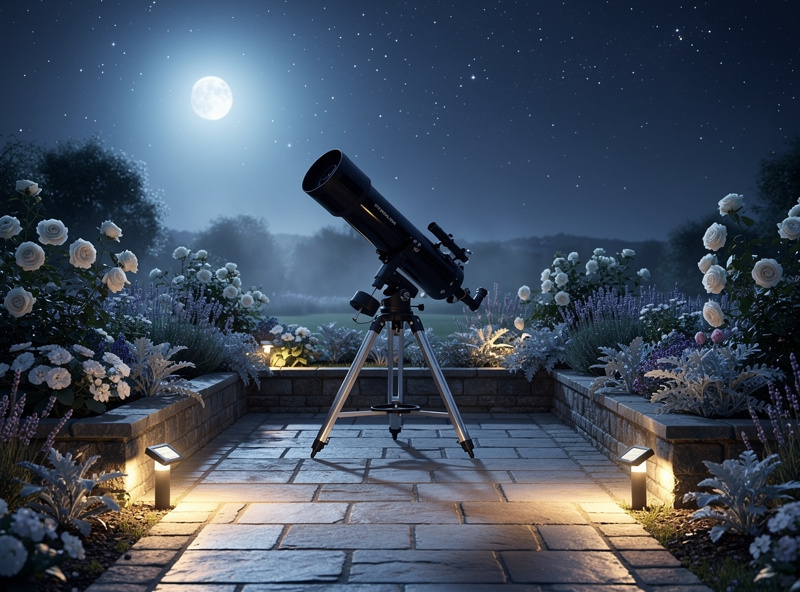
- Spring (April-May): Direct-sow night-scented stock and four-o’clocks. Plant a moonflower seedling next to a trellis or pergola. Tuck lamb’s ear and dusty miller along the front of borders for foliage glow.
- Early summer (June): Add evening primrose plants, white phlox ‘David’, and white coneflower. These will be in bloom by July.
- Mid-summer (July): Plant container gardenia or night-blooming jasmine in a large pot you can move under cover for winter.
- Fall (September): Establish the silver-foliage perennial backbone (artemisia, lamb’s ear). They settle in over winter and explode in spring.
- Pre-observing seasons: Add red-filtered LED rope lighting to any path through the moon garden. Test that your eyes adapt fully within 25 minutes of switching off white house lights.
For the broader observing side, see the best telescopes for beginners for equipment that pairs with patio observing, the astronomy for beginners guide for the targets you’ll observe between flower-watching, and the dark sky locations guide for when the backyard isn’t dark enough for the deep-sky targets you want.
For deeper background on night-pollinator gardening, the Xerces Society pollinator resources publish lists of moth-attracting plants by region. The DarkSky International lighting guidelines document the red-light and shielded-fixture practices that protect both human dark adaptation and nocturnal wildlife habitat.
Frequently Asked Questions
What is a moon garden and why pair it with astronomy?
A moon garden is a deliberate planting of white-flowering, silver-foliage, and night-fragrant species designed to be visible and beautiful in lunar and starlight. Pairing it with an observing patio fills the 20-30 minute waits between targets with sensory engagement and turns a solo hobby into something a family can enjoy together.
What plants glow best in moonlight?
White-flowering moonflower, evening primrose, white phlox, white coneflower, and night phlox all reflect moonlight clearly. Silver-foliage plants — lamb’s ear, dusty miller, and artemisia ‘Silver Mound’ — actually glow more visibly than most flowers because they reflect ambient skylight from leaf surfaces all season, not just during bloom.
Will the garden ruin my dark-adapted vision?
Not if you eliminate white-light sources within 30 feet of the observing patio. Use deep-red LED rope lighting (around 660 nm) for path marking — red light does not destroy dark adaptation. Pale crushed-gravel walking surfaces remain visible by starlight and ambient skyglow without any artificial lighting.
Are night-blooming plants poisonous?
Datura is highly toxic to humans and animals — skip it if you have children or pets on the patio. Most other moon garden plants (moonflower, evening primrose, jasmine, lamb’s ear, phlox) are safe. Always check pet-toxicity lists before planting if you have outdoor cats or dogs.
Do I need full sun for night-blooming plants?
Most night-bloomers want full or partial sun during the day to fuel evening blooming — typical 6 hours minimum. Shade-only beds limit you to silver-foliage plants, which still work for visual moon garden effect. South or west exposure is ideal for most species on the recommended list.
What time do night-blooming plants actually open?
Most species open at dusk and stay open through the night, closing at sunrise. Evening primrose famously opens in 30-60 seconds at dusk and is fast enough to watch. Moonflower opens around 7-8 PM in summer. Night phlox and night-scented stock release fragrance in waves between 9 PM and 1 AM.
How much space do I need for a moon garden?
A useful moon garden border can be as small as 4 feet by 8 feet — enough for moonflower on a trellis, a few evening primrose, lamb’s ear at the front, and night-scented stock filling gaps. Larger 10×20 foot borders accommodate the full plant list with breathing room. Container gardens on patios work well for jasmine and gardenia in cold climates.
